A group of living things
Asterids
Asteridae
One huge plant branch that fills your salad bowl, herb pot and coffee cup.
This branch is shown at about 115 million years ago; its age is a rough estimate.
You and asterids meet in the Eukaryotes branch, shown at about 1.8 billion years ago (on 28 July, in a calendar from life's shared ancestor to today).
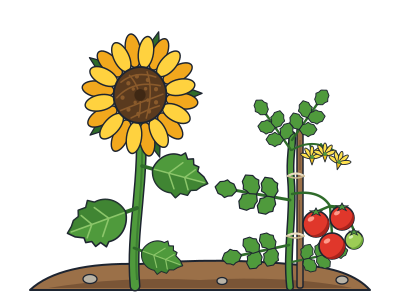
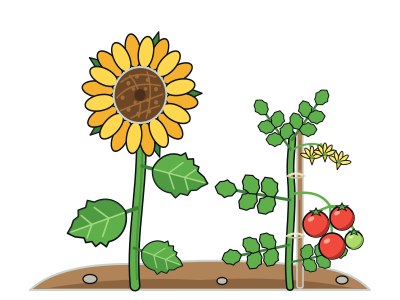
Sunflowers, tomatoes, mint and coffee look nothing alike, yet they all belong to one big branch of flowering plants. So do potatoes, lettuce, carrots, basil, blueberries and tea. Much of your salad, your herb pot and your morning cuppa all come from the same branch of the plant tree. This branch has more than 80,000 species, about a third of all flowering plants.
The branch splits into two large groups. One includes mints, tomatoes and coffee. The other includes daisies and carrots. Two smaller branches split off earlier. One of them includes tea and blueberries.
Many asterids have petals joined into a tube or bell, like a mint or blueberry flower. Over time, the tube has changed in length and shape. That has let different plants team up with particular pollinators, such as hawkmoths, hummingbirds and bee flies. But not every asterid has joined petals. Most share a feature hidden from view instead: a single protective layer around the growing seed, where many other flowering plants have two.
A crowd, not one flower
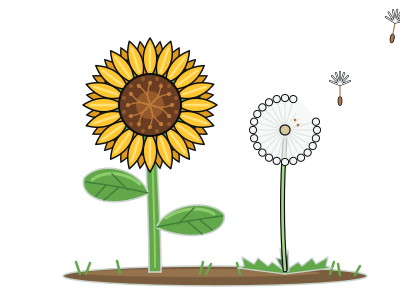
A sunflower head is really hundreds of tiny flowers packed together. Even each yellow 'petal' around the edge is a separate flower.
Almost everywhere
Plants from the daisy family grow on every continent except Antarctica.
A giant family
The daisy family alone has about 32,000 species. Only the orchid family comes close, and experts are not sure which one is bigger.
Inside asterids
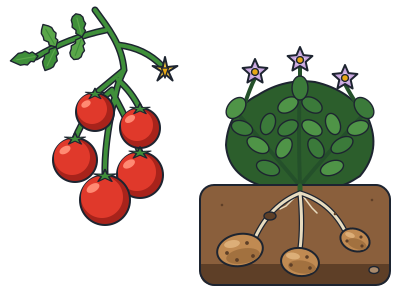
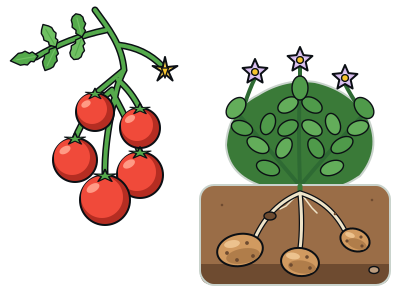
- Nightshade familyTomatoes and potatoes are close cousins in a family that also includes deadly nightshade.
- Daisy familyOne of the two biggest flowering-plant families, with over 32,000 species from lettuce to dandelions.

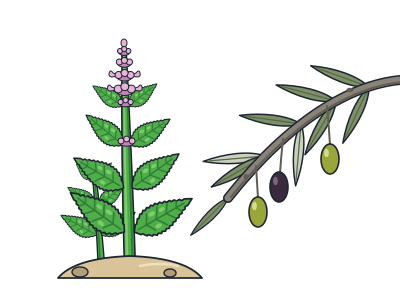
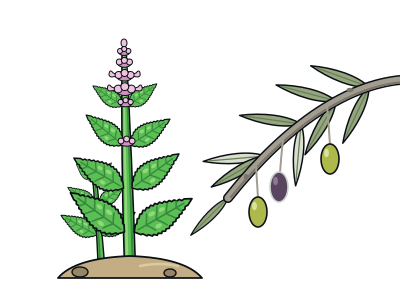
- Olives, mints and kinOlives, mint, lavender, basil and lilacs are all relatives.
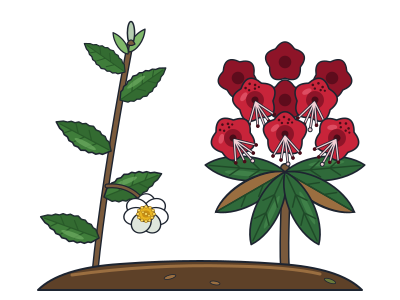
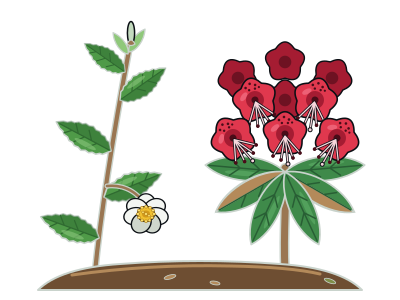
- Heathers, tea and kinTea, blueberries, kiwifruit, Brazil nuts and pitcher plants share one ancestor.
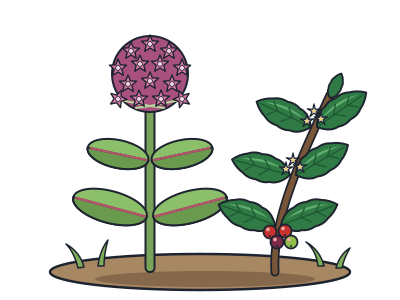
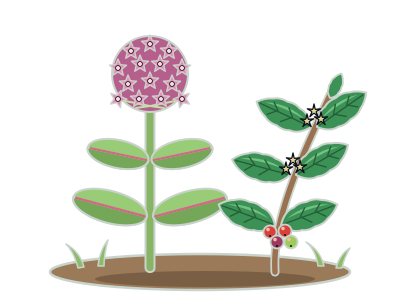
- Coffee and milkweedsCoffee, milkweed and gentians are relatives, many with powerful natural chemicals.
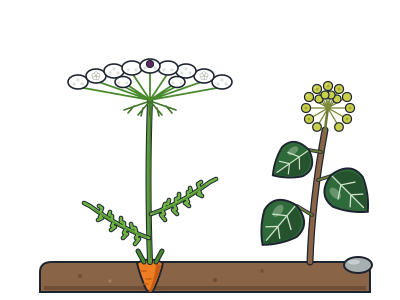
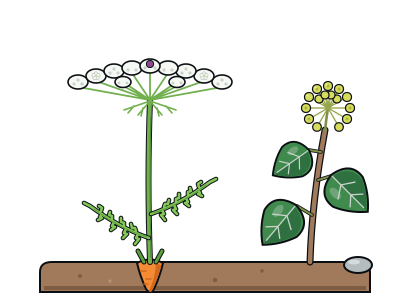
- Carrots, parsley and ivyUmbrella-shaped flower clusters link carrots and coriander to ivy.
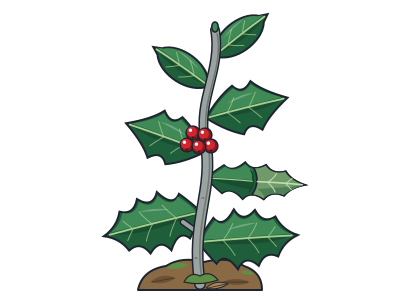
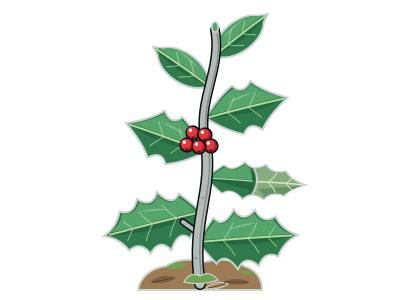
- HollyPrickly lower leaves deter deer, while higher leaves are often smooth.
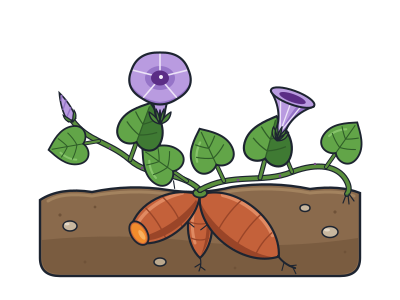
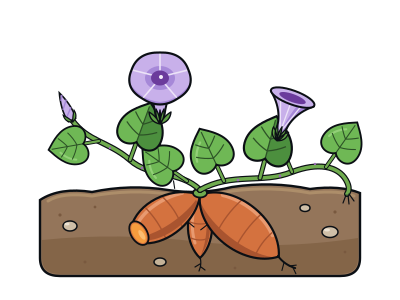
- Sweet potatoA morning glory with a sweet root, which reached Polynesia long before Europeans.
Next to it on the tree
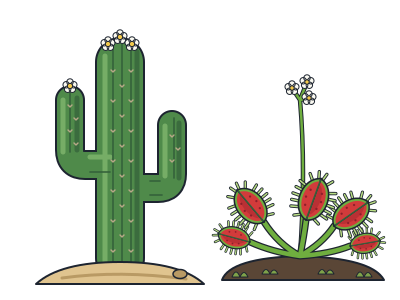
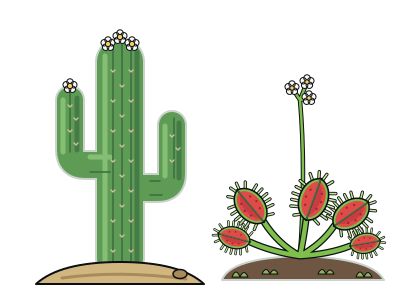
- Cacti, carnations and carnivoresOne branch holds cacti, beetroot and carnations, and also most meat-eating plants.
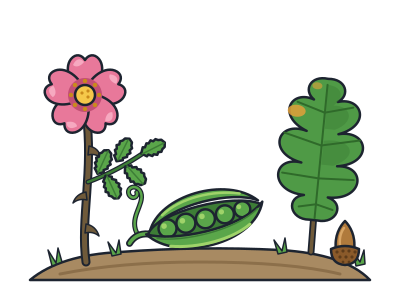
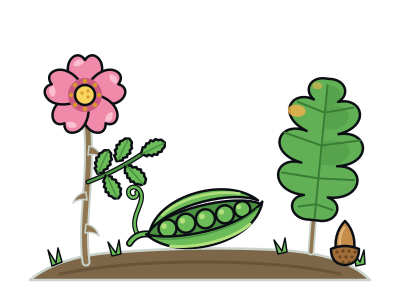
- RosidsA vast branch of eudicots including roses, beans, oaks, cabbages and eucalyptus.
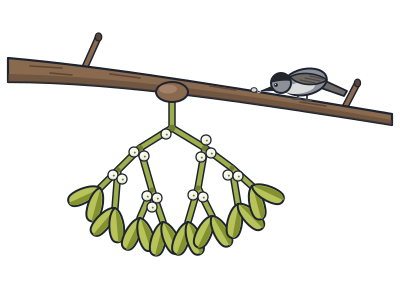
- MistletoeA half-parasite that grows on tree branches, planted there by birds wiping their beaks.
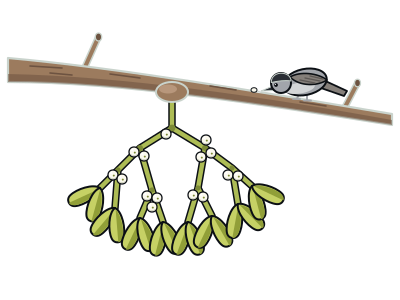
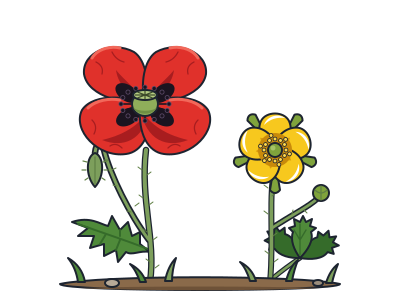
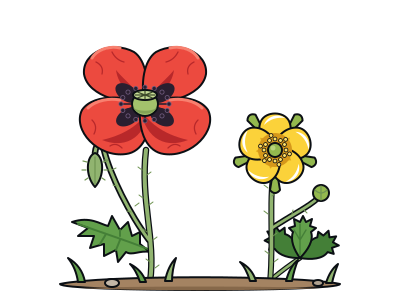
- Buttercups and poppiesThe earliest branch of the eudicots, with buttercups, poppies and columbines.
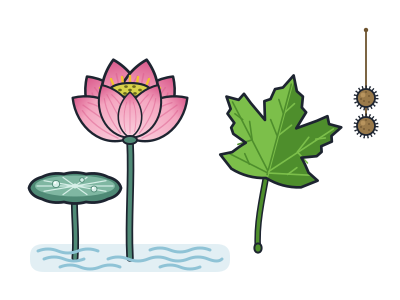
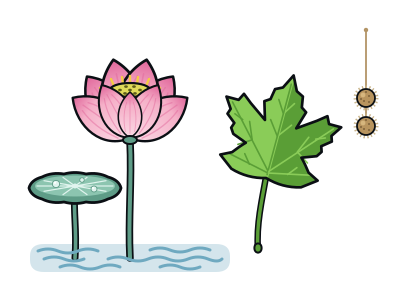
- Lotuses, proteas and planesA water lotus, a South African protea and a city plane tree turn out to be cousins.
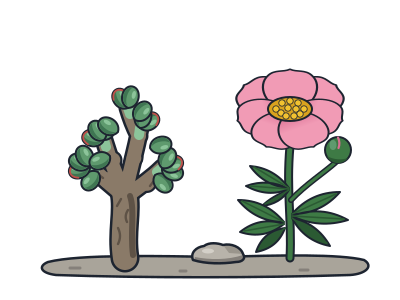
- Stonecrops and peoniesJade plants, peonies and currants: a branch rich in succulents and rock plants.
- Giant rhubarbLeaves big enough to shelter under, with partner microbes living in its stems.