A group of living things
Apes
Hominoidea
No tails, flexible shoulders—and humans in the family.
This branch is shown at about 20 million years ago; its age is a rough estimate.
You are part of this group. See how.
Apes are tailless primates with unusually flexible shoulders. The rounded tops of their upper arm bones fit into shallow shoulder sockets, allowing movements used for hanging and swinging beneath branches. But a missing tail is not enough to identify an ape: some monkeys have very short tails too.
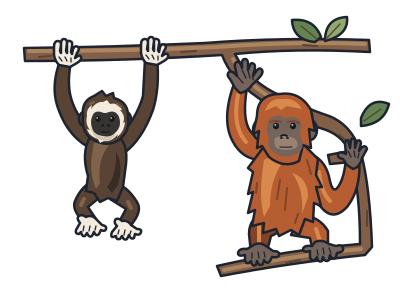
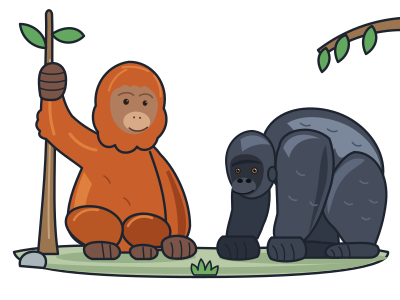
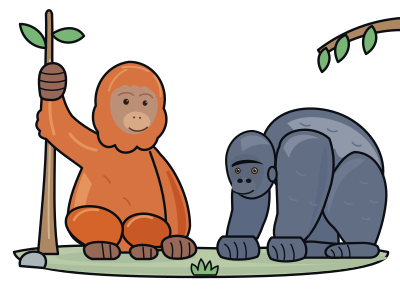
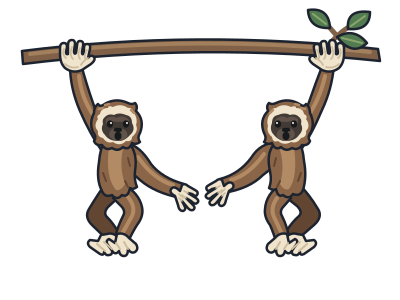
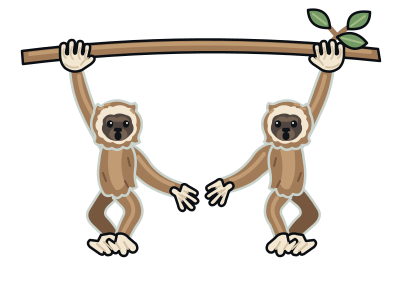
Picture a small gibbon beside a bulky orangutan. Both belong to the ape family, but they sit on its two main living branches: gibbons and great apes. Orangutans, gorillas, chimpanzees, bonobos and humans are all great apes. That makes an orangutan more closely related to you than to a gibbon.
Their movements show how differently apes use their bodies. A gibbon swings from one arm to the other, using its hands like hooks. An orangutan can swing hand over hand too, but usually climbs carefully, spreading its weight across supporting branches. Flexible shoulders do not mean that every ape spends its days swinging.
Arms up for balance
On the ground, gibbons commonly walk on two feet and may hold their long arms up for balance.
A bed among the branches
Orangutans usually build a fresh sleeping nest in the trees each night, though they sometimes reuse an older one.
Forest seed carriers
Orangutans help spread forest plants by eating fruit and passing seeds in their droppings.
Inside apes
Next to it on the tree
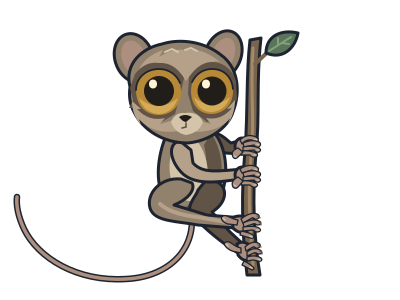
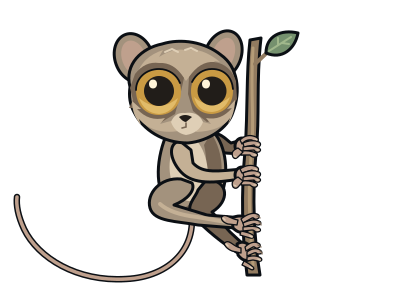
- Philippine tarsierEach eye is as big as its whole brain, and it can turn its head almost all the way round.
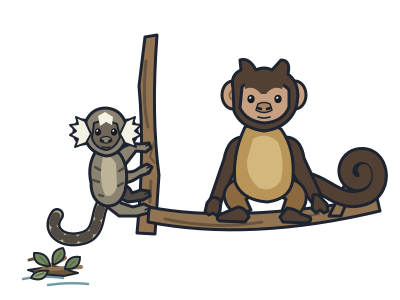
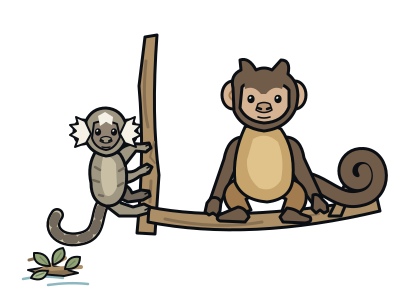
- New World monkeysTheir ancestors probably reached South America from Africa on floating vegetation.
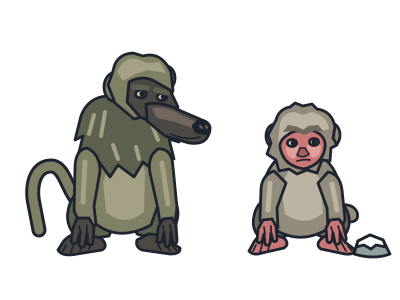
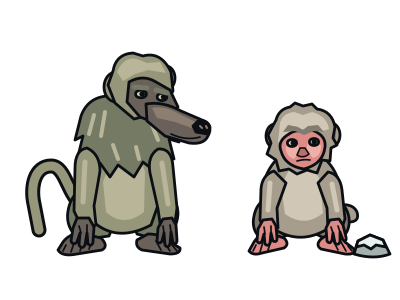
- Old World monkeysBaboons and macaques of Africa and Asia, closer to apes than New World monkeys are.
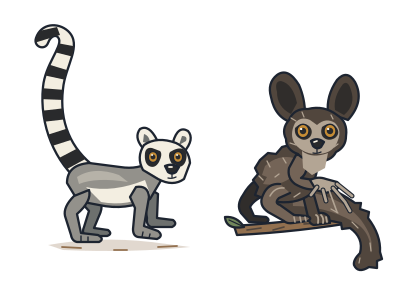
- Lemurs and lorisesWet-nosed primates: Madagascar's lemurs and the slow lorises of Asia.