A species
Lar gibbon
Hylobates lar
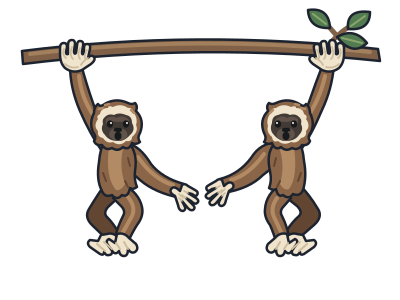
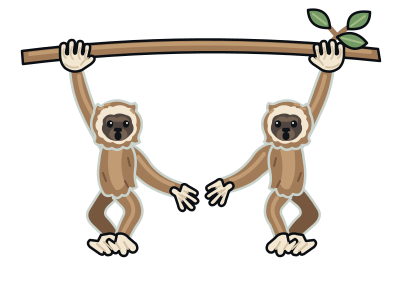
A small ape with speedy swings and a singing partner.
You and the lar gibbon meet in the Apes branch, shown at about 20 million years ago (on 30 December, in a calendar from life's shared ancestor to today).
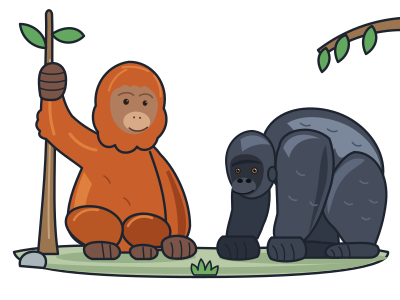
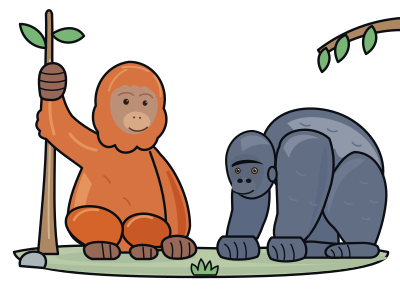
Compare with something elseCopenhagen Zoo reports swinging speeds of up to about 55 km/h for lar gibbons. They also sing duets with their mates. These small forest singers are apes, not monkeys. Living apes have two main branches: gibbons and great apes, including humans, gorillas and orangutans. Lar gibbons are one member of the gibbon branch. Their long arms and hook-like hands help them swing hand over hand beneath branches. Like other apes, they have no external tail.
Partners usually sing between sunrise and noon. During part of the duet, the female gives a distinctive call and the male answers. These songs help the pair maintain their relationship and announce their territory to neighbours. Families commonly include an adult pair and their young, but some groups have extra adults, and partners can change.
Lar gibbons live high in tropical forests across parts of Southeast Asia. Fruit makes up most of their diet, especially figs, alongside foods such as young leaves, flowers and insects. They are listed as Endangered: forest loss and capture for the illegal pet trade threaten their future.
Colour is no clue
Males and females can both have cream, brown or nearly black fur. Coat colour does not reliably tell them apart.
A handful of water
Lar gibbons have been observed cupping their hands to drink water from tree hollows.
Clinging close
Females usually have one baby at a time. Young babies cling closely to their mother.