An extinct species
Gigantopithecus †
Gigantopithecus blacki
An enormous orangutan relative, known mostly from teeth
Lived about 2.2–0.22 million years ago.
You and the gigantopithecus meet in the Great apes branch, shown at about 16 million years ago (on 30 December, in a calendar from life's shared ancestor to today).
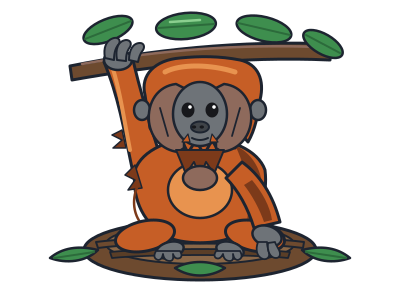
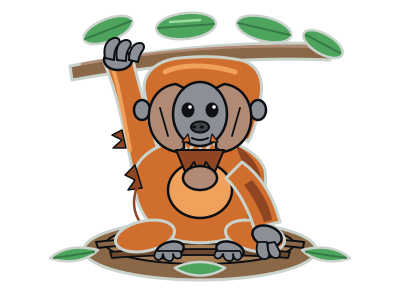
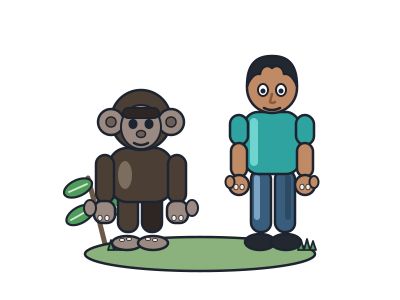
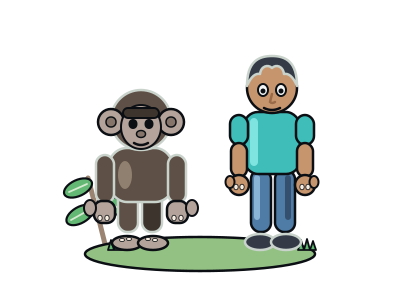
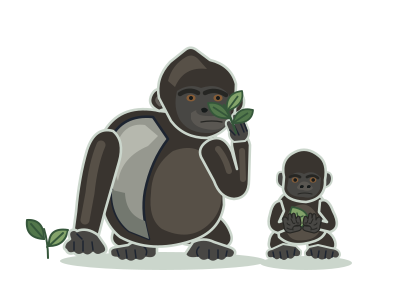
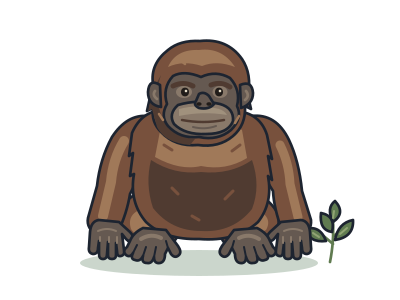
Compare with something elseThe largest ape known to science was an orangutan relative, not a giant human ancestor. It was often reconstructed at about three metres tall if upright—well above an adult person—but this was an estimate. Most of the evidence came from enormous teeth and heavy lower jaws, not a complete skeleton.
Its fossils dated from about 2.2 to 0.22 million years ago. It lived in rich, varied forests in what is now southern China. Its teeth suggested a plant-based diet that included fruit and tough food that needed plenty of chewing.
As seasonal changes grew stronger, those forests and their food supplies changed. Researchers inferred that it struggled to adjust, relying more on poorer-quality foods such as bark and twigs when fruit became scarce. Wear and chemical patterns in later teeth suggested a less varied diet and long-lasting stress. These clues helped researchers explain its decline; they did not reveal exactly how any one animal behaved.
Ancient clues inside a tooth
Researchers studied proteins preserved in the hard outer coating of a tooth about 1.9 million years old.
A wide-ranging investigation
An investigation into its extinction compared 22 caves in southern China and brought together 157 age estimates.
Borrowed hair
A reconstructed head at the University of Iowa Museum of Natural History used real orangutan hair. This was a modelling choice, not preserved hair from the extinct ape.