A group of living things
Fish on the way to land
Tetrapodomorpha
The fish family that includes us
This branch is shown at about 400 million years ago; its age is a rough estimate.
You are part of this group. See how.
Our family’s journey towards land began with fish. Wrist-like joints and movable necks appeared while these animals still lived in water. This branch includes extinct fish-like relatives and all living four-limbed animals, including us. Lungfish sit outside it: every member here is more closely related to us than to living lungfish.
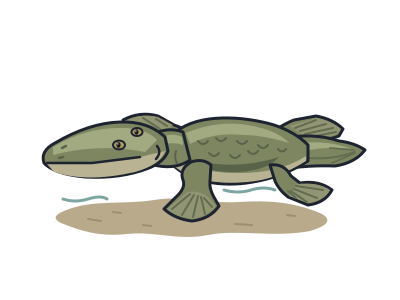
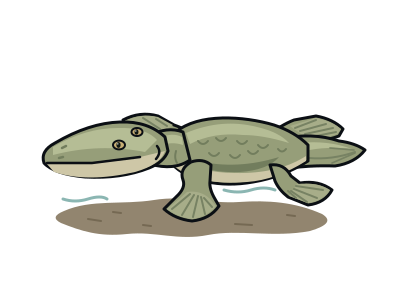
Tiktaalik lived about 375 million years ago. It still had scales, gills and fins, but its front fins held a familiar pattern: one upper-arm bone, two forearm bones and smaller wrist-like bones. These were fins, not hands with fingers. Its head was no longer joined directly to its shoulders, giving it a neck.
The shapes of its fin joints suggest it could brace against the bottom. That was not the same as walking across dry land. These fossils reveal different combinations of fish-like and limb-like features, not a proven ladder of direct ancestors leading to us. Lungs, too, were inherited from an aquatic ancestor shared with lungfish—not invented after animals reached land.
Eyes on top
Tiktaalik had two eyes on top of its flat head, rather than mainly on the sides.
Hips before hind legs
Tiktaalik had large, strong hip bones and a deep hip socket. Stronger rear supports were evolving before true hind legs appeared.
An Arctic home without ice
Tiktaalik fossils were found on Ellesmere Island in the Canadian Arctic. When it lived, the area was near the equator, with warm streams in a river delta.
Inside fish on the way to land
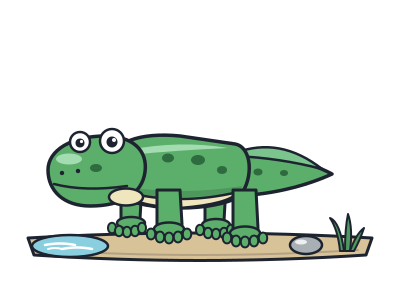
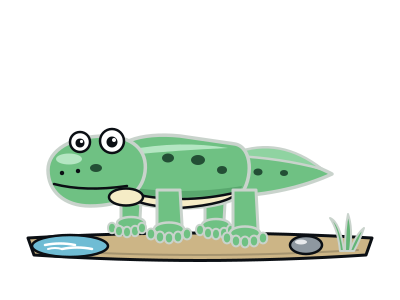
- Four-limbed animalsFish that walked: every frog, lizard, bird and mammal inherits their four limbs.
- EusthenopteronA fish whose fin bones match your arm bones: one upper bone, then two, then many.
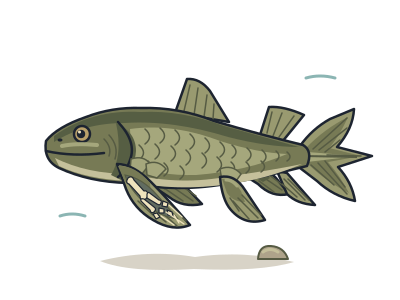
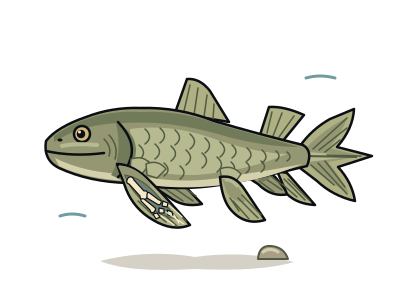
- TiktaalikA 'fishapod' with a neck, wrists and lungs, found in Arctic rocks where scientists predicted.
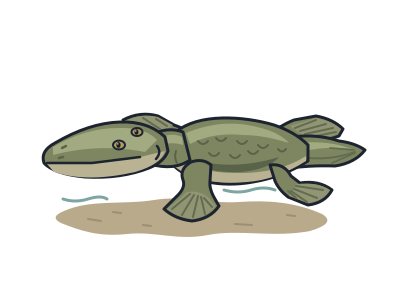
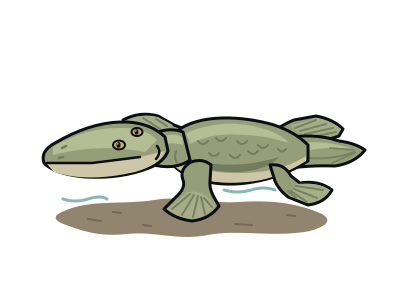
- AcanthostegaHad real legs with eight fingers, yet still lived in water and had gills.
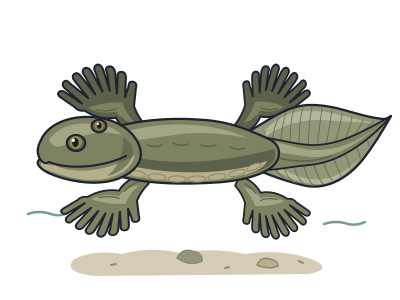
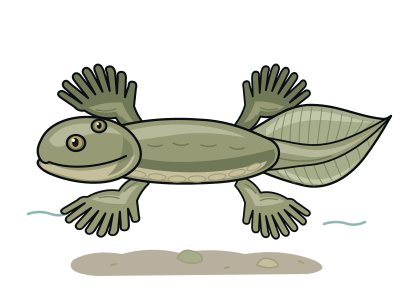
- IchthyostegaA seven-toed, seal-like animal that may have hauled itself across Devonian mudflats.
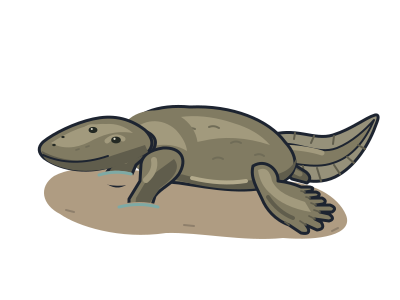
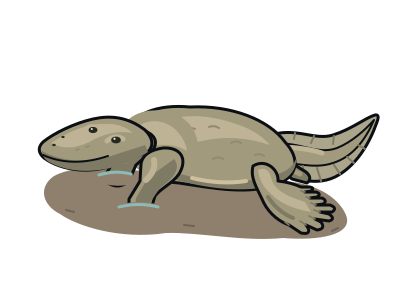
- PanderichthysA flat-headed, crocodile-like fish whose fins hide tiny finger-like bones.
- ElpistostegeA complete fossil fish from Canada with rows of finger bones inside its fin.
- GogonasusAn Australian fossil fish so perfectly preserved in 3D that you can see the arm bones in its fins.
Next to it on the tree
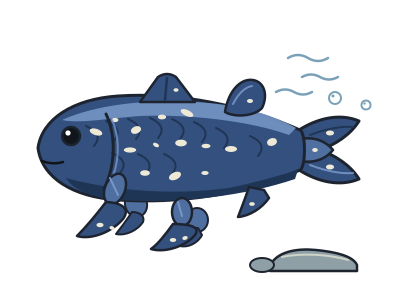
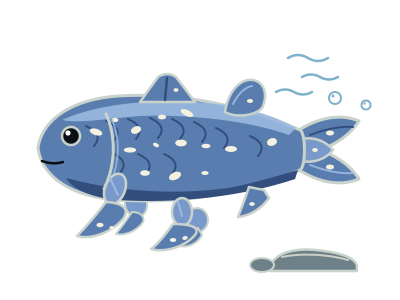
- CoelacanthThought extinct for 66 million years until one turned up in a fishing net in 1938.
- LungfishOur closest living fish relatives: they breathe air and some can survive years dried in mud.
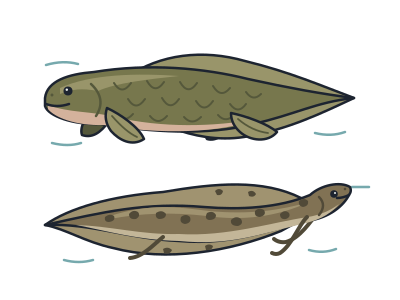
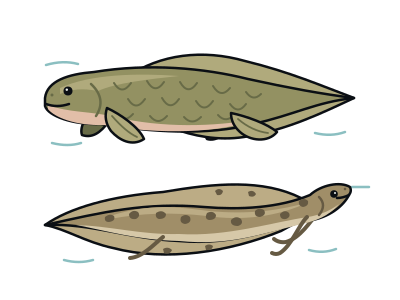
- DipterusA Devonian lungfish from Scotland, already crushing shells with tooth plates like today's lungfish.
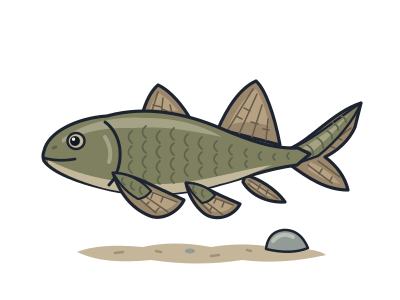
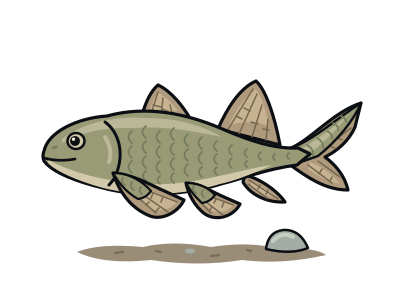
- MawsoniaA coelacanth as long as a car that swam the rivers of dinosaur-age Brazil and Africa.
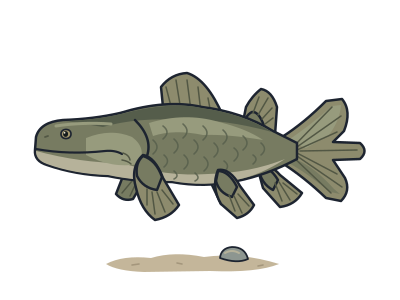
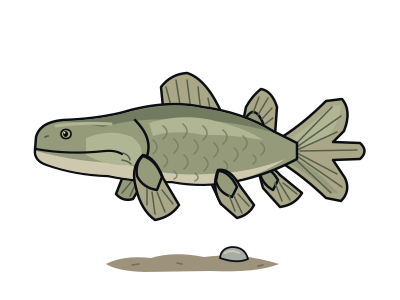
- Indonesian coelacanthA second living coelacanth, recognised in 1997 when a biologist on honeymoon spotted one in a Sulawesi market.
- RebellatrixA fork-tailed coelacanth built for speed, unlike its slow cousins, from just after the great Permian die-off.