An extinct species
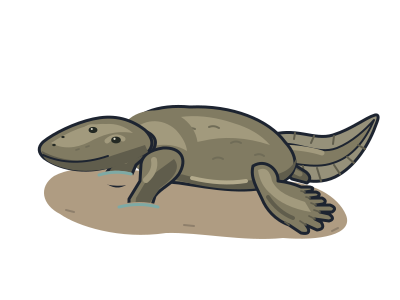
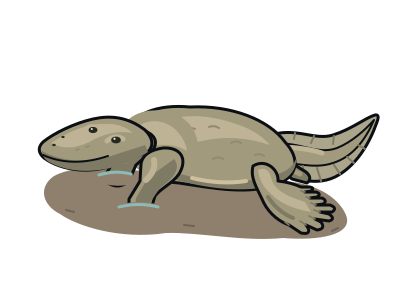
Tiktaalik †
Tiktaalik roseae
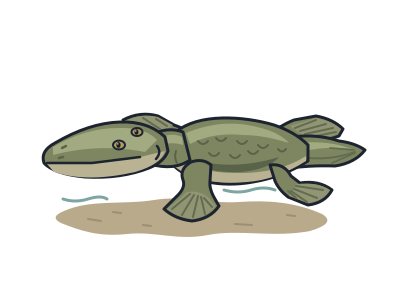
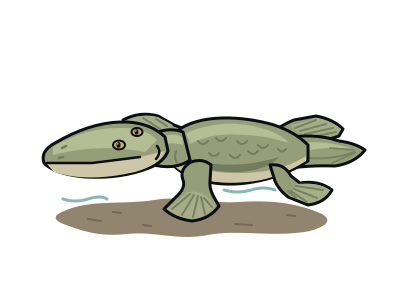
A fish with a neck and wrist-like joints, found in Arctic rocks where scientists predicted.
Lived about 375–372 million years ago.
You and the tiktaalik meet in the Fish on the way to land branch, shown at about 400 million years ago (on 27 November, in a calendar from life's shared ancestor to today).
A close relative of four-limbed animals, including humans, this fish had a neck, wrist-like joints and anatomy that suggested simple lungs. It lived about 375 million years ago. Its unusual mix of features helped explain how bodies suited to life on land began to take shape.
Fossil bones revealed a familiar pattern inside its front fins: one upper bone followed by two forearm bones, with elbow and wrist-like joints. That was the same basic arrangement as in our arms. Yet these were still fins, not hands or fingered feet. Its neck allowed its head to move separately from its shoulders.
The discovery followed a carefully planned search. Researchers deliberately searched northern Canada for rocks of the right age, formed in environments likely to hold a fish with such features. The fossils turned up on Ellesmere Island, in Canada’s Arctic. The prediction concerned the kind of animal and suitable rocks—not this exact species.
A name chosen with local elders
Its name was chosen in consultation with Inuit elders and referred to a large freshwater fish seen in the shallows.
Clues to its meals
Its broad, flattened head and sharp teeth suggested that it hunted in shallow water.
More than front fins
Fossils described in 2014 included a complete hip skeleton and a partly preserved hind fin.
Next to it on the tree
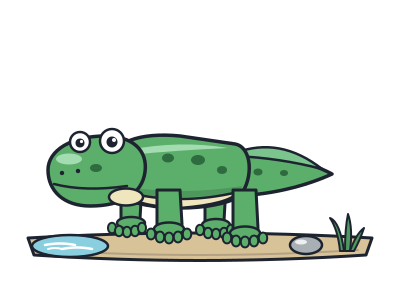
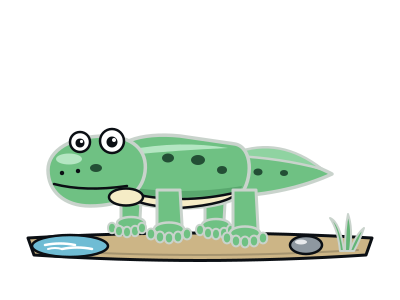
- Four-limbed animalsFish that walked: every frog, lizard, bird and mammal inherits their four limbs.
- EusthenopteronA fish whose fin bones match your arm bones: one upper bone, then two, then many.
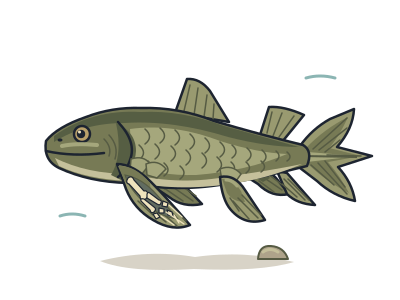
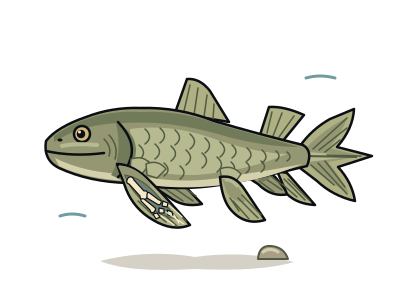
- AcanthostegaHad real legs with eight fingers, yet still lived in water and had gills.
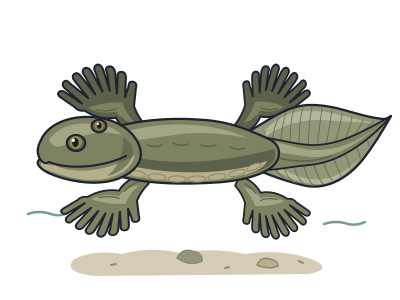
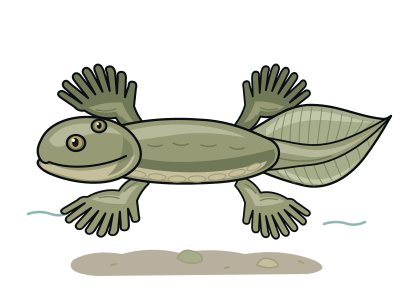
- IchthyostegaA seven-toed, seal-like animal that may have hauled itself across Devonian mudflats.
- PanderichthysA flat-headed, crocodile-like fish whose fins hide tiny finger-like bones.
- ElpistostegeA complete fossil fish from Canada with rows of finger bones inside its fin.
- GogonasusAn Australian fossil fish so perfectly preserved in 3D that you can see the arm bones in its fins.