An extinct species
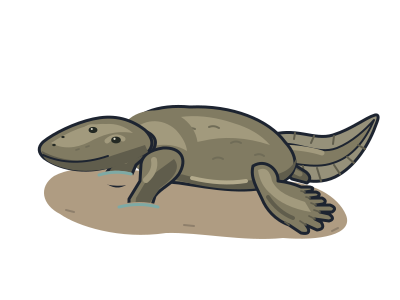
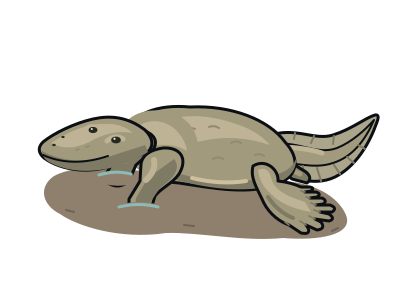
Ichthyostega †
Ichthyostega stensioei
Seven toes, and a possible seal-like shuffle
Lived about 365–360 million years ago.
You and the ichthyostega meet in the Fish on the way to land branch, shown at about 400 million years ago (on 27 November, in a calendar from life's shared ancestor to today).
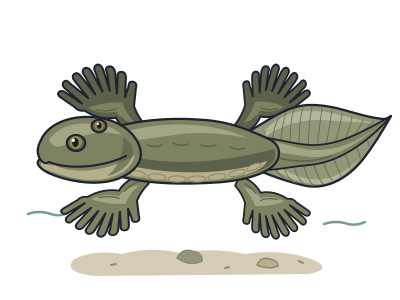
A seven-toed animal that may have moved rather like a seal, this creature belonged near the early branches leading towards frogs, birds and us. It was not a seal or a mammal. The comparison described one possible way it moved: pulling forwards with both front limbs together, with its rear following behind.
It lived about 365 to 360 million years ago, during the Late Devonian. Its fossils came from what became East Greenland. Rocks associated with this species recorded winding rivers and mud left when water spilled over their banks. This was an inland setting, not evidence of a seal-like life at sea.
Fossil bones showed limbs and a hind foot with seven toes. But having toes did not automatically mean it walked easily on land. Scientists reconstructed its movements from its skeleton; they did not observe it crossing a mudflat. It belonged among branching relatives between fin-bearing fishes and living four-limbed animals, rather than forming a proven step in a straight ladder towards us.
A barrel of ribs
Its broad ribs overlapped, forming a barrel-like support around its body.
A fish-like tail
Its tail retained a fin supported by bony rays.
An uneven set of toes
The preserved hind foot had three smaller toes along its leading edge and four stouter toes behind.
Next to it on the tree
- Four-limbed animalsFish that walked: every frog, lizard, bird and mammal inherits their four limbs.
- EusthenopteronA fish whose fin bones match your arm bones: one upper bone, then two, then many.
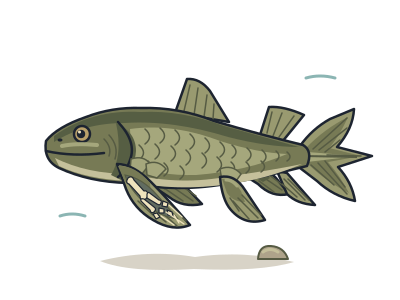
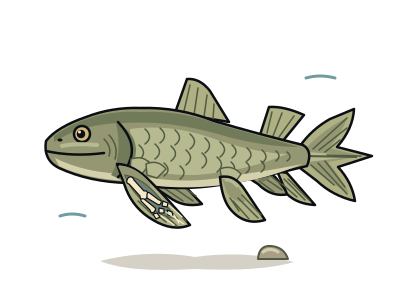
- TiktaalikA 'fishapod' with a neck, wrists and lungs, found in Arctic rocks where scientists predicted.
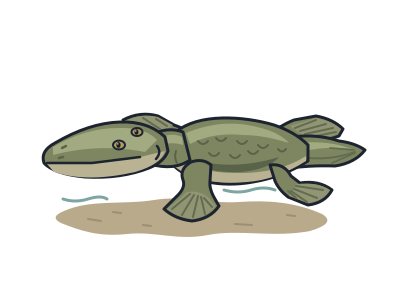
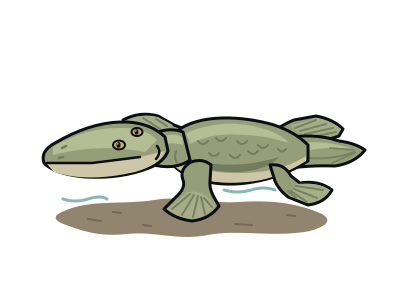
- AcanthostegaHad real legs with eight fingers, yet still lived in water and had gills.
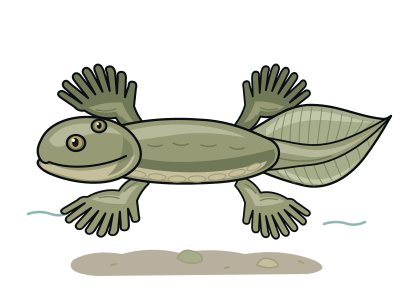
- PanderichthysA flat-headed, crocodile-like fish whose fins hide tiny finger-like bones.
- ElpistostegeA complete fossil fish from Canada with rows of finger bones inside its fin.
- GogonasusAn Australian fossil fish so perfectly preserved in 3D that you can see the arm bones in its fins.