A group of living things
Asgard archaea
Promethearchaeati (Asgardarchaeota)
Tiny mud microbes named after Norse gods, and probably the group your own family tree grew out of.
This branch is shown at about 2.8 billion years ago; its age is a rough estimate.
You are part of this group. See how.
Meet some of your most surprising relatives. Asgard archaea are tiny single cells, mostly found in places with little or no oxygen, such as sea-floor mud. Even so, their genes hold cell-building tools that scientists once thought only eukaryotes had. Eukaryotes are the group that includes animals, plants and fungi. The best evidence now suggests that eukaryotes grew out of the Asgard group, in the same way that birds sit inside the dinosaurs. That would mean our distant ancestor was one of them.
Scientists first read their genes in 2015, from mud near Loki's Castle, a field of deep-sea hot vents in the Arctic Ocean. That is why the group is named after Asgard, the home of the gods in Norse myths. Its subgroups are named after the gods Loki, Thor, Odin and Heimdall.
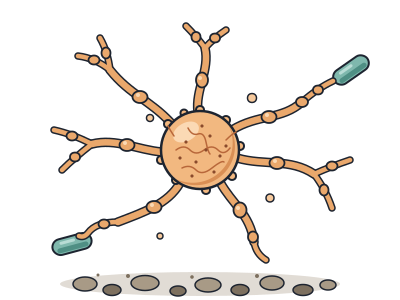
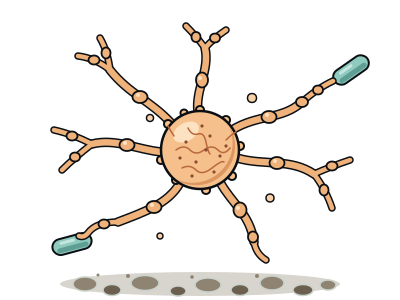
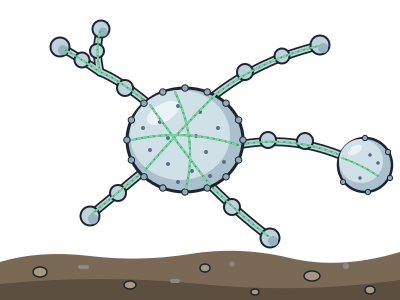
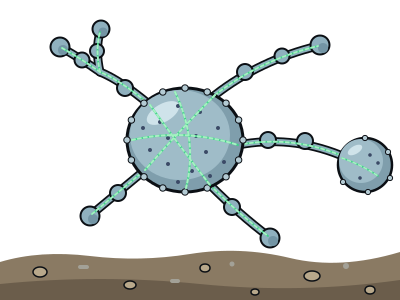
Their genes include instructions for proteins that bend and reshape the cell's outer skin. They also include relatives of the proteins that build the inner skeleton of our own cells. In one species, Loki's archaeon, scientists have actually seen thin threads of this kind running through the cell and out into its long, branching arms.
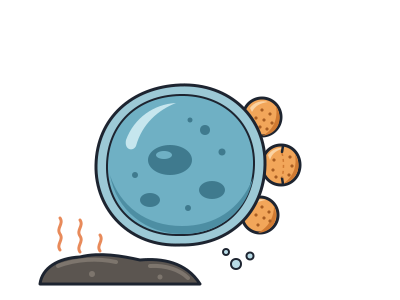
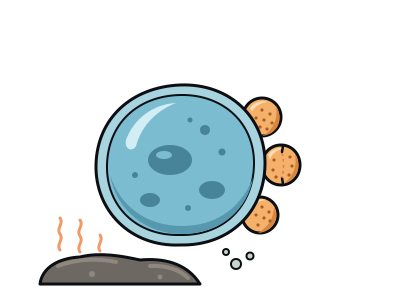
Today's Asgard archaea are our cousins, not our great-grandparents. They have kept evolving too. They still have no nucleus, and each round cell is about a thousandth of a millimetre across or smaller.
Twelve years to grow
The first Asgard archaeon ever grown in a lab, called Prometheoarchaeum, took scientists about 12 years to culture. It splits in two only once every 2 to 3 weeks. A common gut bacterium can do that about every 20 minutes.
Never alone
Prometheoarchaeum cannot survive by itself. It needs partner microbes living alongside it. It is named after Prometheus, the Greek god who gave fire to humans.
Hiding everywhere
Asgard archaea are not limited to one deep-sea vent. Scientists have detected their DNA in fresh water and soil, around plant roots and even in animals.
Inside asgard archaea
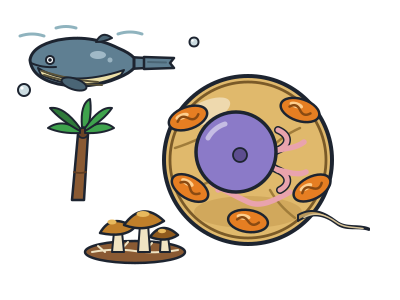
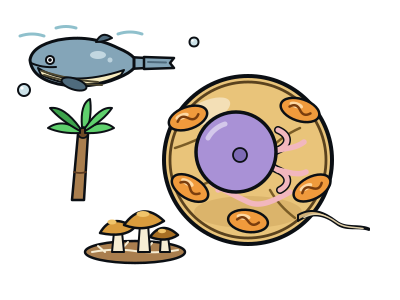
- EukaryotesLife with a nucleus and power-plant mitochondria (captured bacteria); includes every plant, fungus and animal.
- PrometheoarchaeumThe first Asgard archaeon grown in a lab, after 12 years of patience; it grows long tentacles to hug partner bacteria.
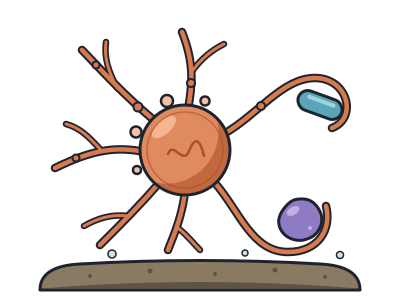
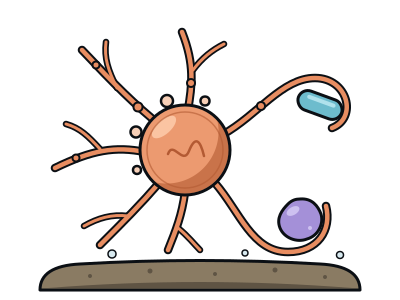
- Loki's archaeonGrown in 2022 from river mud, it has an inner skeleton of actin, the same protein that moves your muscles.
Next to it on the tree
- Methane-makers and salt-loversArchaea that make the methane in cow burps, turn salt ponds pink, or grow hotter than boiling water.
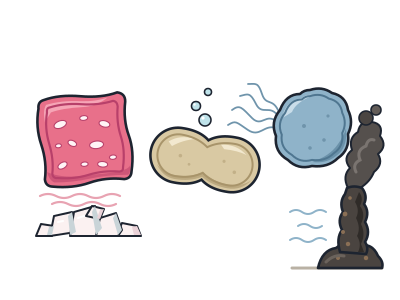
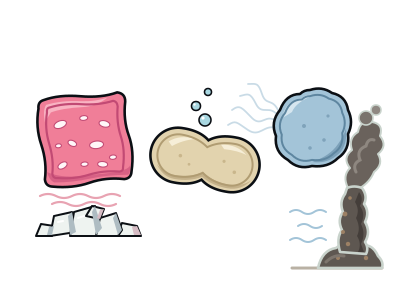
- Hot-spring and ocean archaeaFrom boiling acid springs to the open ocean, these archaea thrive where you would least expect.
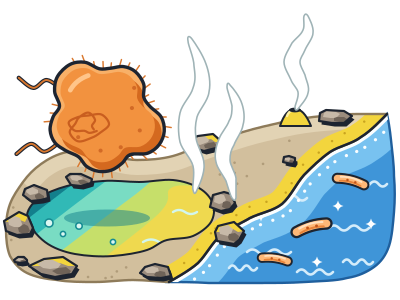
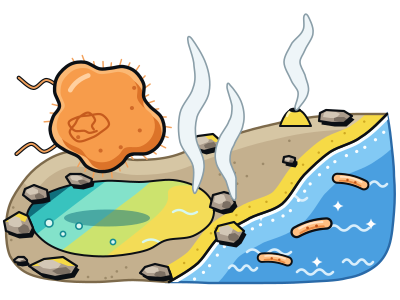
- DPANN archaeaMostly tiny archaea with pared-down genomes that often live by leaning on a bigger neighbour.