A group of living things
Hot-spring and ocean archaea
Thermoproteota
Tiny cells that thrive in near-boiling acid and in the cold, dark sea
This branch is shown at about 2.6 billion years ago; its age is a rough estimate.
You and hot-spring and ocean archaea meet in the Archaea branch, shown at about 3.3 billion years ago (on 20 March, in a calendar from life's shared ancestor to today).
Some of these tiny cells live in pools of near-boiling acid. Others drift in cold, dark seawater far from any volcano. Yet they all belong to one branch of the archaea. Archaea are single cells that look a bit like bacteria under a microscope, but they form a separate domain of life. On this tree, this branch sits beside other archaea, such as the methane-makers and salt-lovers and the Asgard archaea.
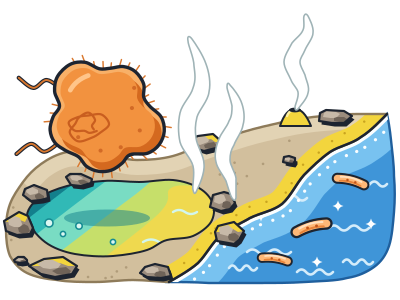
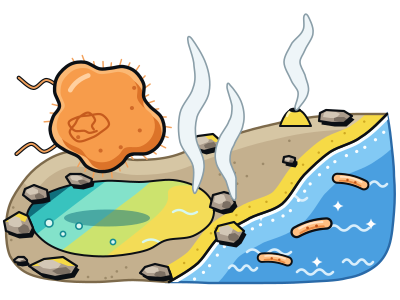
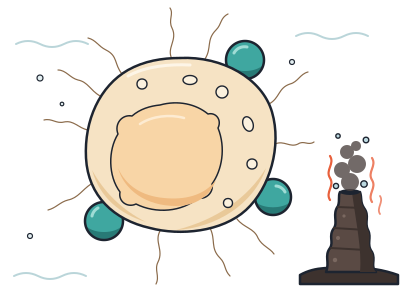
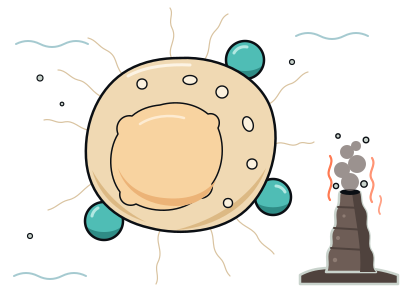
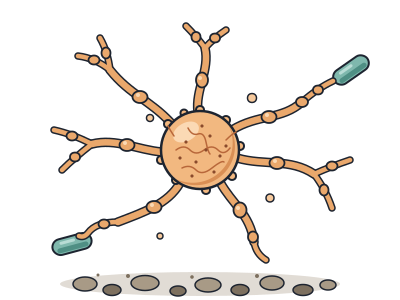
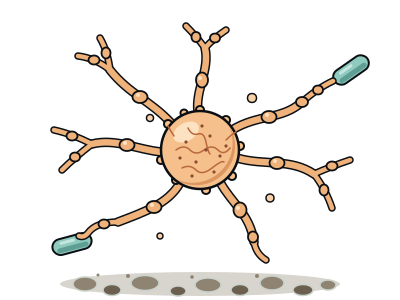
In volcanic springs, such as those in Yellowstone in the USA, lives a lumpy, lobed cell called Sulfolobus. It grows best at about 75 to 80 °C in very acidic water. It can get energy from sulfur and swims with whip-like tails. The thin film around its cell is mostly a single layer of unusual fat-like molecules, not the double layer most cells have. This helps it survive heat and acid.
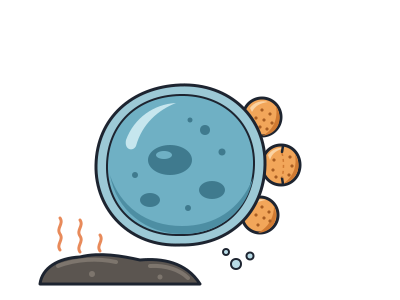
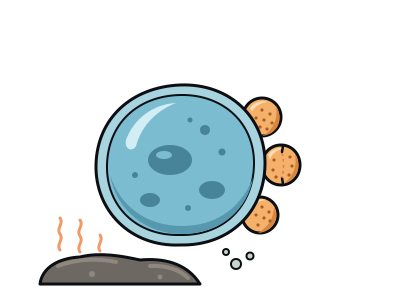
Out in the ocean lives the ocean ammonia-eater, a slim rod about five times narrower than Sulfolobus. It is one of the smallest known living things. It turns ammonia into nitrite, a key first step in the nitrogen cycle. It can do this even when there is hardly any ammonia around.
For a long time, archaea were mostly known from extreme places like hot springs and very salty water. So researchers were surprised to find huge numbers of these archaea in the ordinary open ocean.
Tougher than a steriliser
One member, described in 1996 from a deep-sea vent in the Atlantic, can grow at up to 113 °C. It can even survive an hour at 121 °C inside a machine used to sterilise lab equipment.
Found in an aquarium
The ocean ammonia-eater was first grown in a lab in 2005. Scientists took it from the gravel or sediment of a tropical tank at the Seattle Aquarium.
A window into our own cells
Scientists study how Sulfolobus copies its DNA because its system is a simpler version of the one used by plants, animals and fungi.
Inside hot-spring and ocean archaea
- SulfolobusLives in hot springs as acidic as lemon juice and nearly as hot as boiling water.
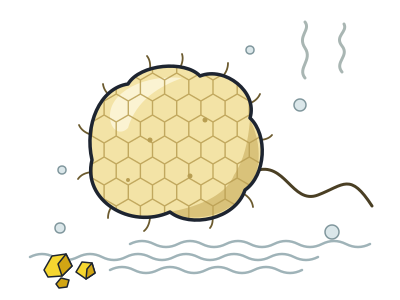
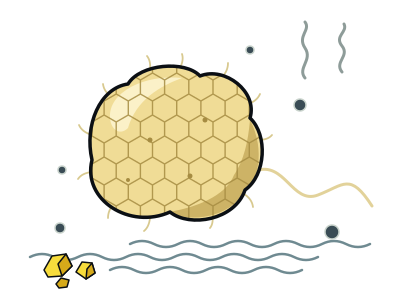
- Ocean ammonia-eaterAmong the most common cells in the sea, quietly turning ammonia into nitrite and recycling nitrogen.
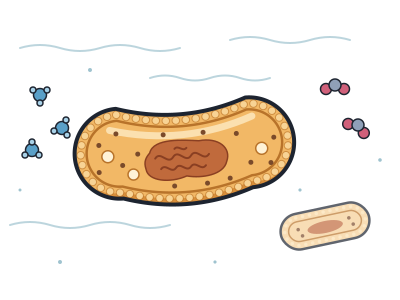
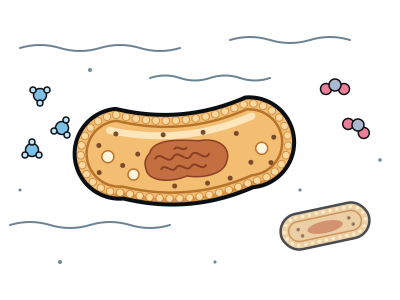
- IgnicoccusThe host archaeon that carries Nanoarchaeum on its surface, in vents near boiling point.
Next to it on the tree
- Methane-makers and salt-loversArchaea that make the methane in cow burps, turn salt ponds pink, or grow hotter than boiling water.
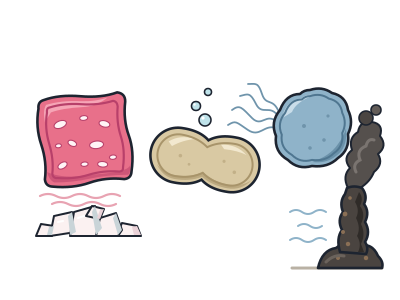
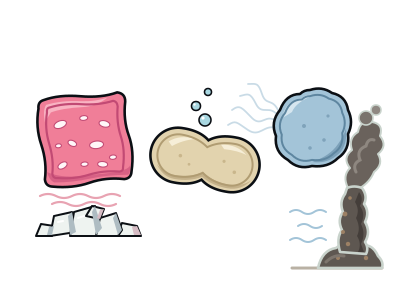
- Asgard archaeaNamed after Norse gods, these archaea carry cell-building genes once thought unique to us; our ancestor was one of them.
- DPANN archaeaMostly tiny archaea with pared-down genomes that often live by leaning on a bigger neighbour.