A species
Sulfolobus
Sulfolobus acidocaldarius
A microbe that loves hot springs as sour as lemon juice and nearly as hot as boiling water.
You and the sulfolobus meet in the Archaea branch, shown at about 3.3 billion years ago (on 20 March, in a calendar from life's shared ancestor to today).
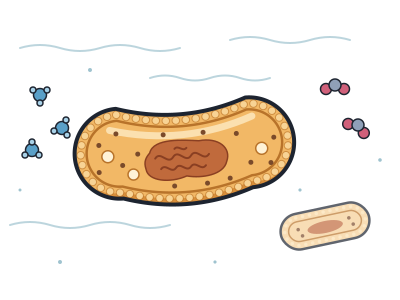
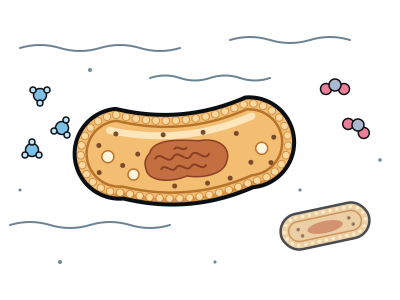
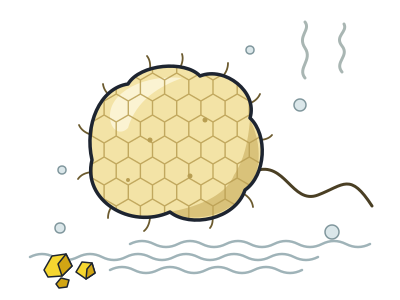
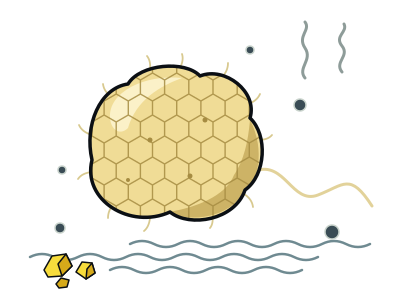
Picture a steaming, muddy pool as sour as lemon juice and hot enough to scald your skin. Most living things would die there, but this tiny microbe does well. It grows best at about 75 to 80 °C, not far below boiling.
It looks like a bacterium, but it is not one. It belongs to the archaea, a separate great branch of life. On the tree it sits beside a relative that eats ammonia in the ocean, so this branch of archaea includes life in both scalding springs and the open sea.
Here is the surprise. Some of the tools it uses to copy its DNA are more like those of animals, plants and fungi than those of bacteria. To split in two, it uses proteins related to ones our own cells use at the very end of cell division. It is not our ancestor, but this distant relative helps scientists learn how our kind of cell works.
How does it survive? The thin skin around its insides, called the membrane, is made of unusual, tough fats that stand up to heat and acid. It also keeps the inside of the cell far less acidic than the water outside. It can feed on ready-made food in the water, and it was first described as able to live on sulfur too. Microbes like it turn sulfur into sulfuric acid, which helps break rock down into mud.
Sticky when sunburnt
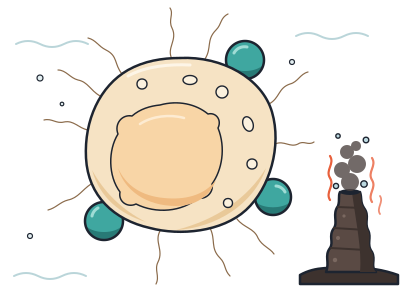
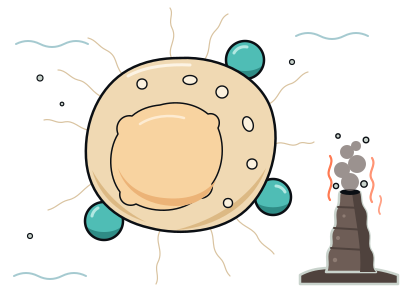
When ultraviolet light damages it, it grows sticky hairs. The cells clump together and swap DNA, which helps them repair the damage.
Never-before-seen viruses
In Congress Pool in Yellowstone, scientists found Sulfolobus microbes infected by viruses unlike any that had been known before.
Named in 1972
It was the first Sulfolobus species ever described. Thomas Brock and his colleagues named it in 1972, using samples from acidic hot springs in Yellowstone and a few other volcanic places.