A group of living things
Mammals and their ancestors
Synapsida
Our family before the dinosaurs
This branch is shown at about 315 million years ago; its age is a rough estimate.
You are part of this group. See how.
Long before dinosaurs became widespread, sail-backed and tusked members of our wider family dominated communities of land animals with backbones. This family is still here: humans, kangaroos, platypuses and every other living mammal belong to it. Its sister branch contains reptiles, including birds.
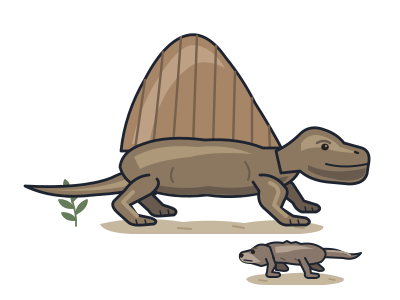
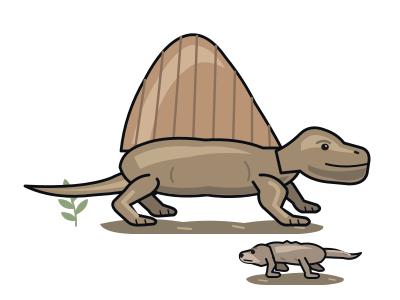
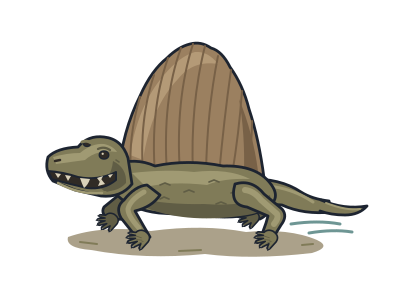
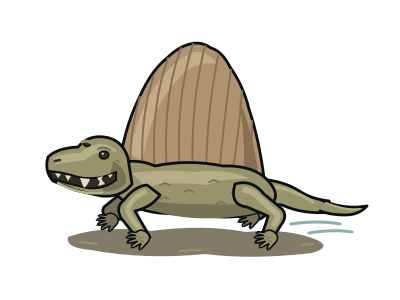
Dimetrodon looked rather like a large lizard with a sail on its back. Yet it was more closely related to you than to any dinosaur. Some species lived nearly 300 million years ago. Fossil bones show the long projections from its backbone that supported the sail.
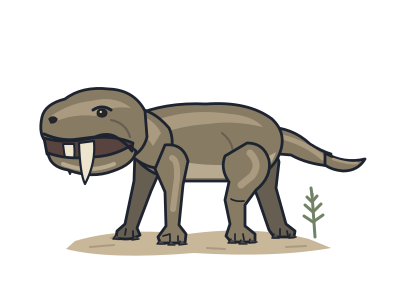
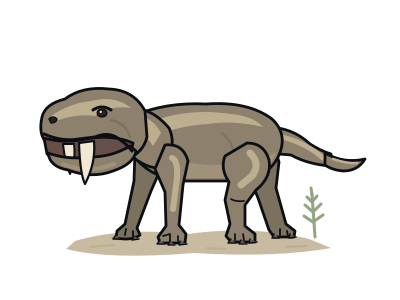
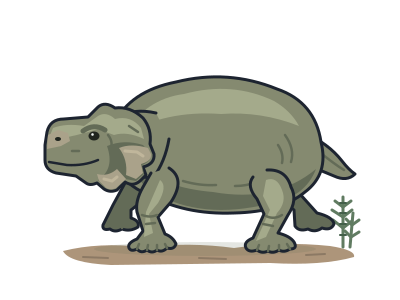
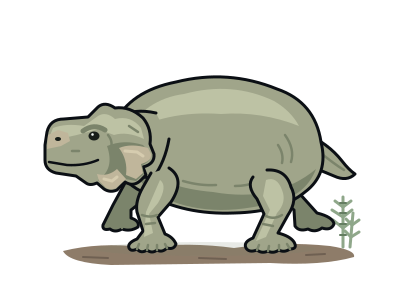
Other relatives, called dicynodonts, often had a turtle-like beak and two projecting upper teeth. They were mammal relatives, not turtles. The family included both plant-eaters and predators, rather than one shared way of life. Nor were these extinct relatives automatically our direct ancestors: this was a branching family, not a straight line leading to humans.
A clue behind the eyes
One opening behind each eye socket is an important family clue. It is associated with jaw muscles, and modified versions occur in human skulls.
From jaws to ears
Fossils show how some bones that once helped form the jaw became tiny bones in the mammalian middle ear.
The first true tusks
The earliest known true tusks belonged to dicynodonts. But not every projecting tooth in this group was a continuously growing tusk.
Inside mammals and their ancestors
- MammalsFur and milk: from egg-laying platypuses to us.
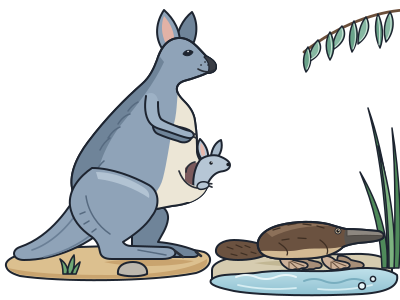
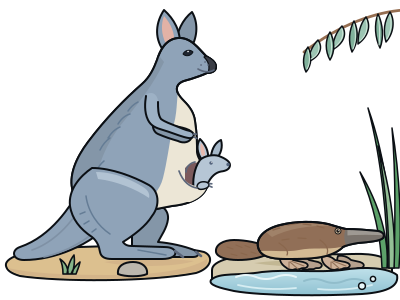
- DimetrodonIts huge back sail looks dinosaur-like, but it is closer to you than to any dinosaur.
- LystrosaurusA tusked plant-eater that survived the end-Permian extinction and became abundant in parts of southern Africa.
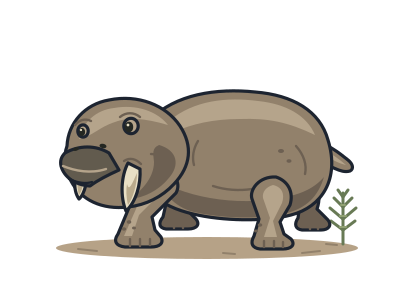
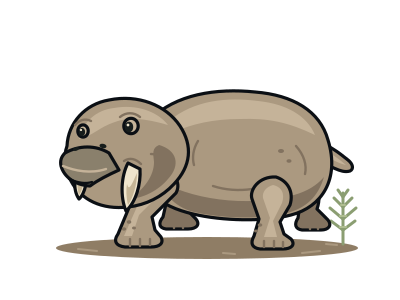
- ThrinaxodonA cat-sized mammal relative with different-shaped teeth and fossils preserved inside burrows.
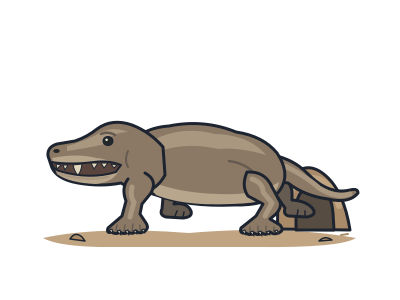
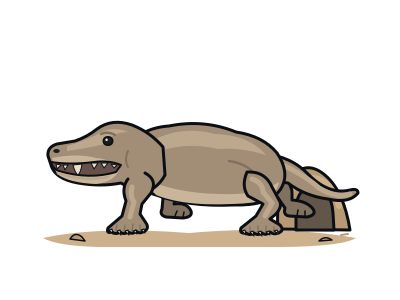
- InostranceviaA bear-sized sabre-toothed gorgonopsian, top predator just before the great Permian die-off.
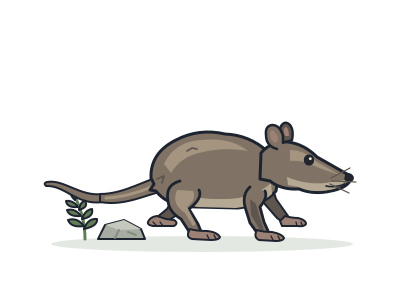
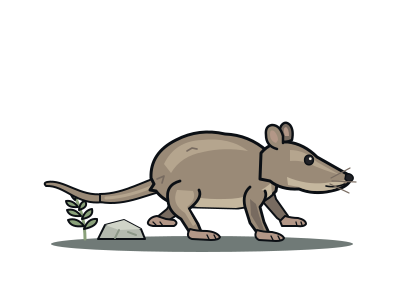
- MorganucodonA shrew-sized night hunter, one of the first mammal-like animals with a mammal jaw joint.
- MoschopsA barrel-chested plant-eater with a skull bone thick enough for head-pushing contests.
- CynognathusA wolf-sized "dog jaw" hunter whose fossils on several continents helped confirm drifting continents.
- CastorocaudaA Jurassic swimmer with a flat beaver-like tail, proving early mammal cousins were not all tiny shrews.
Next to it on the tree
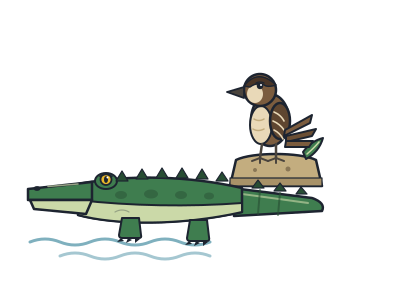
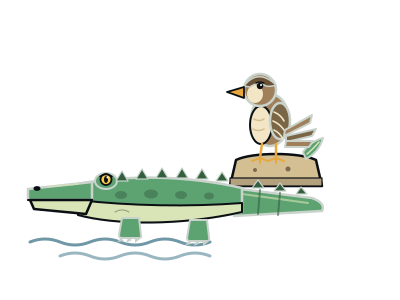
- Reptiles and birdsBirds belong here: a sparrow is a closer relative of a crocodile than a crocodile is of a lizard.
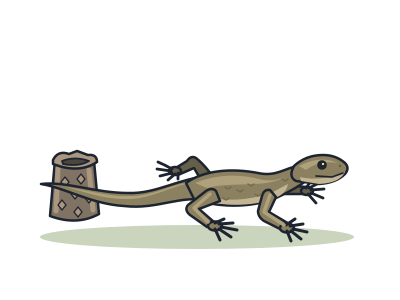
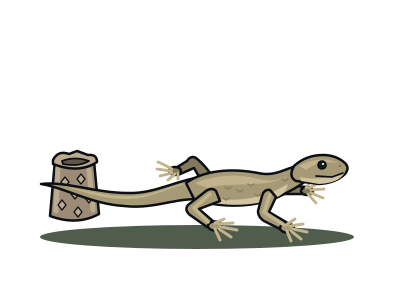
- HylonomusLong described as an early reptile, this small animal was found inside fossil tree stumps in Nova Scotia.
- ScutosaurusA cow-sized, bony-plated plant-eater that lived just before the Permian mass extinction.
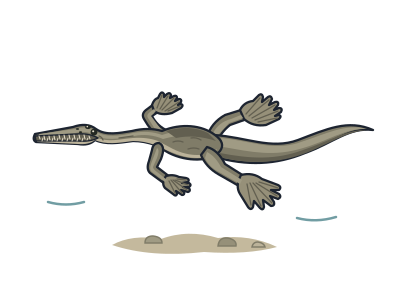
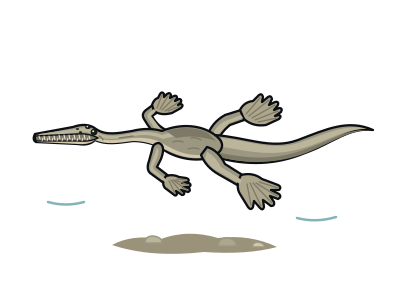
- MesosaurusA small swimming reptile found in both Africa and South America, evidence the continents were joined.