An extinct species
Scutosaurus †
Scutosaurus karpinskii
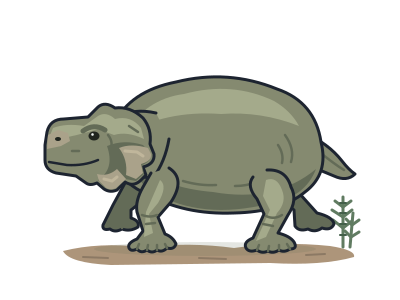
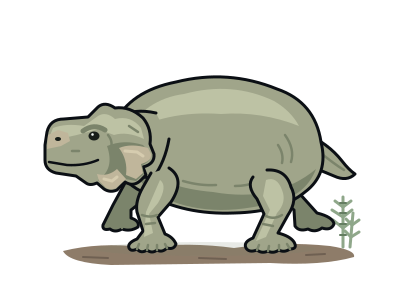
A cow-sized plant-eater with a bumpy, bony skull.
Lived about 259–252 million years ago.
You and the scutosaurus meet in the Amniotes branch, shown at about 320 million years ago (on 4 December, in a calendar from life's shared ancestor to today).
This cow-sized plant-eater lived before the Permian mass extinction. It lived within a broad time window of about 259 to 252 million years ago. Despite its cattle-like bulk, it belonged to an extinct branch on the reptile side of the family tree, not the line leading to cows. Its group was called the pareiasaurs.
Fossil skeletons showed a broad, barrel-shaped body, a short neck and tail, and four stout legs. Its broad skull carried prominent bony bumps around the cheeks and snout. Flattened, leaf-shaped teeth provided evidence of a plant diet. The bones revealed its sturdy shape, but not its living colours.
Its remains came from European Russia. They included complete skeletons and separate bones from animals of different sizes, giving researchers more than a single snapshot of its build. These remains helped scientists reconstruct its appearance, although details such as the amount of flesh around the skeleton still had to be estimated.
Surprisingly porous bones
Despite its bulky build, the bones studied had porous interiors and thin outer walls.
Growth with pauses
Bone structure suggested that it grew quickly when young, with pauses along the way. Growth appeared to slow at about three-quarters of the largest known body length.
A widespread family
Its pareiasaur relatives lived in places now called Russia, China and South Africa.
Next to it on the tree
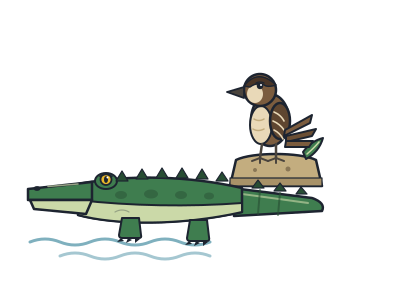
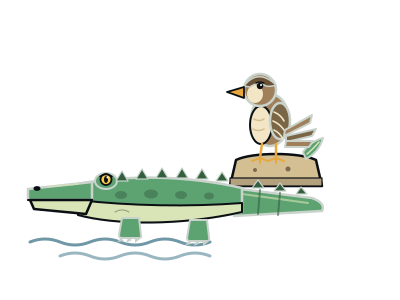
- Reptiles and birdsBirds belong here: a sparrow is a closer relative of a crocodile than a crocodile is of a lizard.
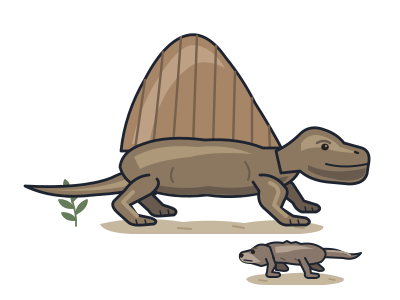
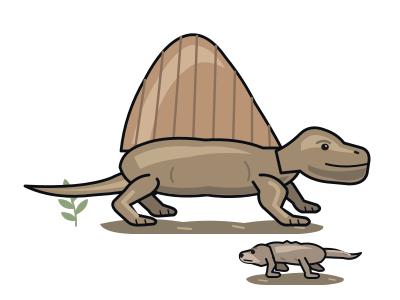
- Mammals and their ancestorsLong before dinosaurs, our sail-backed and tusked forerunners ruled the land.
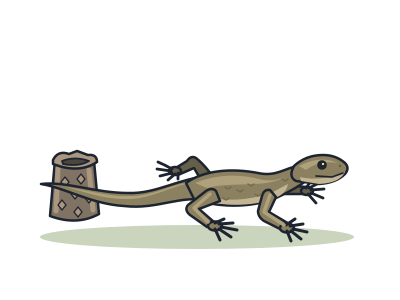
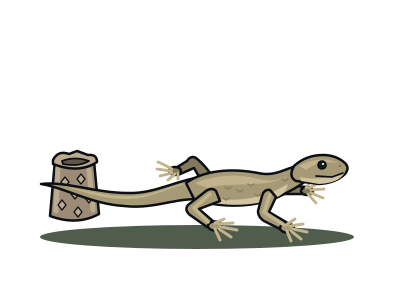
- HylonomusLong described as an early reptile, this small animal was found inside fossil tree stumps in Nova Scotia.
- MesosaurusA small swimming reptile found in both Africa and South America, evidence the continents were joined.