A group of living things
Lobe-finned fish
Sarcopterygii
Fish with limb-like fins that led to four-limbed animals
This branch is shown at about 410 million years ago; its age is a rough estimate.
You are part of this group. See how.
This group holds a surprise: you belong in it. Its fish members have fleshy fins with bone and muscle inside, shaped a bit like limbs. From fish like these came four-limbed animals, the line that walked onto land and includes frogs, whales and humans.
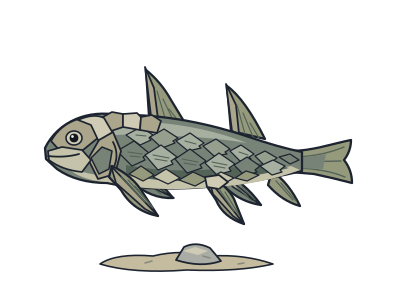
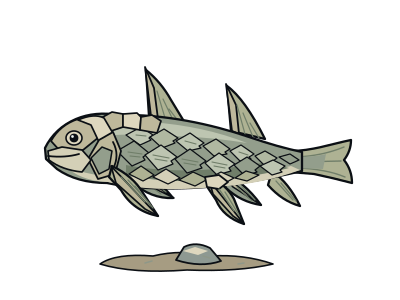
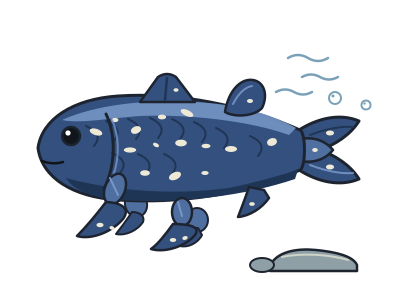
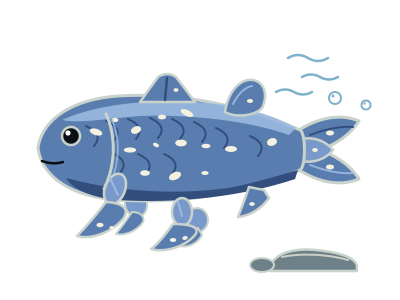
Only a few fish members are still swimming today. Coelacanths are large sea fish that rest in deep caves by day and hunt at night. Lungfish live in warm rivers and swamps and can breathe air.
Coelacanths were thought to have vanished with the dinosaurs, until one was found on a fishing boat in 1938. Some lungfish can live through dry times buried in damp mud, breathing air until the water returns.
Hard teeth
The fish in this group have enamel on their teeth.
Own spot pattern
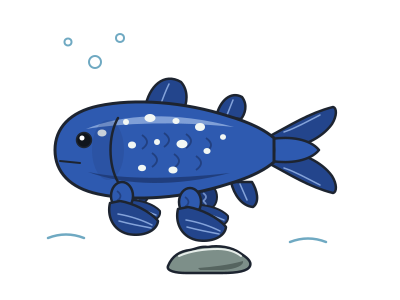
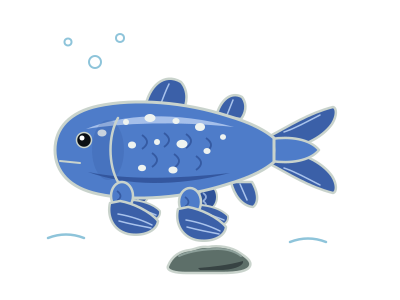
Each African coelacanth has its own pattern of white spots, different on every fish.
Three homes
Living lungfish fall into three groups, with one group each in Australia, Africa and South America.
Inside lobe-finned fish
- CoelacanthThought extinct for 66 million years until one turned up in a fishing net in 1938.
- LungfishOur closest living fish relatives: they breathe air and some can survive years dried in mud.
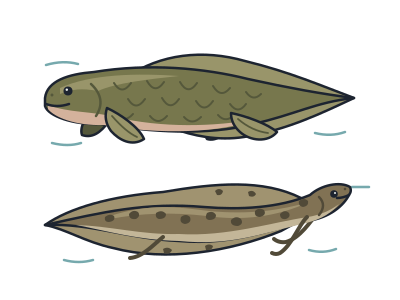
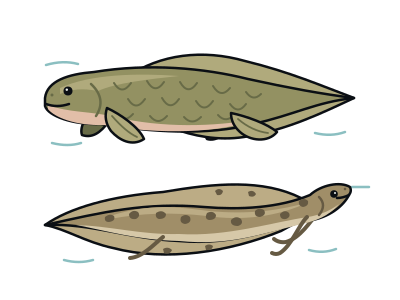
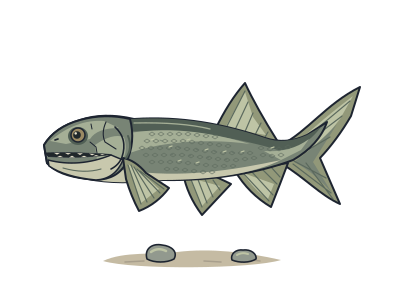
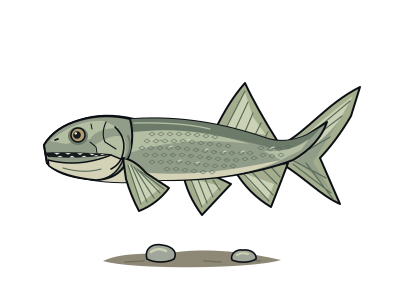
- DipterusA Devonian lungfish from Scotland, already crushing shells with tooth plates like today's lungfish.
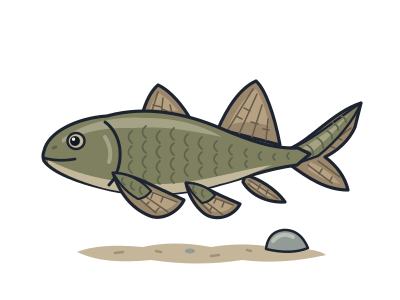
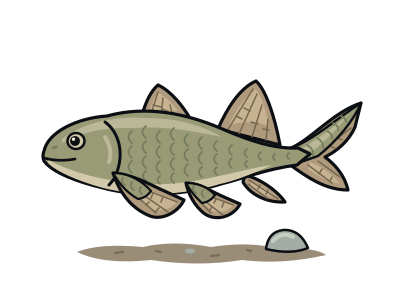
- MawsoniaA coelacanth as long as a car that swam the rivers of dinosaur-age Brazil and Africa.
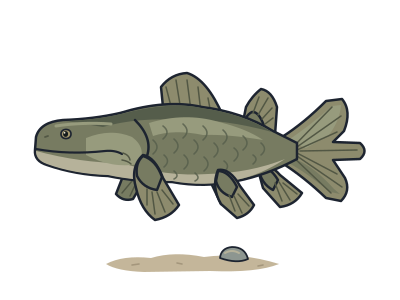
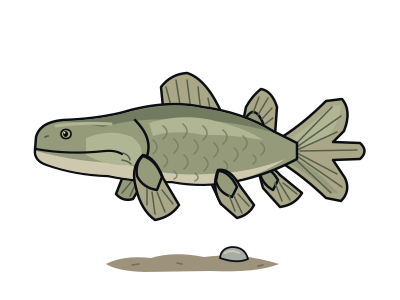
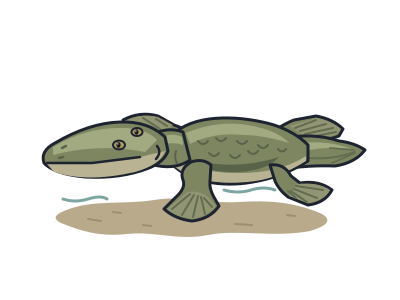
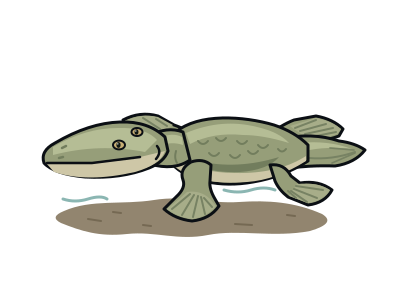
- Fish on the way to landFish that grew wrists, necks and lungs, step by step, until some walked out of the water.
- Indonesian coelacanthA second living coelacanth, recognised in 1997 when a biologist on honeymoon spotted one in a Sulawesi market.
- RebellatrixA fork-tailed coelacanth built for speed, unlike its slow cousins, from just after the great Permian die-off.