An extinct species
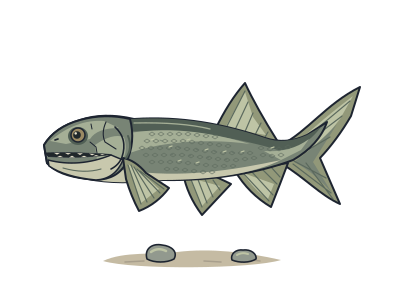
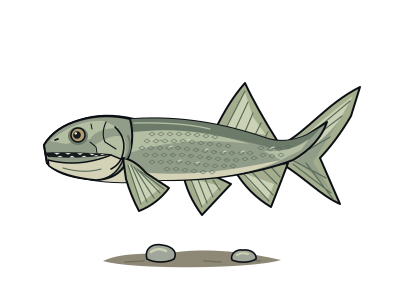
Cheirolepis †
Cheirolepis trailli
A tiny-scaled predator from an early ray-finned branch
Lived about 390–380 million years ago.
You and the cheirolepis meet in the Bony fish and their descendants branch, shown at about 430 million years ago (on 24 November, in a calendar from life's shared ancestor to today).
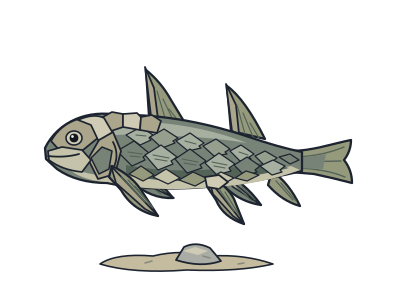
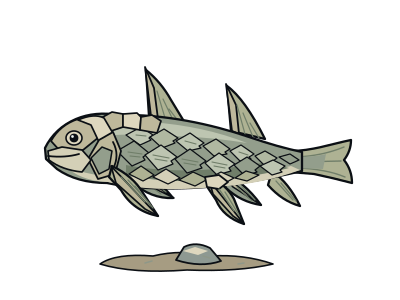
This Devonian predator wore tiny, diamond-shaped scales and belonged to one of the earliest clearly identified ray-finned fish groups. It was an early relative of living ray-finned fishes, not a proven direct ancestor. Its branch lay outside the group containing all living ray-finned fishes.
It lived about 390 to 380 million years ago, in lakes in what is now northern Scotland, including Orkney. These lakes were fed by streams in a hot climate. One museum specimen measured about 25 centimetres long, and reported lengths reached about 30 centimetres—roughly a school ruler.
Fossils showed an elongated body, an uneven tail and rows of sharp teeth in both jaws. Its little scales fitted together with pegs and sockets, like tiny interlocking tiles. Researchers interpreted its anatomy as evidence of a fish-eating hunter. Particular prey, such as small lungfish, remained suggestions rather than meals confirmed by the research.
A shiny covering
A thin, enamel-like coating covered its scales and outer skull bones.
An early mix-up
Its small scales initially led researchers to group it with spiny fishes. Its skull, shoulder and fins later revealed its ray-finned relationships.
Hidden details
Modern scans revealed previously hidden details of the bony case around its brain and the internal supports of its chest fins.