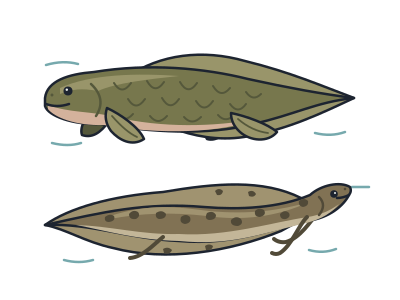
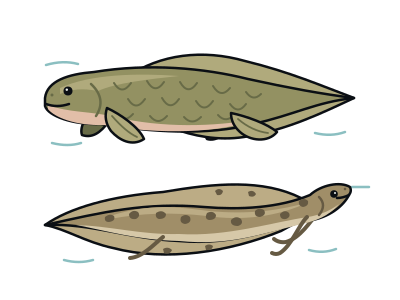
A group of living things
Lungfish
Dipnoi
Our closest living fish relatives breathe air
This branch is shown at about 225 million years ago; its age is a rough estimate.
You and lungfish meet in the Lobe-finned fish branch, shown at about 410 million years ago (on 26 November, in a calendar from life's shared ancestor to today).
Lungfish are our closest living fish relatives, and some can survive years inside dried mud. They are more closely related to humans and other four-limbed animals than coelacanths are. Their lungs and ours are inherited versions of the same ancestral organ. Living lungfish are relatives of our ancestral line, not unchanged copies of our ancestors.
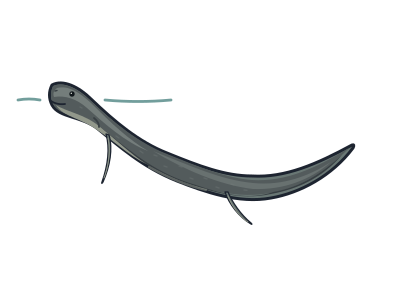
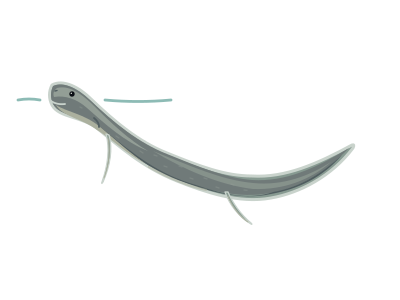
Not all lungfish breathe in the same way. Australian lungfish normally use their gills to take oxygen from water. When oxygen runs low, they can surface for air. African lungfish need access to air even when surrounded by water: their gills alone cannot keep them alive.
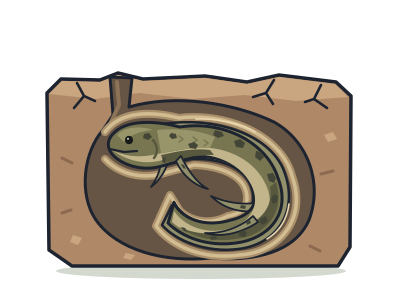
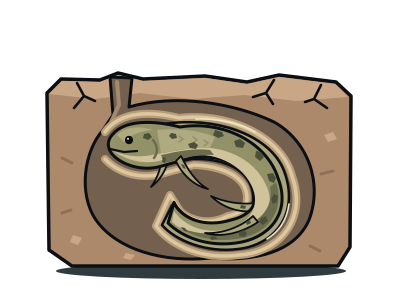
When seasonal waters disappear, West African lungfish retreat into mud. They make a protective cocoon from slime, leaving an opening for breathing air. The usual wait for water lasts months, though some can survive years in this resting state. Australian lungfish cannot do this. They do not make drought-survival cocoons and cannot endure prolonged drying.
Six living species
There are six recognised living lungfish species: four African, one South American and one Australian. This tree shows three selected species.
One lung or two?
Australian lungfish have one lung. African and South American lungfish have two.
An electrical sense
Australian lungfish can detect weak electrical signals to help find hidden prey.
Inside lungfish
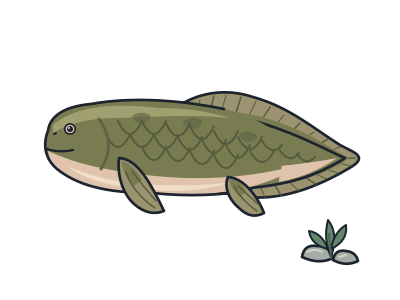
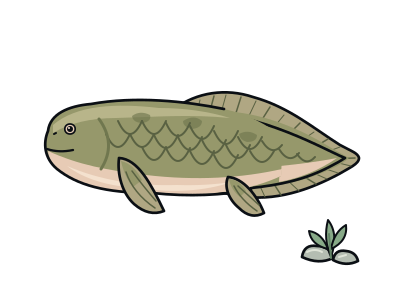
Next to it on the tree
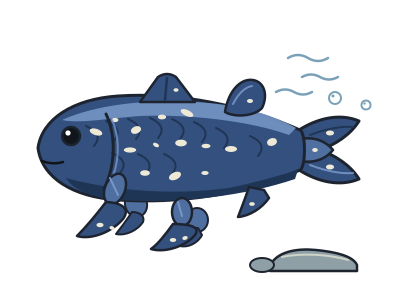
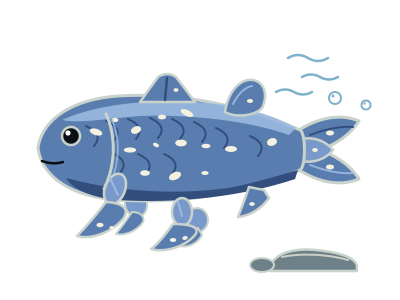
- CoelacanthThought extinct for 66 million years until one turned up in a fishing net in 1938.
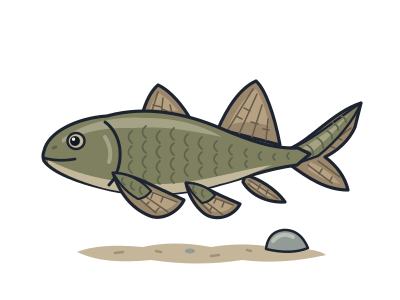
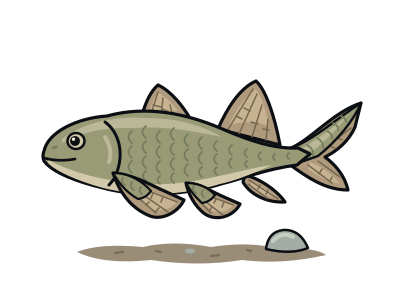
- DipterusA Devonian lungfish from Scotland, already crushing shells with tooth plates like today's lungfish.
- MawsoniaA coelacanth as long as a car that swam the rivers of dinosaur-age Brazil and Africa.
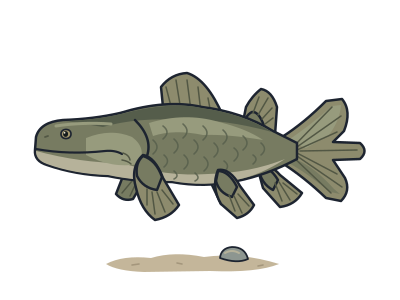
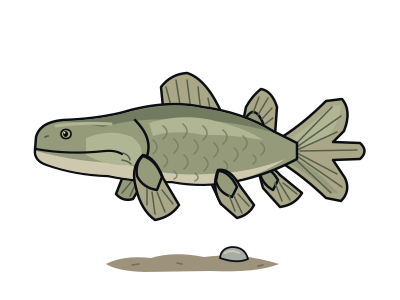
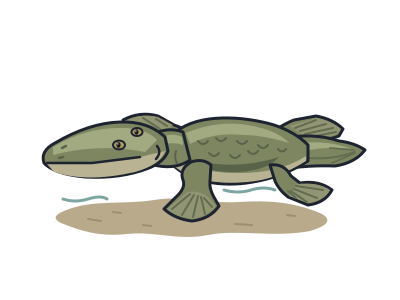
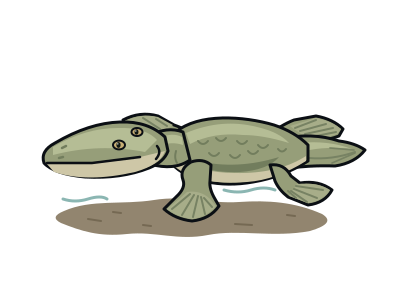
- Fish on the way to landFish that grew wrists, necks and lungs, step by step, until some walked out of the water.
- Indonesian coelacanthA second living coelacanth, recognised in 1997 when a biologist on honeymoon spotted one in a Sulawesi market.
- RebellatrixA fork-tailed coelacanth built for speed, unlike its slow cousins, from just after the great Permian die-off.