A species
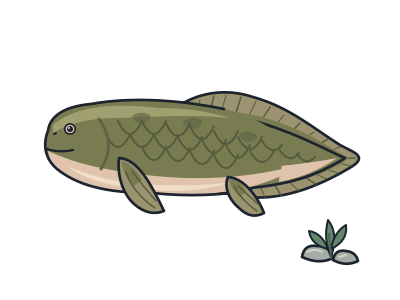
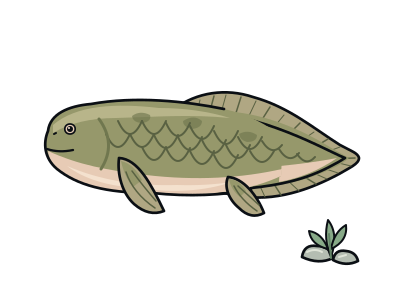
Australian lungfish
Neoceratodus forsteri
Ancient-looking fins, an enormous collection of DNA.
You and the australian lungfish meet in the Lobe-finned fish branch, shown at about 410 million years ago (on 26 November, in a calendar from life's shared ancestor to today).
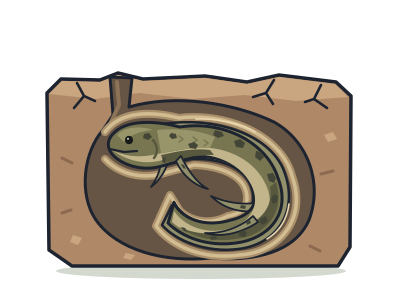
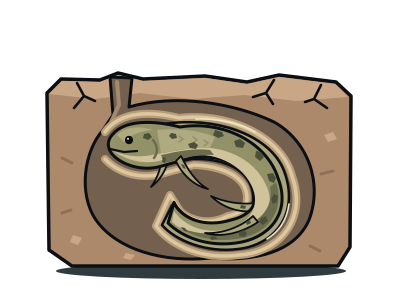
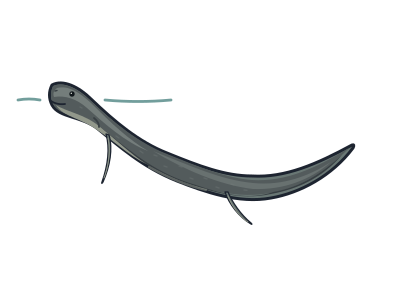
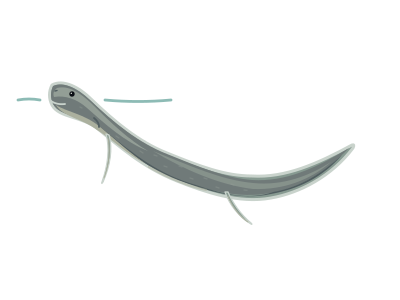
The Australian lungfish has paddle-shaped fins whose outward form has changed little in about 100 million years. Yet its genome—its complete set of DNA—is about 14 times the size of ours. It contains about 43 billion paired DNA letters. That does not mean it has 14 times as many genes: much of the extra DNA is repeated material.
The family connection is just as surprising. Lungfish are the closest living fish relatives of the group containing amphibians, reptiles, birds and mammals, including us. Inside this fish’s fleshy fins, the bones have an arrangement recognisably similar to bones in our limbs. It is our living relative, not our living ancestor.
It lives in freshwater pools and slow-moving rivers in south-eastern Queensland. The Mary and Burnett river systems are natural strongholds. Despite those ancient-looking fins, its DNA is not standing still. Some DNA sequences keep making copies of themselves, expanding an already enormous genome.
One lung, not two
It has one lung. Every other living lungfish species has two.
An electrical sense
It can detect weak electrical signals to help find hidden prey.
A varied menu
It eats snails, shrimp, small fish and other small animals, as well as some plant material.