A species
South American lungfish
Lepidosiren paradoxa
An eel-shaped fish that must come up for air.
You and the south american lungfish meet in the Lobe-finned fish branch, shown at about 410 million years ago (on 26 November, in a calendar from life's shared ancestor to today).
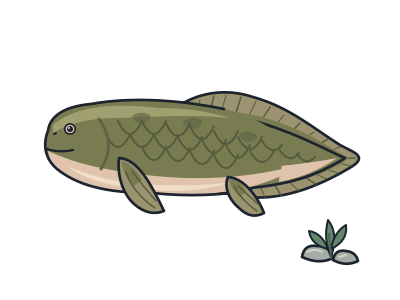
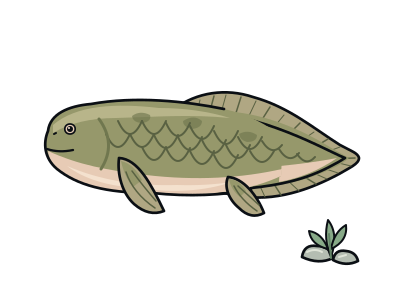
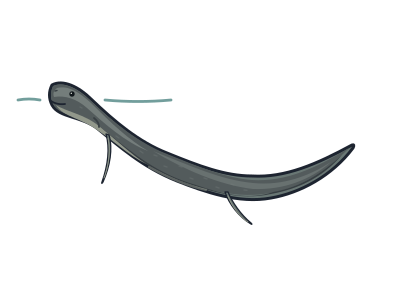
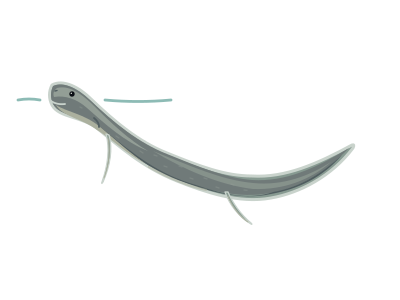
This eel-shaped Amazon fish can drown if it cannot reach the surface. Adults must breathe air. Living underwater is not the problem; being cut off from air is. Despite its long, slender outline, it is a lungfish, not a true eel.
Its family connections are just as surprising. Lungfish are the closest living fish relatives of the group containing frogs, reptiles, birds and mammals, including us. This species is more closely related to African lungfish than to the Australian lungfish shown nearby on the tree. The fins along its sides are thin threads, unlike the Australian species’ broad, limb-like side fins.
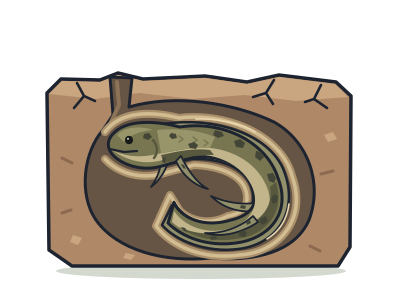
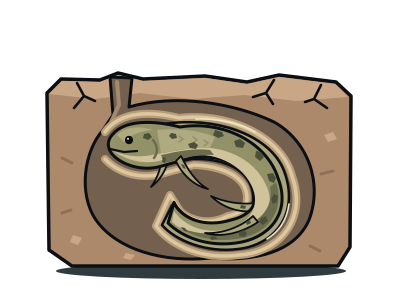
It lives in freshwater across the Amazon, Paraguay and lower Paraná river systems, favouring still water or very little current. When waters dry, it can shelter in a mud burrow with small openings that let air through. Its body slows down during this dry-season rest. Breathing air helps make life possible even when its watery home shrinks.
Spots that fade
Young fish have bright yellow spots. These fade as they grow, leaving adults mainly black or grey.
A mouthful by suction
It sucks food into its mouth and processes it with solid tooth plates rather than rows of separate teeth.
A watchful father
Breeding happens during the rainy season. Plant material lines a burrow nest, and the male guards the young.