An extinct species
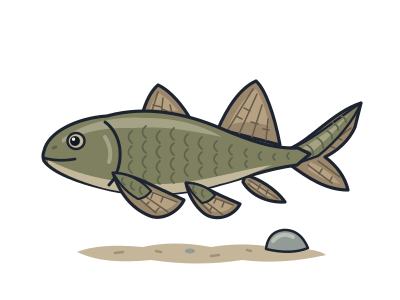
Dipterus †
Dipterus valenciennesi
A Scottish lungfish with an ancient shell-crushing toolkit
Lived about 393–382 million years ago.
You and the dipterus meet in the Lobe-finned fish branch, shown at about 410 million years ago (on 26 November, in a calendar from life's shared ancestor to today).
This ancient Scottish lungfish had a mouth equipped for crushing, much like its living relatives. Fossil tooth plates suggested that it ate small animals with shells or other hard coverings. Living lungfish use tooth plates to crush shellfish too. The resemblance was in the mouth equipment; it did not prove exactly which animals this fish ate.
It lived during the Middle Devonian, in lake systems across northern Scotland. It belonged to an early branch of the lungfish family, outside the group containing all living lungfish and their shared ancestor. It was an ancient relative, not a proven direct ancestor of today’s species.
That family connection reaches towards us. Living lungfish are the closest living fish relatives of four-limbed animals, including humans. But this fish’s place in the family tree did not mean that it walked onto land.
Ruler-sized
A museum estimate put its length at about 35 centimetres, a little longer than a school ruler.
Separate fins
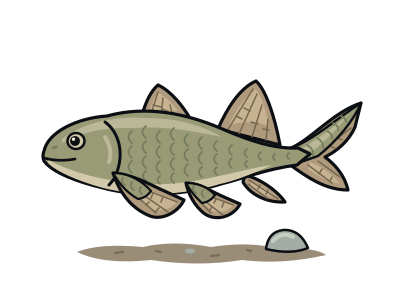
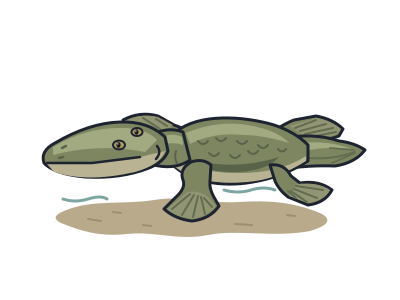
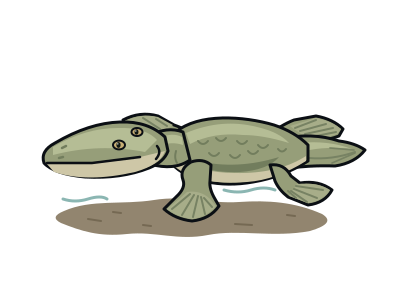
Its back, tail and underside fins were separate, rather than joined into the continuous fringe seen in living lungfish.
More than loose scales
Fossils from Orkney included both isolated scales and specimens with body parts still joined together.
Next to it on the tree
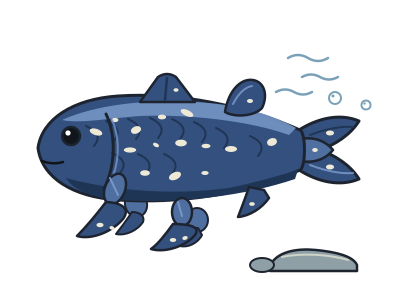
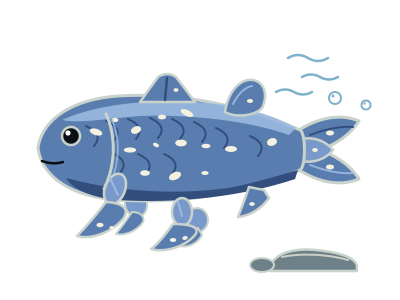
- CoelacanthThought extinct for 66 million years until one turned up in a fishing net in 1938.
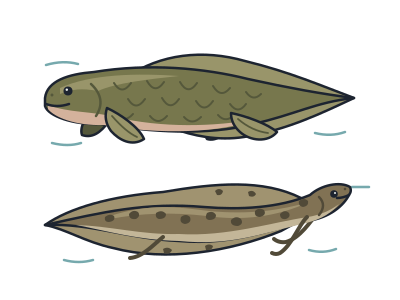
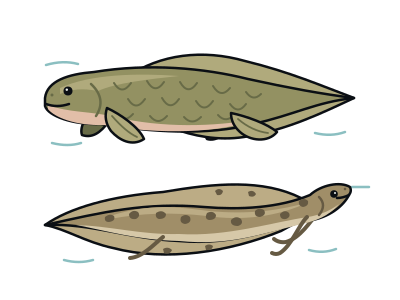
- LungfishOur closest living fish relatives: they breathe air and some can survive years dried in mud.
- MawsoniaA coelacanth as long as a car that swam the rivers of dinosaur-age Brazil and Africa.
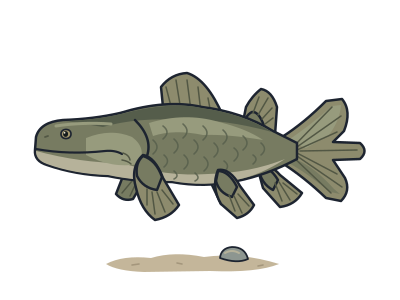
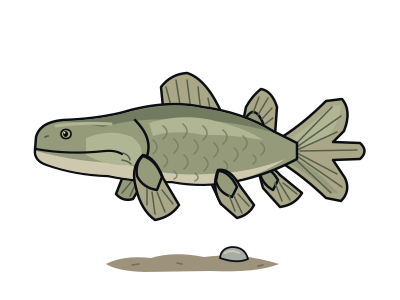
- Fish on the way to landFish that grew wrists, necks and lungs, step by step, until some walked out of the water.
- Indonesian coelacanthA second living coelacanth, recognised in 1997 when a biologist on honeymoon spotted one in a Sulawesi market.
- RebellatrixA fork-tailed coelacanth built for speed, unlike its slow cousins, from just after the great Permian die-off.