A species
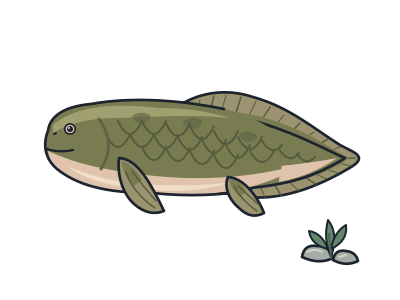
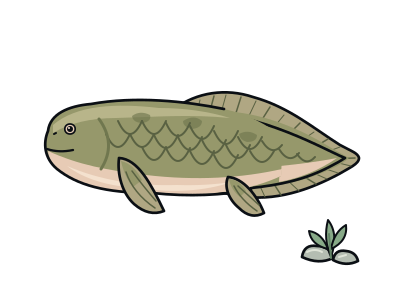
West African lungfish
Protopterus annectens
A fish that waits out drought in a cocoon.
You and the west african lungfish meet in the Lobe-finned fish branch, shown at about 410 million years ago (on 26 November, in a calendar from life's shared ancestor to today).
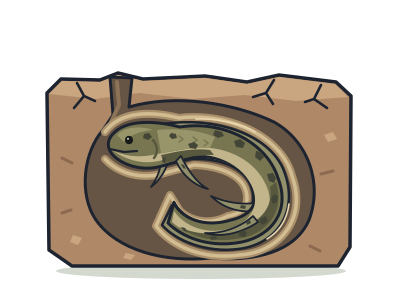
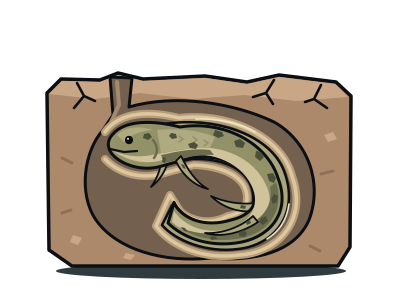
When its pond dries up, the West African lungfish buries itself in mud and makes a cocoon from mucus. Its body slows down for a long dry-season rest: usually months, sometimes years. This is not ordinary sleep. A tunnel links its underground chamber to the surface, letting it breathe air while it waits out the drought.
This unusual fish has a family connection to you. Lungfish are the closest living fish relatives of the four-limbed animal group that includes frogs, reptiles, birds and mammals, including people. They are relatives of our branch of the family tree, not surviving ancestors.
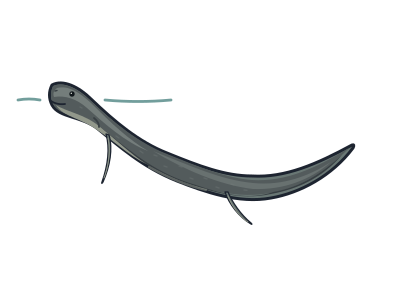
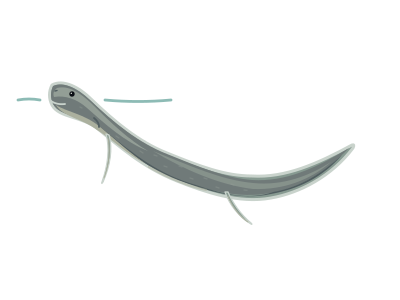
Its watery home includes tropical freshwater swamps, floodplains and quiet river or lake edges. Even there, it needs access to air. Having gills does not let it stay underwater forever: without a way to reach air, this fish can drown.
Fathers care for the young
It breeds in the wet season. Eggs are laid in nests, and males care for the young.
Youngsters have outside gills
Young West African lungfish have gills outside their bodies. These are absorbed as they develop.
More than a meat-eater
Its food includes frogs, fish and molluscs, such as snails, as well as roots and seeds.