An extinct species
Kronosaurus †
Kronosaurus queenslandicus
A giant-headed relative of long-necked sea reptiles
Lived about 113–100 million years ago.
You and the kronosaurus meet in the Amniotes branch, shown at about 320 million years ago (on 4 December, in a calendar from life's shared ancestor to today).
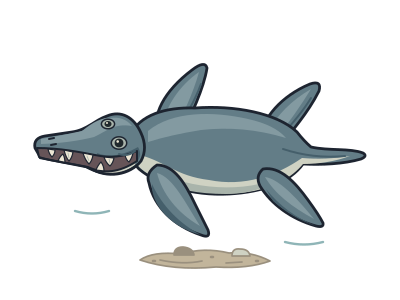
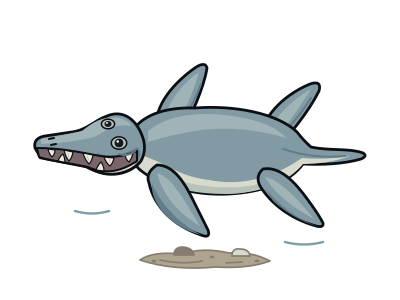
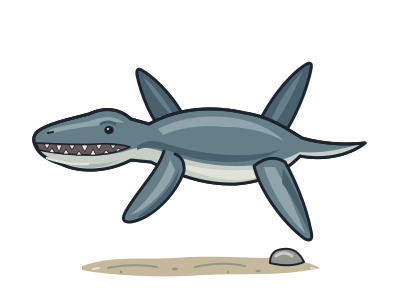
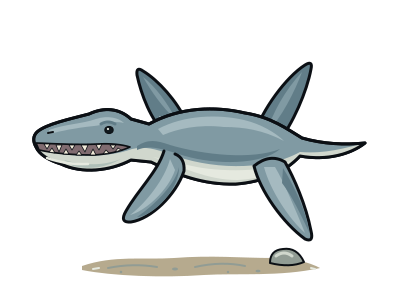
With a skull over two metres long, this pliosaur patrolled Australia’s inland sea. It belonged to the wider plesiosaur group, alongside relatives with much longer necks. Its enormous head and short neck made it look very different from those relatives. It was a marine reptile, not a dinosaur or a fish.
It lived about 113 to 100 million years ago in the Eromanga Sea, a cool inland sea that covered large areas of Australia. Other marine reptiles shared these waters with bony fish, sharks, sea turtles and squid-like animals.
Its skeleton showed four limbs shaped into long paddles. Reconstructions suggested that both the front and back pairs helped drive it through the water. Reconstructions based on the bones also suggested a broad body tapering towards a short tail. These remains helped researchers rebuild its outline, but they did not reveal its colour or markings.
Teeth as long as a ruler
Its largest cone-shaped teeth approached 30 centimetres long, including the roots hidden inside the jaws.
A fossil meal
Fossilised stomach contents showed that it ate turtles and long-necked marine reptiles.
Named from a fragment
Heber Longman named it in 1924 using a jaw fragment found near Hughenden in Queensland.
Next to it on the tree
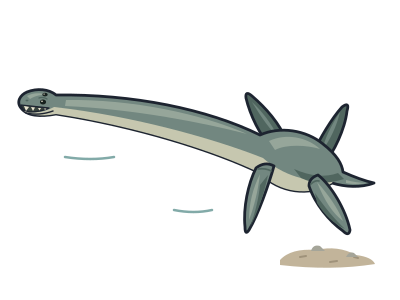
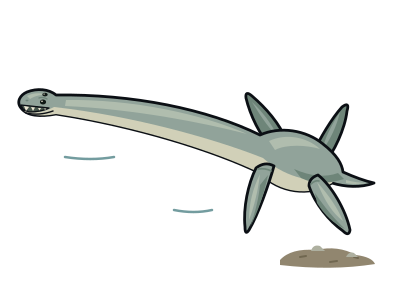
- ElasmosaurusA plesiosaur whose neck was longer than the rest of its body, with 72 neck bones.
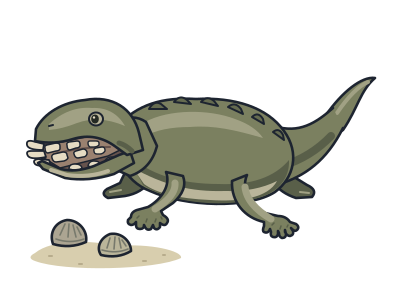
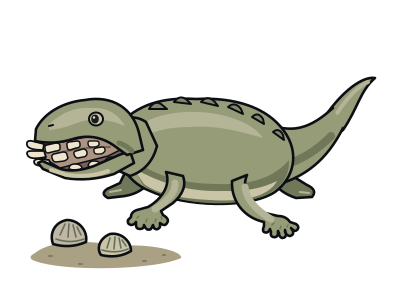
- PlacodusUsed flat, cobblestone teeth to crush shellfish on Triassic sea floors.
- NothosaurusA seal-like Triassic hunter with a mouth full of needle teeth for catching fish.
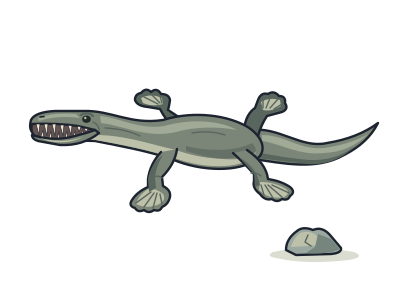
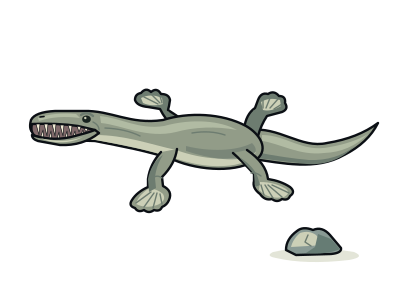
- PlesiosaurusMary Anning's 1823 find: 'a snake threaded through a turtle', as one scientist put it.
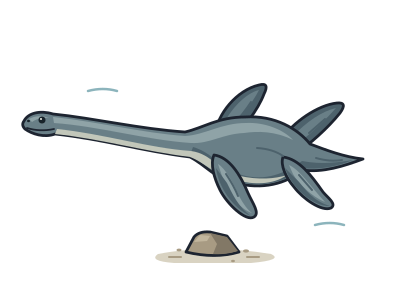
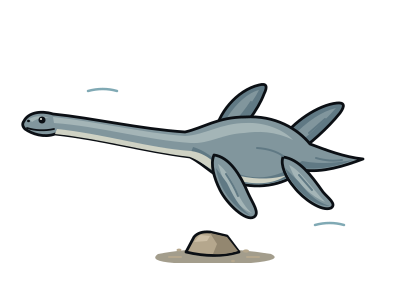
- LiopleurodonA big-headed pliosaur with crocodile-like jaws, a top Jurassic sea predator.