An extinct species
Liopleurodon †
Liopleurodon ferox
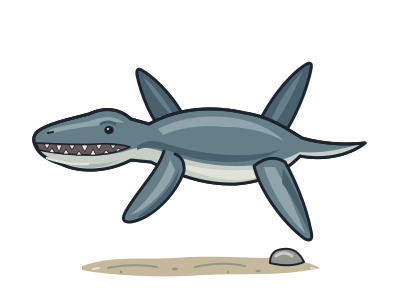
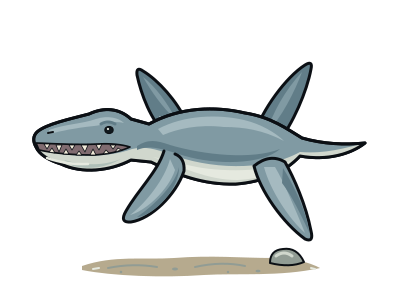
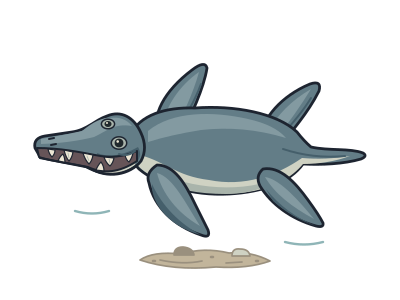
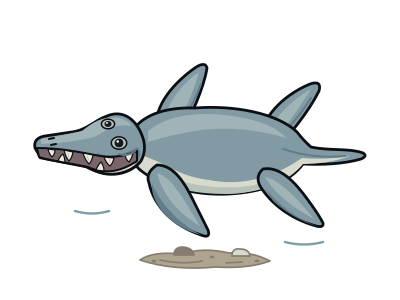
Crocodile-like jaws, but a plesiosaur family connection
Lived about 166–155 million years ago.
You and the liopleurodon meet in the Amniotes branch, shown at about 320 million years ago (on 4 December, in a calendar from life's shared ancestor to today).
This big-headed sea hunter had crocodile-like jaws, but it belonged to a different reptile group. It was a pliosaur: a short-necked member of the wider plesiosaur group, which also included long-necked Elasmosaurus. Kronosaurus belonged to the same pliosaur family. Despite living alongside dinosaurs, this hunter was not a dinosaur—or a crocodile.
It lived around 165 million years ago in seas covering parts of present-day Europe. Fossils were especially well known from eastern England and northern France. It was a top predator in the seas recorded by England’s Oxford Clay. Its broad rear skull provided room for powerful jaw muscles.
Like other plesiosaurs, it had four flipper-shaped limbs, rather than a fish’s arrangement of fins. Its marine-reptile ancestors had returned to the sea from land. The short neck and enormous head gave it a very different outline from its long-necked relatives.
Named from one tooth
Henri Émile Sauvage named the species in 1873 from a single tooth found at Le Wast in northern France.
A toothy name
The first part of its name meant ‘smooth-sided tooth’; the second meant ‘fierce’.
Brickmaking discoveries
Peterborough’s brickmaking industry exposed fossil-bearing clay. Workers collected fossils, and Alfred Leeds built important collections from their discoveries.
Next to it on the tree
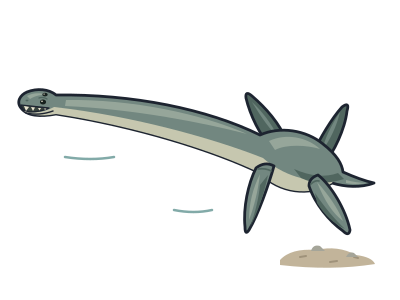
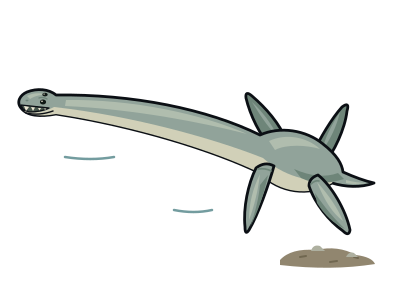
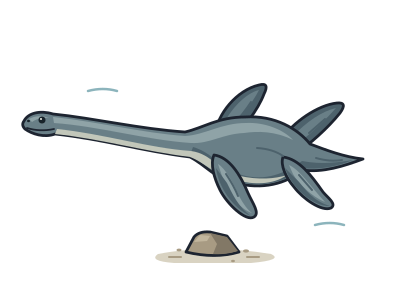
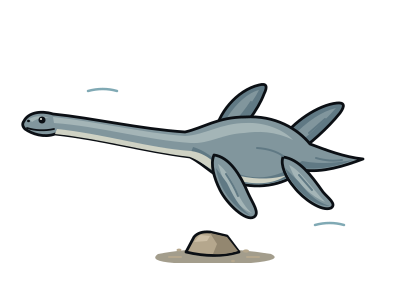
- ElasmosaurusA plesiosaur whose neck was longer than the rest of its body, with 72 neck bones.
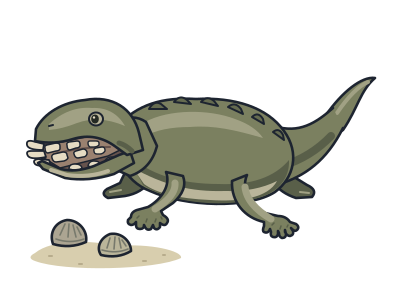
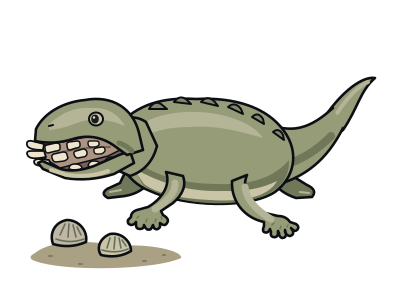
- PlacodusUsed flat, cobblestone teeth to crush shellfish on Triassic sea floors.
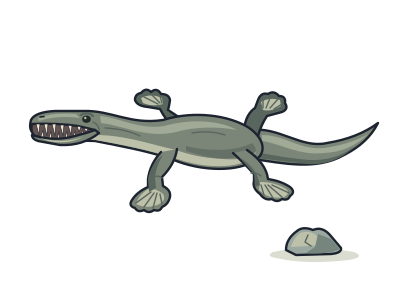
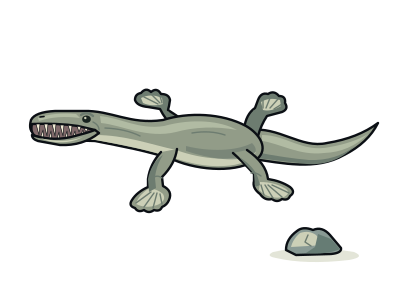
- NothosaurusA seal-like Triassic hunter with a mouth full of needle teeth for catching fish.
- PlesiosaurusMary Anning's 1823 find: 'a snake threaded through a turtle', as one scientist put it.
- KronosaurusA pliosaur with a skull over two metres long that patrolled Australia's inland sea.