An extinct species
Elasmosaurus †
Elasmosaurus platyurus
A sea reptile with 72 neck bones
Lived about 81–80 million years ago.
You and the elasmosaurus meet in the Amniotes branch, shown at about 320 million years ago (on 4 December, in a calendar from life's shared ancestor to today).
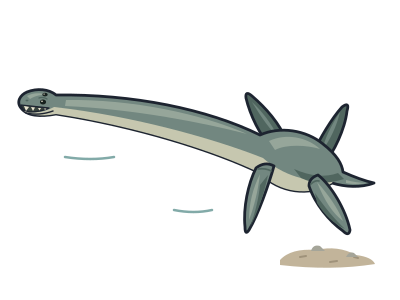
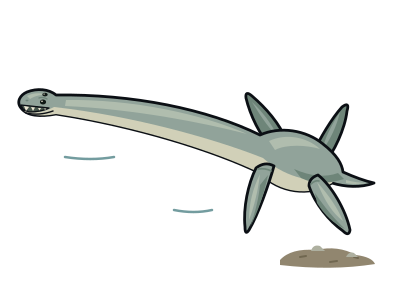
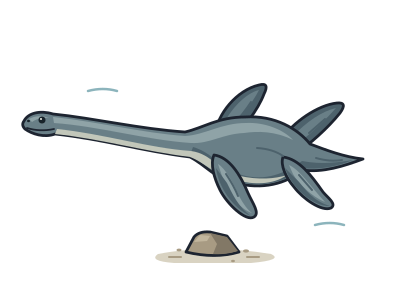
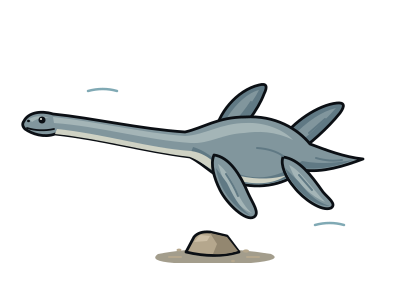
With 72 preserved neck bones, this plesiosaur had a neck estimated to be longer than the rest of its body. It belonged to a separate reptile branch from dinosaurs. Other plesiosaurs, including Plesiosaurus, were its relatives. The neighbouring Placodus and Nothosaurus branches belonged to the same wider reptile group.
It lived about 81 to 80 million years ago in the Western Interior Seaway, an ocean that covered part of North America. Its securely identified fossils came from western Kansas. That land, now far inland, had once been beneath the sea.
Reconstructions gave it four flippers, a compact body and a short tail behind that extraordinary neck. Like other plesiosaurs, it used its flippers to move through the water rather than relying mainly on a long tail. Having so many neck bones did not mean it could coil its neck like a snake.
A rounded snout
Its fossil snout had a rounded tip when viewed from above.
Different-sized teeth
Preserved tooth fragments showed large, pointed teeth near the front of its jaws and smaller teeth farther back.
Head at the wrong end
Edward Drinker Cope named it in 1868 but initially placed its head at the tail end. Joseph Leidy publicly corrected the reconstruction in 1870.
Next to it on the tree
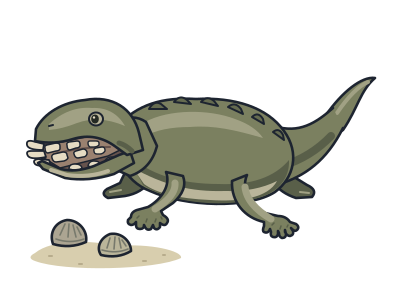
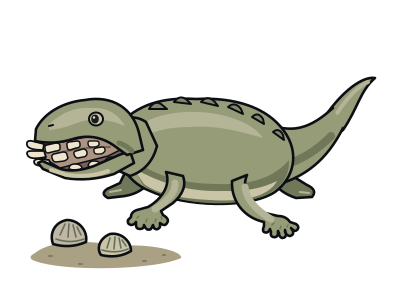
- PlacodusUsed flat, cobblestone teeth to crush shellfish on Triassic sea floors.
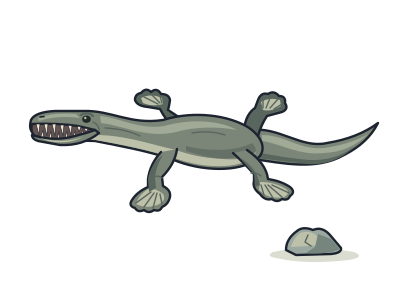
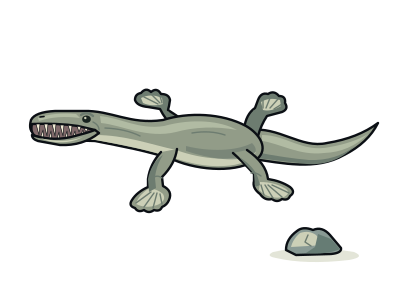
- NothosaurusA seal-like Triassic hunter with a mouth full of needle teeth for catching fish.
- PlesiosaurusMary Anning's 1823 find: 'a snake threaded through a turtle', as one scientist put it.
- LiopleurodonA big-headed pliosaur with crocodile-like jaws, a top Jurassic sea predator.
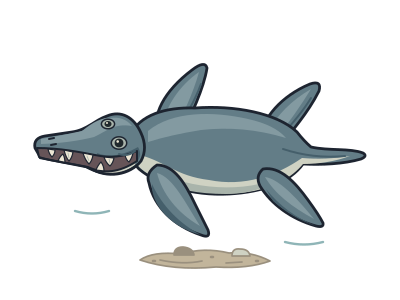
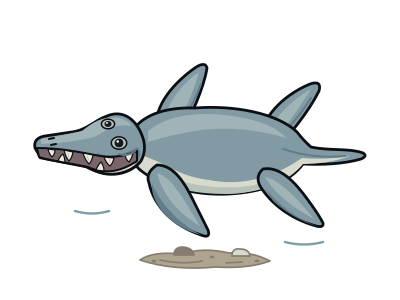
- KronosaurusA pliosaur with a skull over two metres long that patrolled Australia's inland sea.