An extinct species
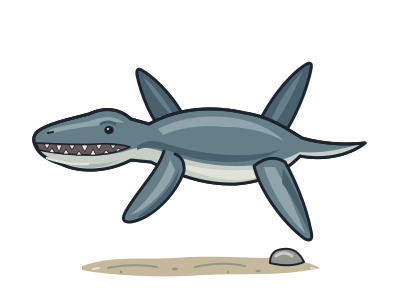
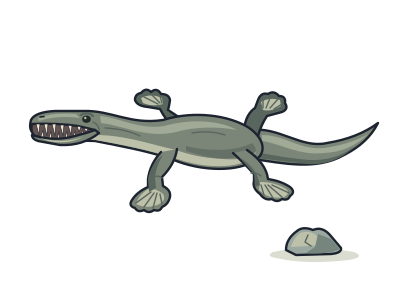
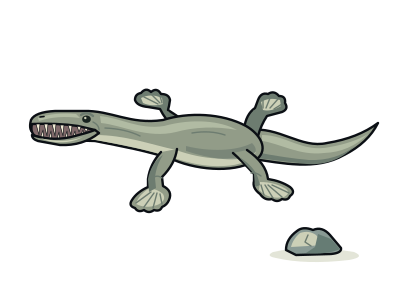
Nothosaurus †
Nothosaurus mirabilis
A seal-like hunter with a needle-toothed fish trap.
Lived about 247–237 million years ago.
You and the nothosaurus meet in the Amniotes branch, shown at about 320 million years ago (on 4 December, in a calendar from life's shared ancestor to today).
A seal-like hunter with a mouth full of needle teeth, this sea reptile was a relative of plesiosaurs and Placodus—not a seal. The resemblance described a possible lifestyle, not a family connection. Its wider reptile group had ancestors that lived on land before returning to the sea.
Its long, thin teeth interlocked when its jaws closed, making a trap suited to holding slippery fish. Their shape suggested they were used for gripping prey. A small, flattened head and long jaws gave it a very different outline from a seal.
It lived about 240 million years ago, during the Middle Triassic. Fossils of this species came from Central Europe and the southern Alps. Its best-studied skeleton belonged to an animal that was still growing. Researchers reconstructed its length at about 3 metres.
Extra-large front teeth
Five enlarged teeth sat on each side of the tip of its upper snout.
A discovery in Germany
The skeleton originally used to describe this species was discovered near Bayreuth in 1834.
An incomplete puzzle
That skeleton preserved neck and body bones, parts of the tail, ribs and limb bones, but its skull and shoulder bones were missing.
Next to it on the tree
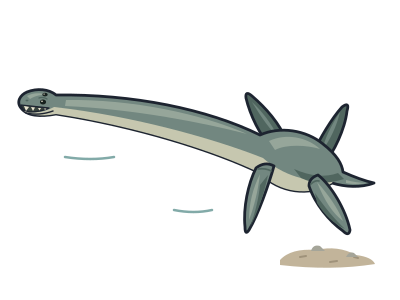
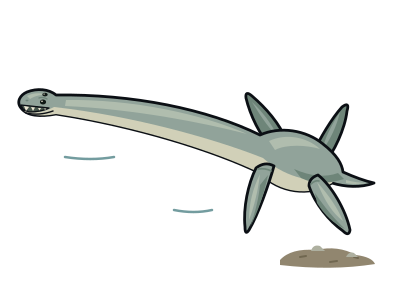
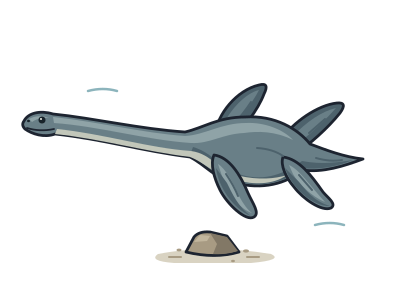
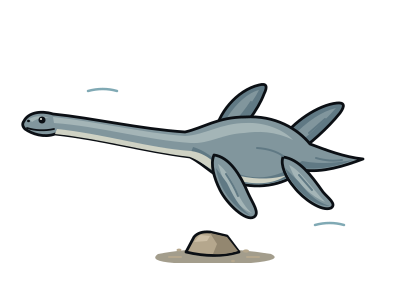
- ElasmosaurusA plesiosaur whose neck was longer than the rest of its body, with 72 neck bones.
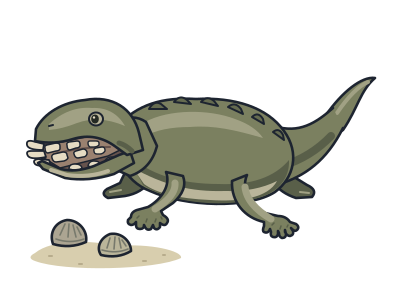
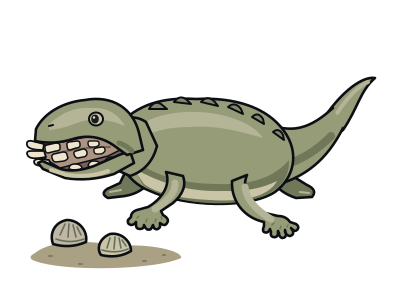
- PlacodusUsed flat, cobblestone teeth to crush shellfish on Triassic sea floors.
- PlesiosaurusMary Anning's 1823 find: 'a snake threaded through a turtle', as one scientist put it.
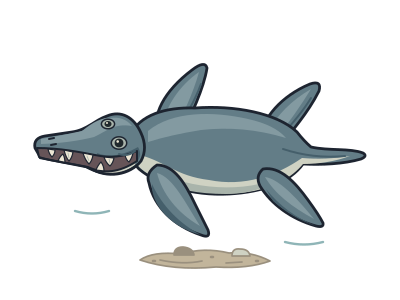
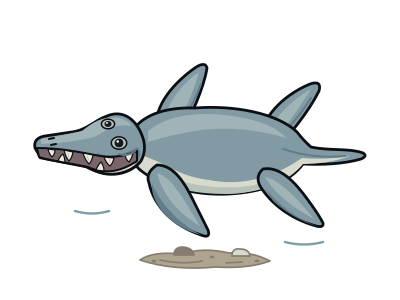
- LiopleurodonA big-headed pliosaur with crocodile-like jaws, a top Jurassic sea predator.
- KronosaurusA pliosaur with a skull over two metres long that patrolled Australia's inland sea.