An extinct species
Placodus †
Placodus gigas
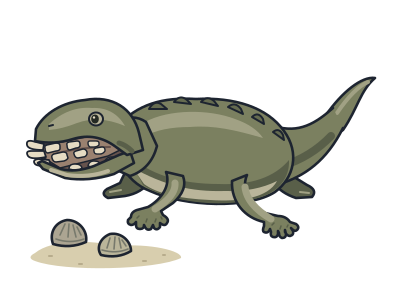
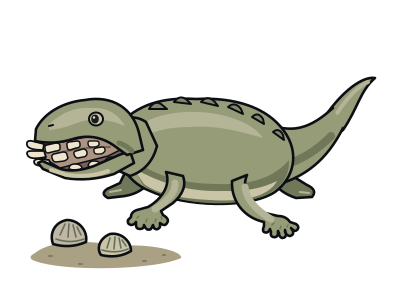
Cobblestone teeth for crushing shells
Lived about 247–237 million years ago.
You and the placodus meet in the Amniotes branch, shown at about 320 million years ago (on 4 December, in a calendar from life's shared ancestor to today).
Flat, cobblestone-like teeth made this sea reptile well suited to crushing shellfish from Triassic sea floors. It was a relative of plesiosaurs, not a plesiosaur itself. Rather than the long neck and four large flippers familiar from many of those relatives, it had a bulky, stretched-out body and a long tail.
It lived about 247 to 237 million years ago, in shallow seas covering parts of what became central Europe. Fossil teeth showed that its crushing surfaces extended beyond the jaw edges: large teeth also covered parts of the roof of its mouth. Its reinforced skull had room for large jaw muscles, suggesting a powerful bite. The mouth worked more like a crushing press than a set of cutting blades.
Sturdy, spoon-shaped front teeth projected forwards. Researchers interpreted these as tools for picking shelled animals from the bottom. Shell-crushing remained the main explanation of its diet, but fossils did not preserve the animal feeding.
New teeth underneath
Replacement teeth grew directly beneath working teeth. Scans revealed replacements at several stages of development.
A reinforced body
Closely packed ribs and extra belly ribs helped make its trunk relatively stiff.
A scattered discovery
A collector found the museum skeleton near Heidelberg in 1915, after quarry workers had broken its rock into small pieces. Assembling the scattered fossils took several years.
Next to it on the tree
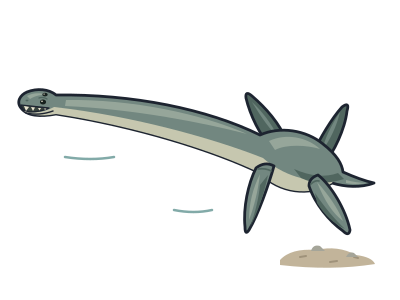
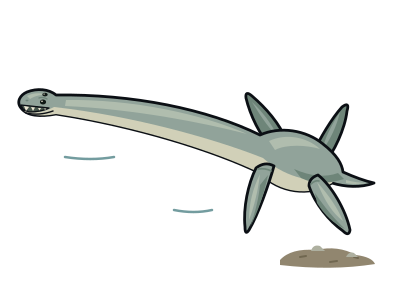
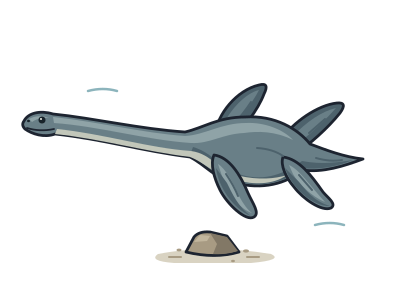
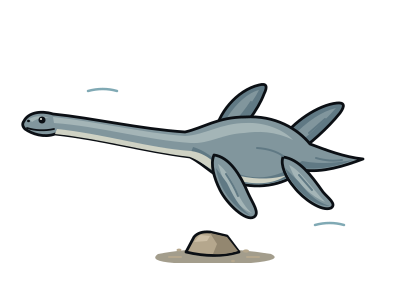
- ElasmosaurusA plesiosaur whose neck was longer than the rest of its body, with 72 neck bones.
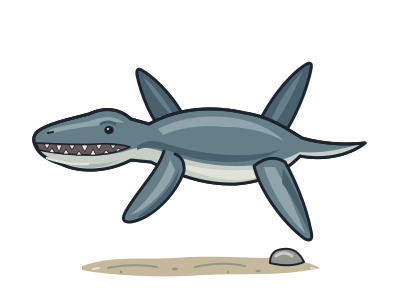
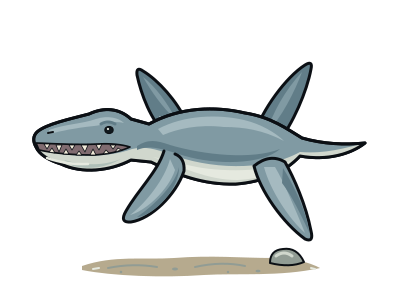
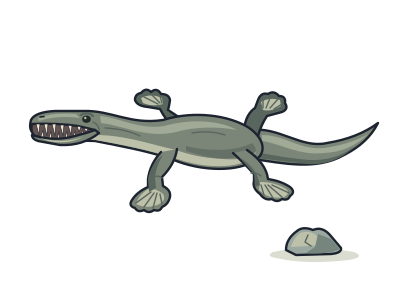
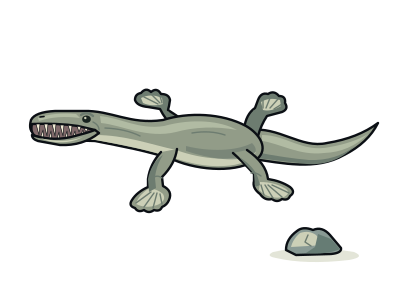
- NothosaurusA seal-like Triassic hunter with a mouth full of needle teeth for catching fish.
- PlesiosaurusMary Anning's 1823 find: 'a snake threaded through a turtle', as one scientist put it.
- LiopleurodonA big-headed pliosaur with crocodile-like jaws, a top Jurassic sea predator.
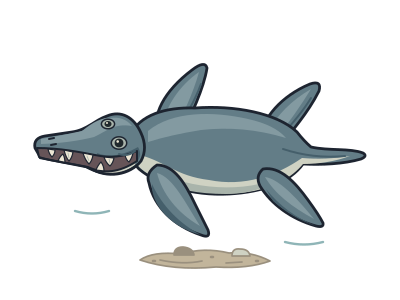
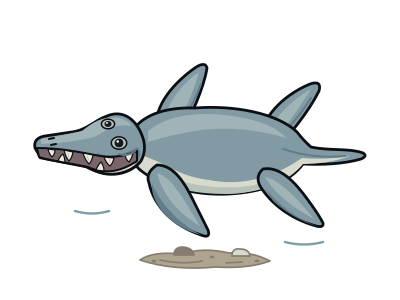
- KronosaurusA pliosaur with a skull over two metres long that patrolled Australia's inland sea.