An extinct group
Plesiosaurs and kin †
Sauropterygia
From shell-crushers to four-flippered hunters
This branch is shown at about 247 million years ago; its age is a rough estimate.
Lived about 247–66 million years ago.
You and plesiosaurs and kin meet in the Amniotes branch, shown at about 320 million years ago (on 4 December, in a calendar from life's shared ancestor to today).
Long-necked hunters and shell-crushers belonged to the same sea-reptile group. Its plesiosaurs had four large, wing-shaped flippers, but earlier relatives had less specialised limbs. Their ancestors had lived on land before returning to the water. Fossils recorded this wider group from about 247 to 66 million years ago. They were reptiles, but not dinosaurs.
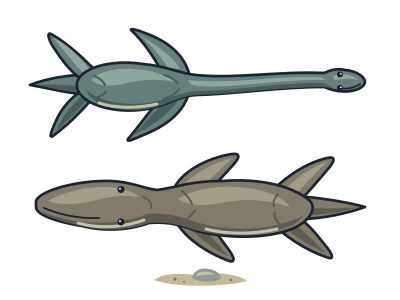
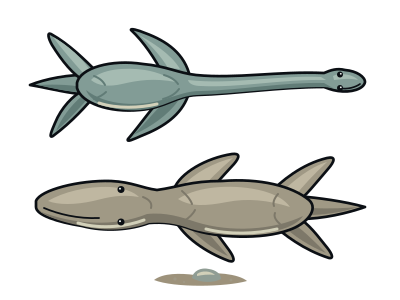
The group included placodonts and nothosaurs, as well as plesiosaurs. Some placodonts had turtle-like armour, though that did not make them turtles. Plesiosaur skeletons revealed broad bodies and short tails. Some had small heads on long necks. Others, including many pliosaurs, had much larger heads and shorter necks.
These different bodies went with different ways of feeding. Most placodonts had broad teeth suited to crushing hard shells. The skull and teeth of one small-headed kind of plesiosaur suggested meals of fish and other small animals. Plesiosaurs spread widely through the seas: their fossils were found on every continent, including Antarctica.
A remarkable neck
Some extremely long-necked plesiosaurs had more than 70 neck bones.
An early discovery
Mary Anning discovered an almost complete plesiosaur skeleton in 1823.
Evidence of live birth
One fossil preserved an unborn young plesiosaur inside an adult. This showed live birth in that species, not necessarily throughout the family.
Inside plesiosaurs and kin
- ElasmosaurusA plesiosaur whose neck was longer than the rest of its body, with 72 neck bones.
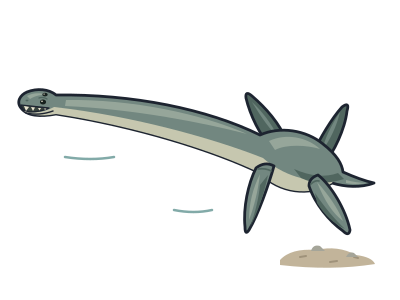
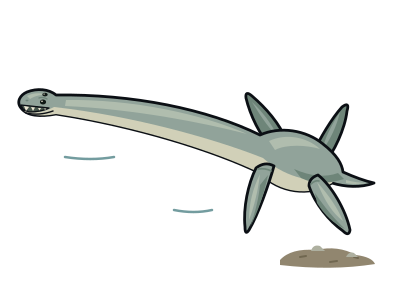
- PlacodusUsed flat, cobblestone teeth to crush shellfish on Triassic sea floors.
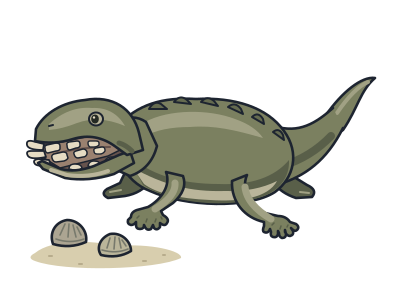
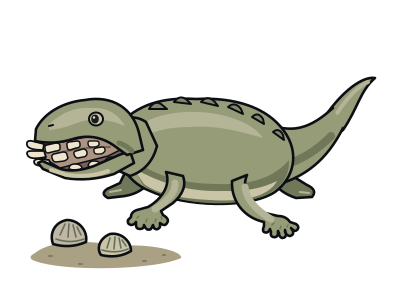
- NothosaurusA seal-like Triassic hunter with a mouth full of needle teeth for catching fish.
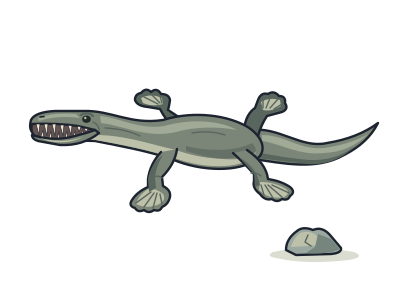
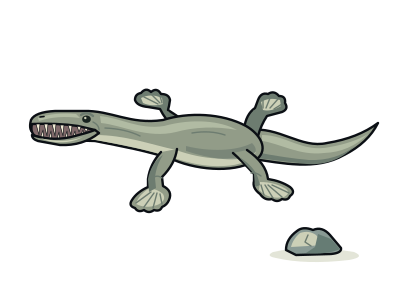
- PlesiosaurusMary Anning's 1823 find: 'a snake threaded through a turtle', as one scientist put it.
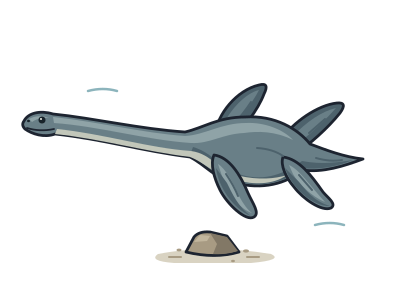
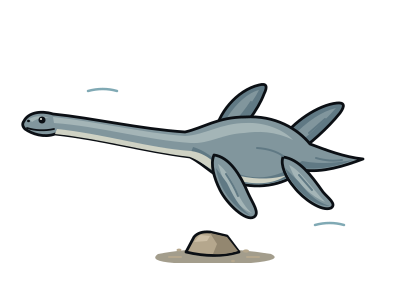
- LiopleurodonA big-headed pliosaur with crocodile-like jaws, a top Jurassic sea predator.
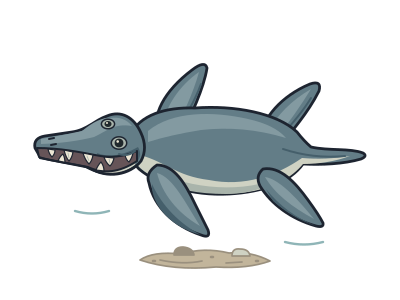
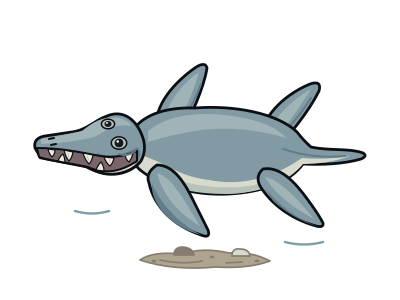
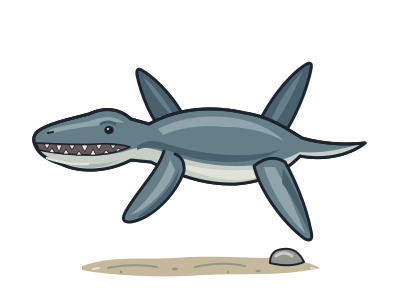
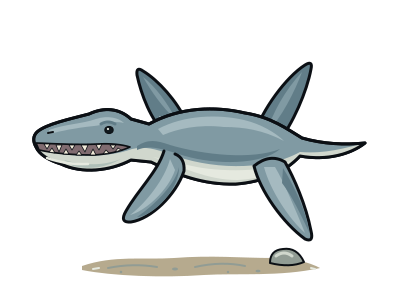
- KronosaurusA pliosaur with a skull over two metres long that patrolled Australia's inland sea.
Next to it on the tree
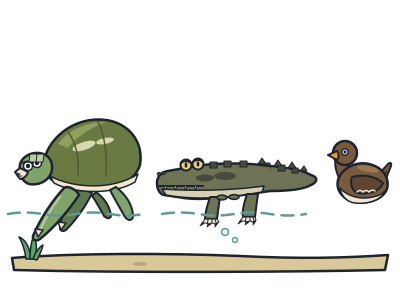
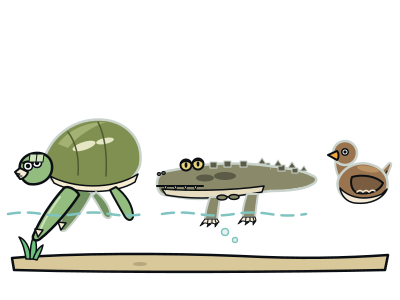
- Turtles, crocodiles and birdsTurtles turned out to be cousins of crocodiles and birds, not of lizards.
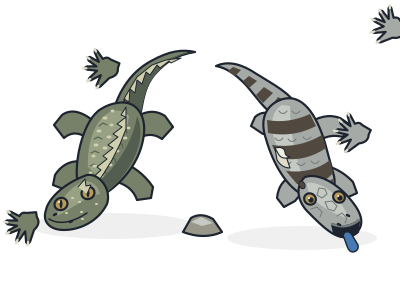
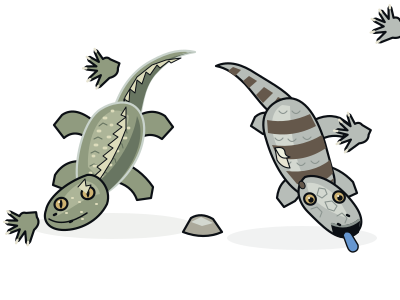
- Tuatara, lizards and snakesScaly reptiles that shed their skin; the tuatara is the lone survivor of an old sister line.
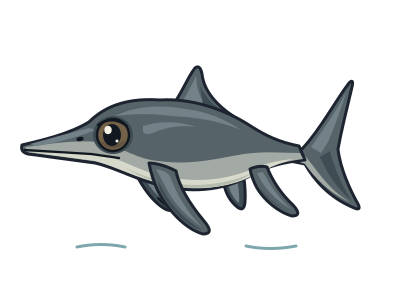
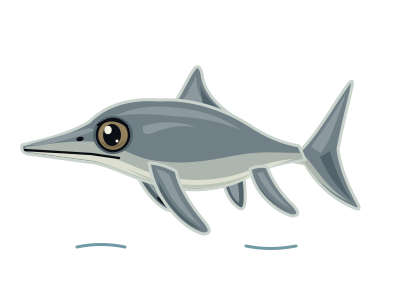
- IchthyosaursReptiles that turned into dolphin-shaped swimmers long before dolphins existed.