A group of living things
Tuatara, lizards and snakes
Lepidosauria
Scaly relatives, with one surprising survivor
This branch is shown at about 240 million years ago; its age is a rough estimate.
You and tuatara, lizards and snakes meet in the Amniotes branch, shown at about 320 million years ago (on 4 December, in a calendar from life's shared ancestor to today).
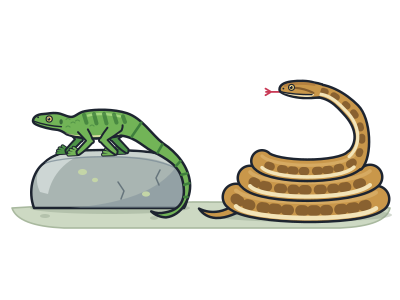
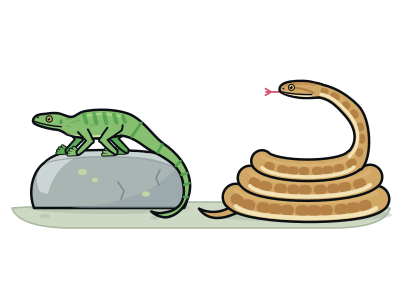
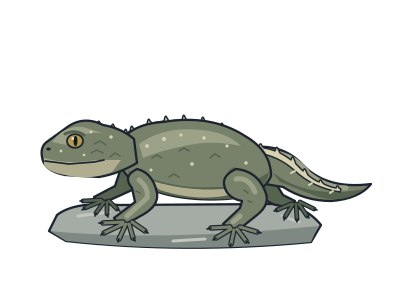
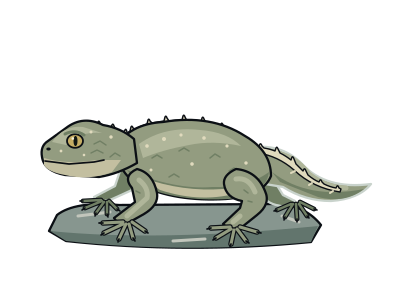
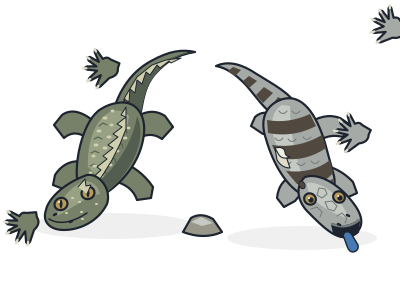
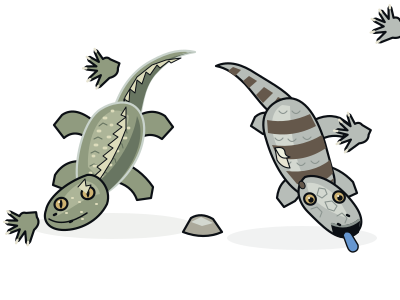
These scaly reptiles shed the outer covering of their skin. But their family holds a surprise: the tuatara looks like a lizard, yet is not one. Its branch is the sister group of lizards and snakes. That once more varied branch now has only one living species left: the tuatara.
The lizard-and-snake side of the family occupies many different environments. Many members live on land, while some live in freshwater or the sea. Their family includes more than just the reptiles we might picture on dry ground.
Tuatara are native only to New Zealand, where their naturally surviving populations live on offshore islands. An adult male is about 50 centimetres long, including its tail. That is an example from one member, not a typical size for this whole varied family.
Comfortable in the cool
Tuatara can be active in unusually cool conditions for reptiles, although they also bask in sunshine.
Small-animal meals
Most tuatara food consists of small animals without backbones, including beetles, wētā, worms and spiders.
Introduced threats
Introduced rats threaten tuatara by eating eggs and young and competing for food.