A species
Tuatara
Sphenodon punctatus
Lizard looks, a different family branch
You and the tuatara meet in the Amniotes branch, shown at about 320 million years ago (on 4 December, in a calendar from life's shared ancestor to today).
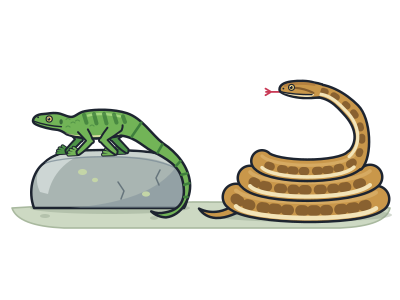
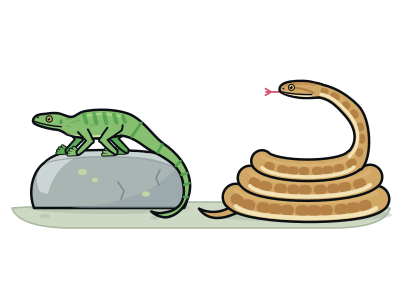
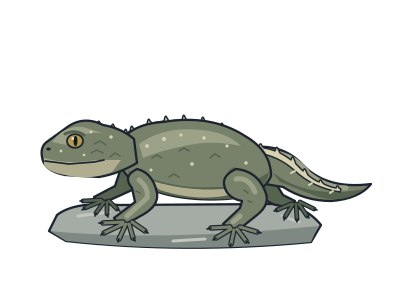
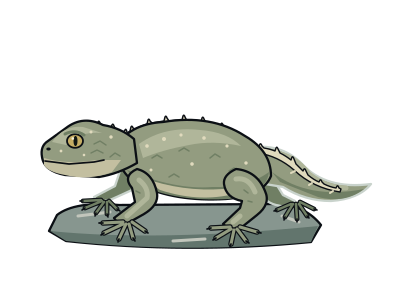
A tuatara looks like a lizard, but belongs to a different reptile branch. It is the last living member of a group that thrived alongside dinosaurs about 200 million years ago. Lizards and snakes are its closest living relatives: their branch sits beside its own on the reptile family tree.
Tuatara are native only to New Zealand. Their surviving natural populations live on offshore islands, though conservation releases have also returned them to protected mainland places. They shelter in burrows and mostly come out at night. During the day, they may emerge to warm themselves in the sun. Unlike many reptiles, they can stay active in cool weather.
Meals are mainly small animals such as beetles, worms and spiders. Tuatara grow slowly: they can keep growing until about 35 years old, and may live for about 100 years. Introduced rodents threaten them by eating eggs and young and competing for food.
A hidden third eye
A light-sensitive ‘third eye’ sits on top of the head. It cannot see scenes like ordinary eyes and becomes hidden beneath scales and pigment.
Warm nests, more males
Nest temperature influences whether hatchlings are male or female. Warmer nests produce more males; cooler nests produce more females.
Protected since 1895
Tuatara received full legal protection in New Zealand in 1895.