An extinct group
Ichthyosaurs †
Ichthyosauria
Dolphin-shaped swimmers from the reptile family
This branch is shown at about 248 million years ago; its age is a rough estimate.
Lived about 248–90 million years ago.
You and ichthyosaurs meet in the Amniotes branch, shown at about 320 million years ago (on 4 December, in a calendar from life's shared ancestor to today).
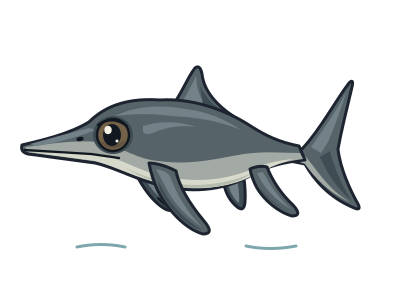
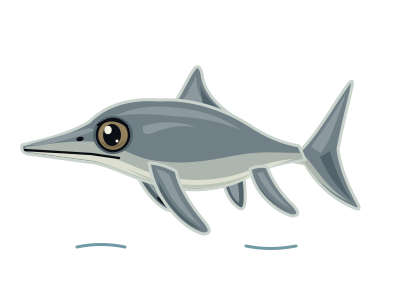
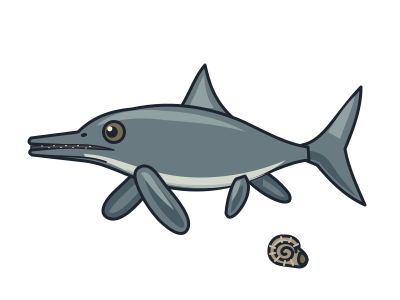
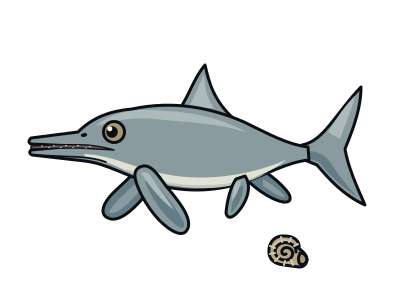
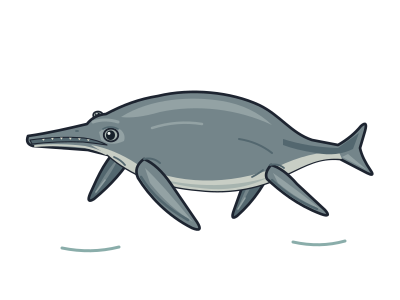
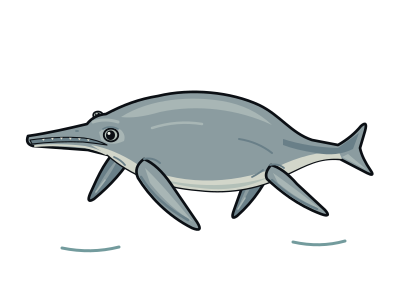
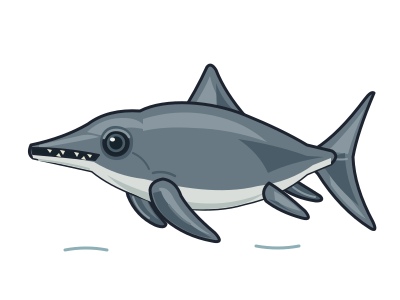
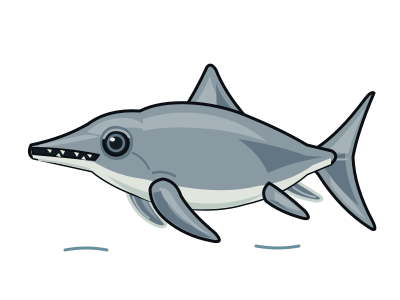
Ichthyosaurs were reptiles that evolved dolphin-shaped bodies long before dolphins existed. They were not dolphin ancestors: the two groups developed a similar shape independently as they adapted to swimming. These sea-going reptiles lived about 248 to 90 million years ago.
The familiar later forms had sleek bodies, long snouts and large eyes. Their upright tail fins swept from side to side, unlike a dolphin’s flat tail, which moved up and down. Earlier members had longer, more flexible bodies, so the dolphin shape did not fit the whole group.
They breathed air and had to reach the surface to breathe. Fossil skeletons revealed their bones, while exceptional fossils also preserved body outlines and soft tissues. These rare finds showed back fins and tail fins that bones alone could not fully reveal.
Babies, not eggs
Fossils containing unborn young showed that ichthyosaurs gave birth to live babies rather than returning ashore to lay eggs.
Hands inside flippers
Their front flippers contained the same basic bones as an arm and hand, but with shortened arm bones and extra finger bones.
Ocean travellers
They lived in oceans worldwide. Their fossils have been found from the Arctic to Antarctica.
Inside ichthyosaurs
Next to it on the tree
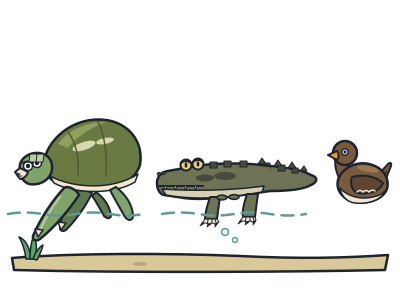
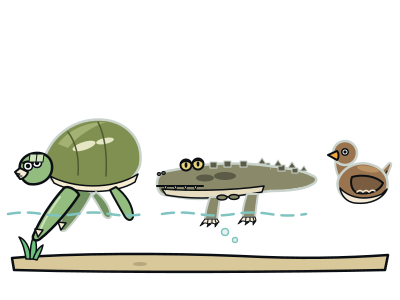
- Turtles, crocodiles and birdsTurtles turned out to be cousins of crocodiles and birds, not of lizards.
- Tuatara, lizards and snakesScaly reptiles that shed their skin; the tuatara is the lone survivor of an old sister line.
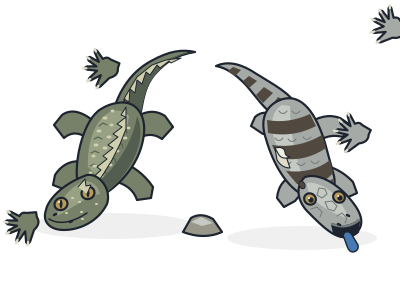
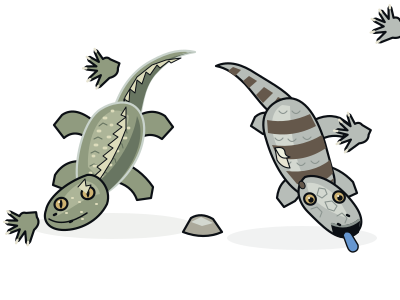
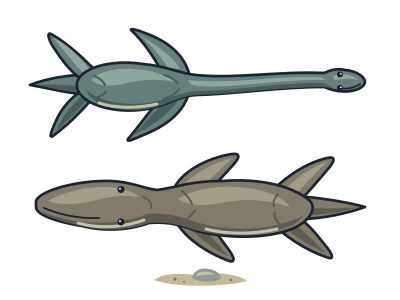
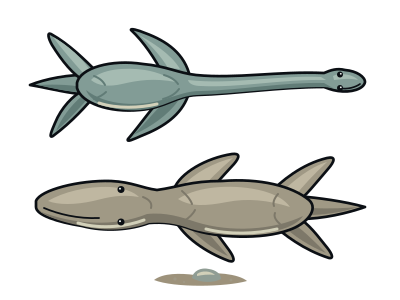
- Plesiosaurs and kinSea reptiles that swam with four flippers, from shell-crushers to long-necked hunters.