An extinct species
Shonisaurus †
Shonisaurus popularis
A school-bus-sized sea reptile and Nevada’s state fossil.
Lived about 237–227 million years ago.
You and the shonisaurus meet in the Amniotes branch, shown at about 320 million years ago (on 4 December, in a calendar from life's shared ancestor to today).
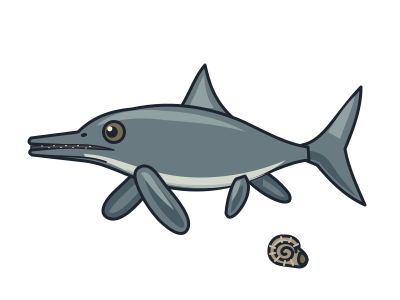
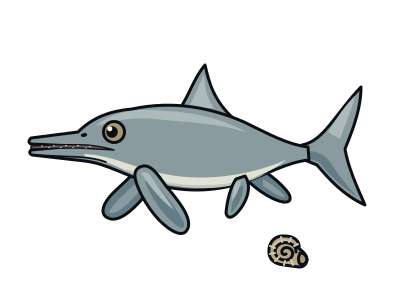
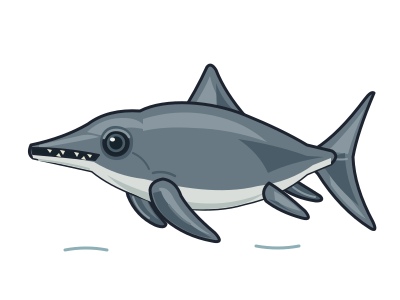
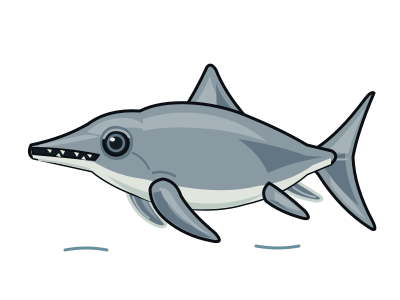
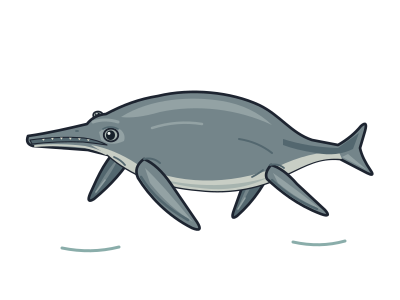
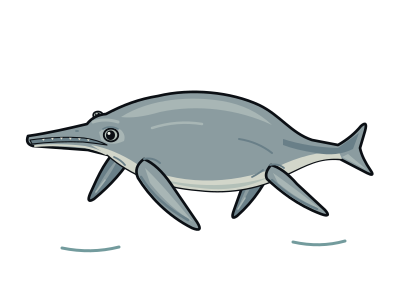
This school-bus-sized sea reptile became Nevada’s state fossil. It was an ichthyosaur, in the same group as Ichthyosaurus and Ophthalmosaurus, the relatives shown beside it on the tree. Large adults were reconstructed at about 15 metres long. That length was an estimate pieced together from fossils, not a measurement of one complete animal.
It swam in ancient seas during the Late Triassic, about 230 million years ago according to a 2022 study. The fossil beds formed in a moderately deep tropical sea over what later became Nevada. Despite its fish-like outline, it was a reptile, not a fish or a swimming dinosaur. It had no gills and had to reach the surface to breathe air.
The fossils preserved parts of skulls, jaws, teeth, large ribs, and bones from the backbone and limbs. Its long jaws carried many teeth: adults were not the toothless giants shown in some older pictures. These bones helped researchers reconstruct its body, but they did not reveal its colour or the exact outlines of its soft fins.
Many giants
Excavations uncovered remains of about 40 individuals, rather than just one enormous animal.
An early identification
Siemon Muller recognised the area’s bones as giant sea reptile remains in 1928.
A champion for the site
Local fossil finder Margaret Wheat brought the site to researcher Charles Camp’s attention and helped campaign for its protection.