An extinct species
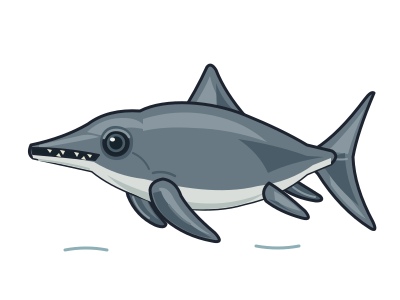
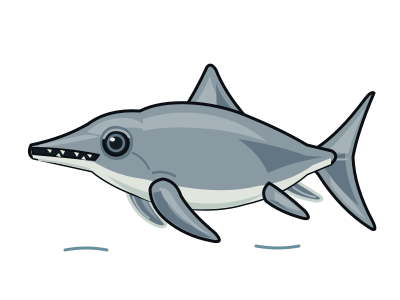
Ophthalmosaurus †
Ophthalmosaurus icenicus
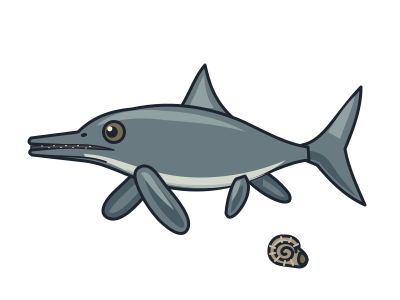
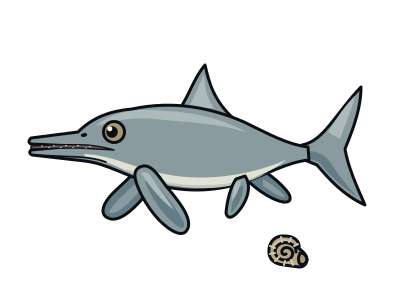
Giant eyes in a dolphin-shaped reptile.
Lived about 165–145 million years ago.
You and the ophthalmosaurus meet in the Amniotes branch, shown at about 320 million years ago (on 4 December, in a calendar from life's shared ancestor to today).
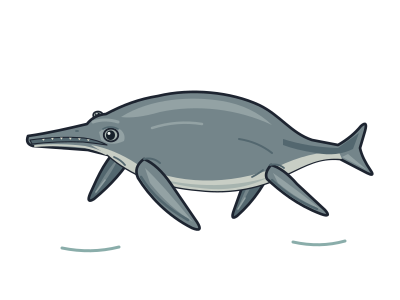
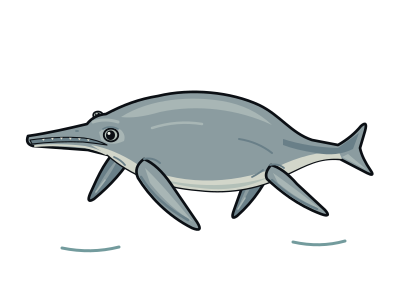
Eyes wider than a grapefruit made this swimmer stand out. It was a sea-going reptile, not a dolphin, fish or dinosaur. It belonged to the ichthyosaurs, the same broad reptile group as its tree neighbours Ichthyosaurus and Shonisaurus.
It lived about 165 to 145 million years ago. Adults were estimated at about 4–5 metres long, roughly the length of a family car. Although its outline looked dolphin-like, it had a broad, barrel-shaped body. Its streamlined shape evolved separately from the similar shape of dolphins.
Fossils preserved bony rings that supported the eyes. From these, scientists estimated eyeballs more than 22 centimetres across. The rings were not fossilised eyeballs: they gave clues to the size of soft parts that had disappeared.
Small but real teeth
Its jaws held small, pointed teeth. It was not toothless.
Bones with depth
Many specimens from England’s Oxford Clay preserved three-dimensional bones rather than flattened impressions.
Born, not hatched
Fossils of other members of its group preserved unborn young, showing that those relatives gave birth rather than laying eggs on beaches.