An extinct species
Plesiosaurus †
Plesiosaurus dolichodeirus
A strange sea reptile revealed by Mary Anning
Lived about 199–190 million years ago.
You and the plesiosaurus meet in the Amniotes branch, shown at about 320 million years ago (on 4 December, in a calendar from life's shared ancestor to today).
When Mary Anning found its skeleton at Lyme Regis in 1823, its outline invited an extraordinary comparison: a snake threaded through a turtle’s shell. That described its shape, not its family tree. It had no shell. The near-complete fossil, with bones still joined in their natural positions, showed how this strange animal’s body fitted together.
It was a sea-living reptile, not a dinosaur. It lived during the early Jurassic, within the broad time window of about 199 to 190 million years ago. Its wider group also included Placodus and Nothosaurus. These were relatives, not its direct ancestors. The wider family descended from land reptiles that had returned to the water—a surprising history for animals so suited to life at sea.
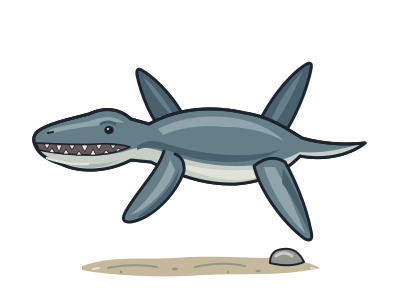
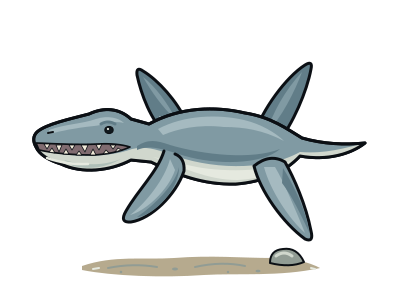
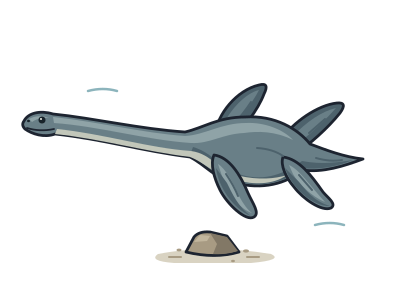
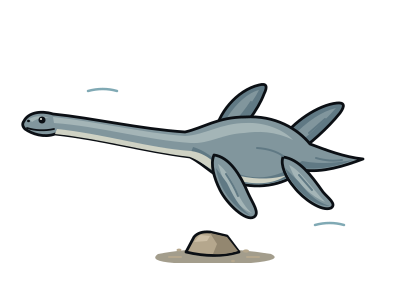
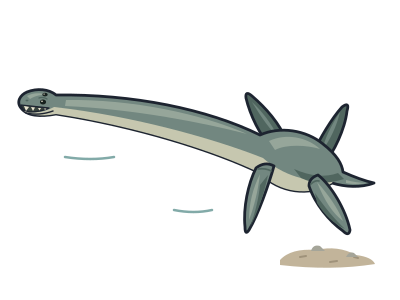
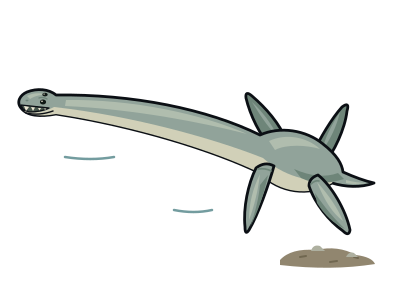
The bones revealed a small head and a neck roughly as long as the trunk and tail together. Four paddle-shaped limbs completed the unusual outline. Its skull and teeth suggested that it ate relatively small animals, including fish. That diet was an inference from its anatomy, rather than something the skeleton directly showed.
Too big for the stairs
The fossil slab measured about three by two metres. It would not fit upstairs for a Geological Society meeting in 1824, so it was displayed in the hallway.
Almost too strange to believe
Scientist Georges Cuvier initially suspected that the skeleton was a fake or a mixture of different animals. He was eventually convinced it was genuine.
A skeleton to compare against
Anning’s skeleton became the reference specimen against which other fossils of the species were compared.
Next to it on the tree
- ElasmosaurusA plesiosaur whose neck was longer than the rest of its body, with 72 neck bones.
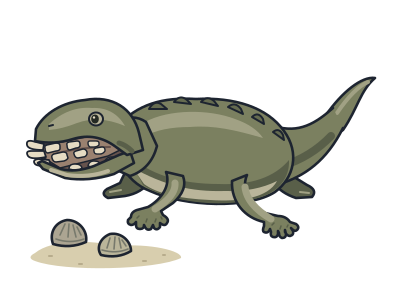
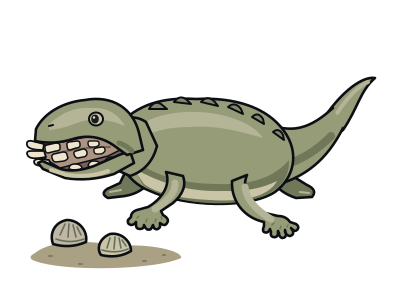
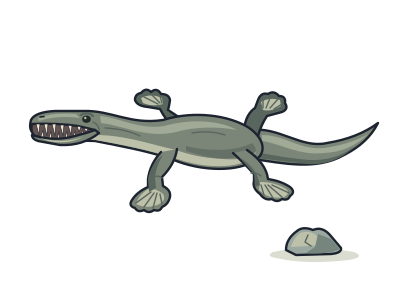
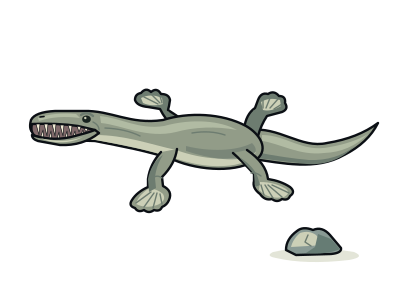
- PlacodusUsed flat, cobblestone teeth to crush shellfish on Triassic sea floors.
- NothosaurusA seal-like Triassic hunter with a mouth full of needle teeth for catching fish.
- LiopleurodonA big-headed pliosaur with crocodile-like jaws, a top Jurassic sea predator.
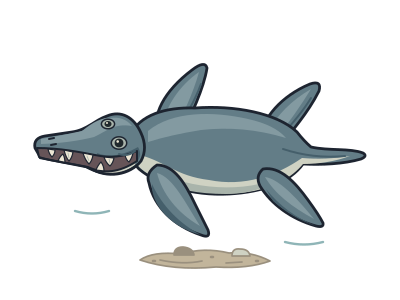
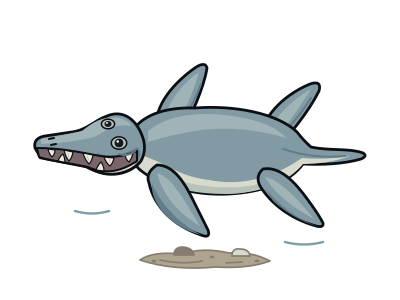
- KronosaurusA pliosaur with a skull over two metres long that patrolled Australia's inland sea.