An extinct group
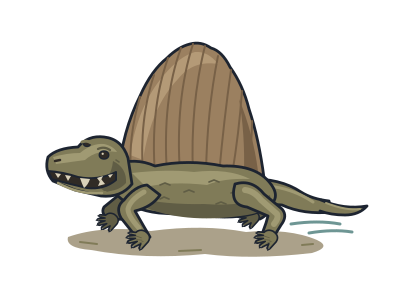
Dimetrodon †
Dimetrodon
A dinosaur-like sail on our side of the family tree.
Lived about 295–272 million years ago.
You and dimetrodon meet in the Mammals and their ancestors branch, shown at about 315 million years ago (on 4 December, in a calendar from life's shared ancestor to today).
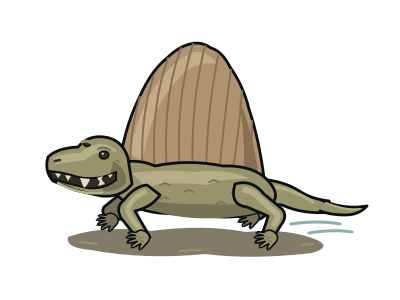
Its huge back sail looked dinosaur-like, but this animal was more closely related to you than to any dinosaur. It belonged to the mammal branch of the family tree, although it was not a mammal itself. Being on our branch did not make it a proven direct ancestor of humans.
Dimetrodon included several species that lived about 295 to 272 million years ago. That broad range did not establish the exact time span of each species. These animals lived before dinosaurs appeared, rather than alongside familiar dinosaurs such as Tyrannosaurus.
The sail’s bony supports were greatly lengthened projections from the bones of its spine, not separate horns. Fossil bones preserved those supports, along with evidence of the skull and teeth. Reconstructions joined the supports with skin, but the sail’s exact outline and living colours were not established by the fossils.
Teeth behind the name
Its name referred to teeth of different sizes. Large, canine-like teeth stood among smaller ones.
A sprawling stance
It had a long tail, and its limbs extended out to the sides rather than straight beneath its body like a dog’s.
Another sail, a separate origin
Its plant-eating relative Edaphosaurus also had a sail, but the two sails evolved independently.
Next to it on the tree
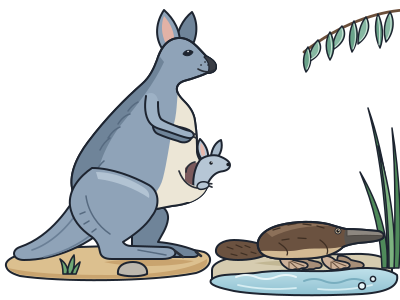
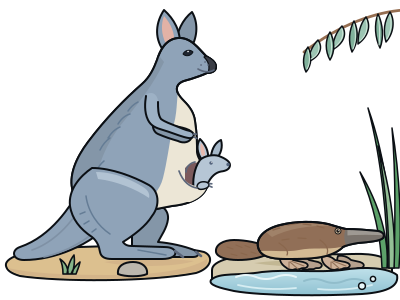
- MammalsFur and milk: from egg-laying platypuses to us.
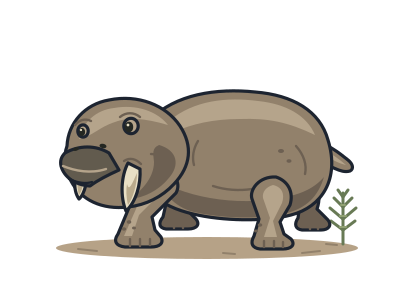
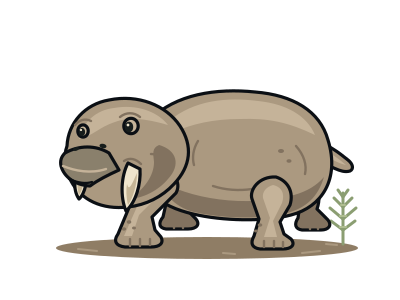
- LystrosaurusA tusked plant-eater that survived the end-Permian extinction and became abundant in parts of southern Africa.
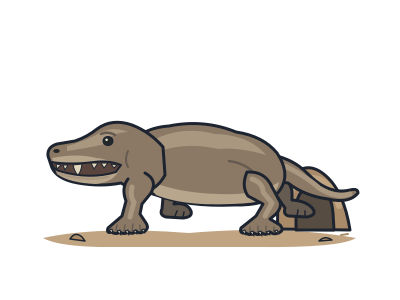
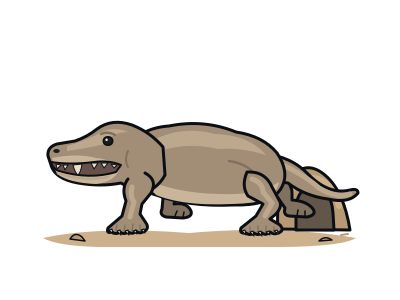
- ThrinaxodonA cat-sized mammal relative with different-shaped teeth and fossils preserved inside burrows.
- InostranceviaA bear-sized sabre-toothed gorgonopsian, top predator just before the great Permian die-off.
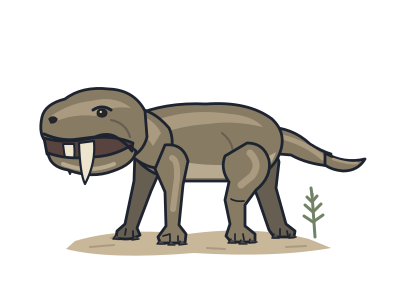
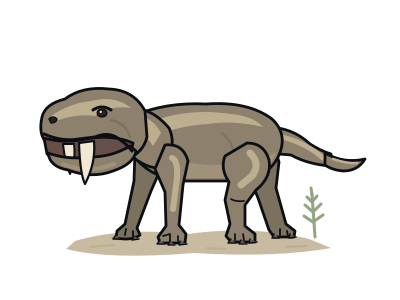
- MorganucodonA shrew-sized night hunter, one of the first mammal-like animals with a mammal jaw joint.
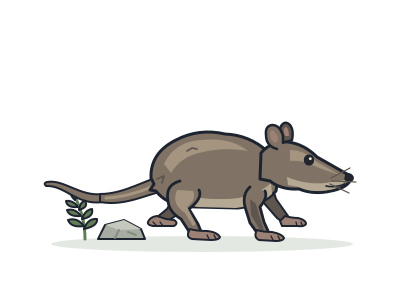
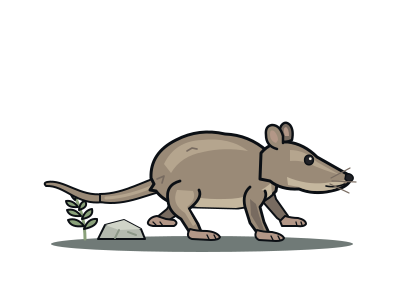
- MoschopsA barrel-chested plant-eater with a skull bone thick enough for head-pushing contests.
- CynognathusA wolf-sized "dog jaw" hunter whose fossils on several continents helped confirm drifting continents.
- CastorocaudaA Jurassic swimmer with a flat beaver-like tail, proving early mammal cousins were not all tiny shrews.