An extinct group
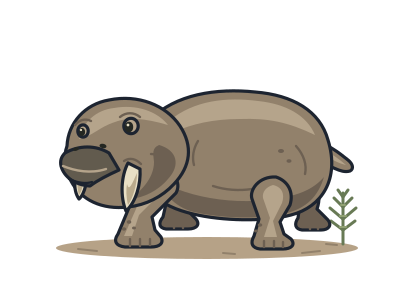
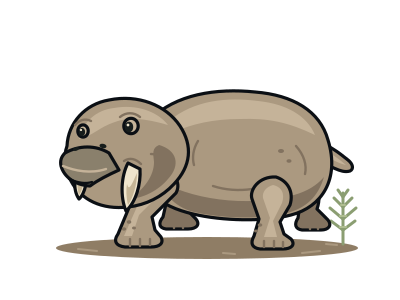
Lystrosaurus †
Lystrosaurus
A tusked survivor on our side of the family tree.
Lived about 255–248 million years ago.
You and lystrosaurus meet in the Mammals and their ancestors branch, shown at about 315 million years ago (on 4 December, in a calendar from life's shared ancestor to today).
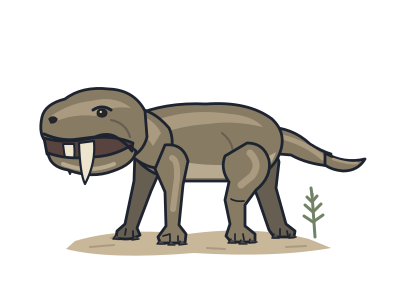
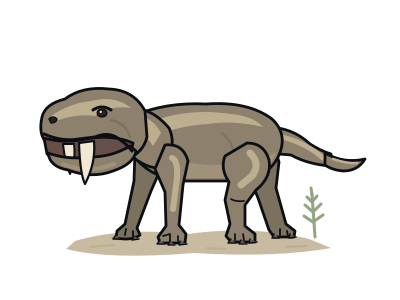
This tusked, pig-sized plant-eater survived Earth's worst mass extinction—and belonged on our side of the family tree. It was more closely related to humans than to lizards or dinosaurs, though it was not a mammal. It lived about 255 to 248 million years ago.
The name covered several species. About a metre long was a useful size guide, but species and individuals varied. Its skeleton showed a heavy body and powerful front legs. The bones suggested that its legs spread partly out to the sides, unlike a pig's. Its only teeth were two upper tusks. Researchers inferred that a turtle-like beak helped it crop plants.
The mass extinction struck about 252 million years ago. Afterwards, this survivor became especially abundant in parts of southern Africa. Its success was striking, but not equal everywhere: a huge share of fossils of animals with backbones in one region did not mean it dominated the whole world.
Underground shelter
Fossils found inside burrow structures in South Africa provided evidence that it used underground shelters.
An Antarctic home
It lived in Antarctica alongside plants and other land animals, without today's thick ice sheet.
Clues to joined continents
Its fossils on widely separated continents helped support the idea that those continents had once formed one huge landmass.
Next to it on the tree
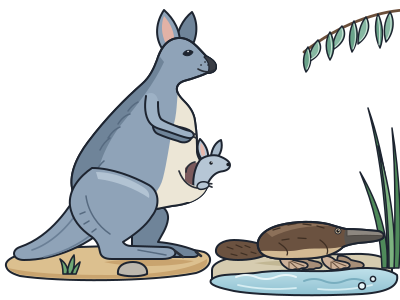
- MammalsFur and milk: from egg-laying platypuses to us.
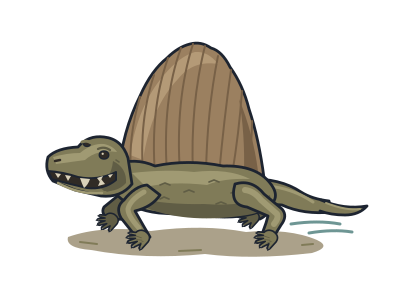
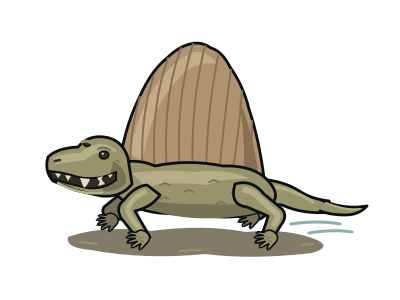
- DimetrodonIts huge back sail looks dinosaur-like, but it is closer to you than to any dinosaur.
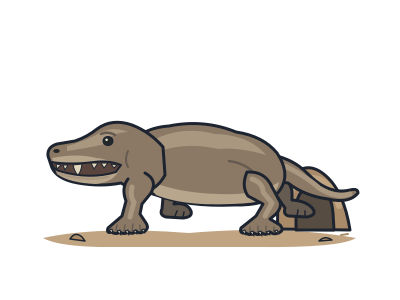
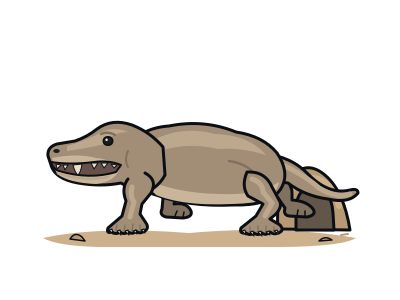
- ThrinaxodonA cat-sized mammal relative with different-shaped teeth and fossils preserved inside burrows.
- InostranceviaA bear-sized sabre-toothed gorgonopsian, top predator just before the great Permian die-off.
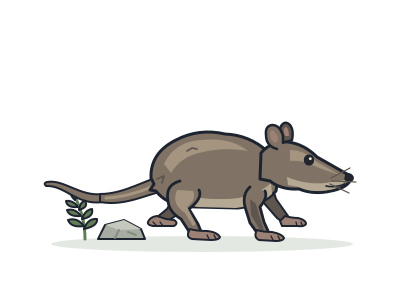
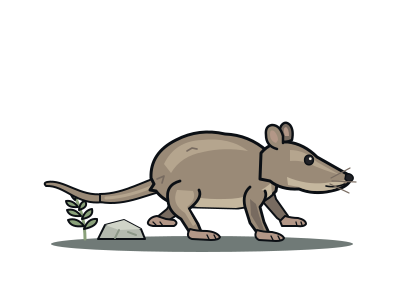
- MorganucodonA shrew-sized night hunter, one of the first mammal-like animals with a mammal jaw joint.
- MoschopsA barrel-chested plant-eater with a skull bone thick enough for head-pushing contests.
- CynognathusA wolf-sized "dog jaw" hunter whose fossils on several continents helped confirm drifting continents.
- CastorocaudaA Jurassic swimmer with a flat beaver-like tail, proving early mammal cousins were not all tiny shrews.