A species
Ignicoccus
Ignicoccus hospitalis
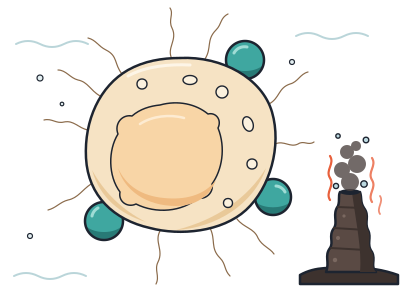
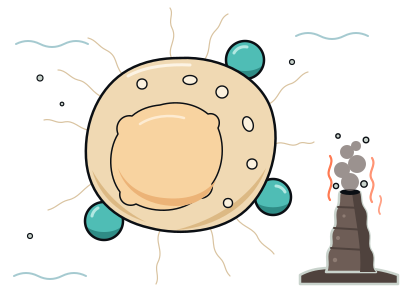
A fireball of a cell that gives tiny passengers a ride in seawater close to boiling point.
You and the ignicoccus meet in the Archaea branch, shown at about 3.3 billion years ago (on 20 March, in a calendar from life's shared ancestor to today).
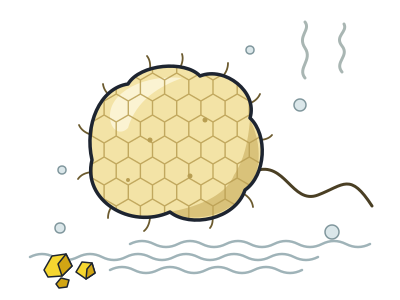
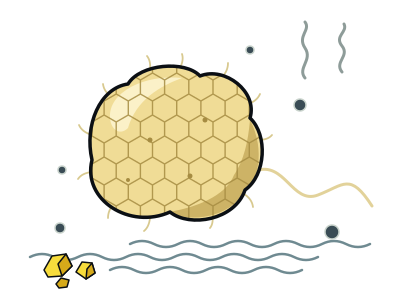
Picture a tiny round cell living in seawater close to boiling point, with even tinier cells stuck to its outside like beads. This is Ignicoccus. Its passengers are Nanoarchaeum, a different kind of archaeon. So far, Ignicoccus is the only living thing known that can host them.
The two are not equal partners. Ignicoccus grows fine on its own, but Nanoarchaeum cannot live without its host. The riders seem to take building blocks for their bodies from Ignicoccus. They can also stop a host cell from dividing. When conditions slow the culture's growth, most host cells carry about ten riders each.
Ignicoccus was found at a hot vent on the seabed north of Iceland, about 100 metres down. It grows at about 70 to 98 °C and likes about 90 °C best. It needs no sunlight and does not eat other living things. Instead it gets energy by joining hydrogen gas with sulfur, which makes hydrogen sulfide, the gas that smells of rotten eggs. It builds its body from carbon dioxide.
On the tree, Ignicoccus belongs to the same broad group of heat-loving archaea as Sulfolobus. Archaea are not bacteria. They are a separate major branch of life.
Power station on the outside
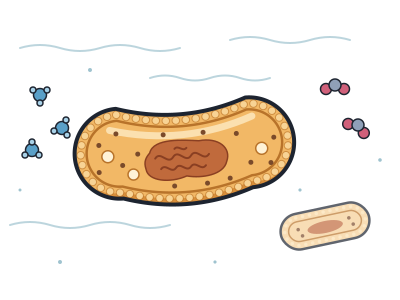
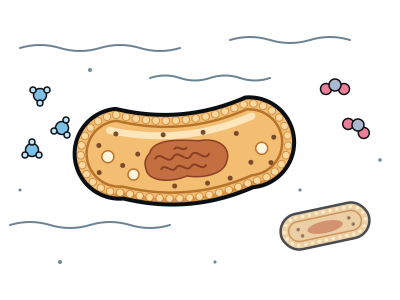
Ignicoccus has two membranes. It is the only known microbe with two membranes that keeps its energy-making machinery in the outer one, away from the inner part that holds its DNA.
Busy times, fewer riders
When the culture is growing fast, only about a quarter of Ignicoccus cells carry any riders, and usually just one to three each.
Found in two oceans
Scientists first named the Ignicoccus group in 2000, from members found at vents in both the Atlantic Ocean and the Pacific Ocean. The host of Nanoarchaeum was named as its own species in 2007.