A group of living things
DPANN archaea
DPANN
Tiny archaea with trimmed-down genes, many of which live by leaning on a bigger neighbour.
This branch is shown at about 2.6 billion years ago; its age is a rough estimate.
You and dpann archaea meet in the Archaea branch, shown at about 3.3 billion years ago (on 20 March, in a calendar from life's shared ancestor to today).
Some of the smallest living cells ever found belong to this group of archaea. Archaea are not bacteria. They are a separate main branch of life. On this tree the group sits beside the methane-makers, the hot-spring archaea and the Asgard archaea. Many members have tiny cells, short sets of genes and few ways of making a living. Many may not be able to survive without a partner, and some may be parasites.
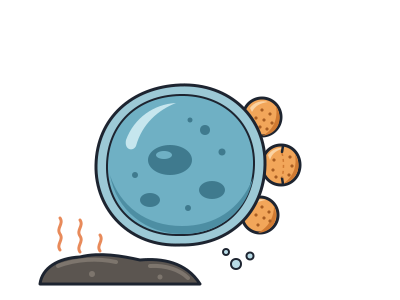
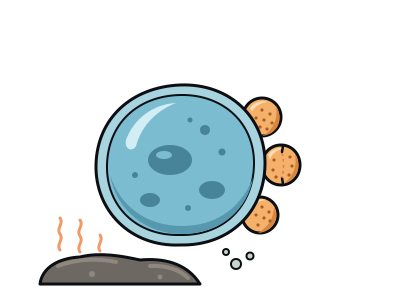
The best-known member, Nanoarchaeum, rides on the outside of a bigger archaeon in hot vents on the seafloor, at about 75 to 98 °C. The top of that range is close to boiling. Its cell is about 400 nanometres across, with less than 1% of the volume of a common gut bacterium. It carries only about 536 protein genes. It cannot make its own fats or amino acids, so it gets them from its host. Its relatives have turned up in hot springs in Yellowstone, in Russia's Uzon Caldera and along the East Pacific Rise.
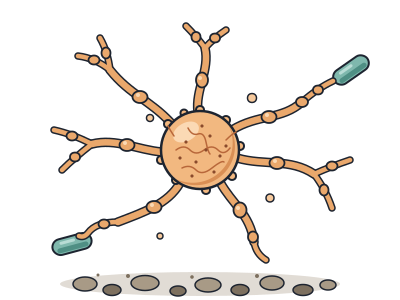
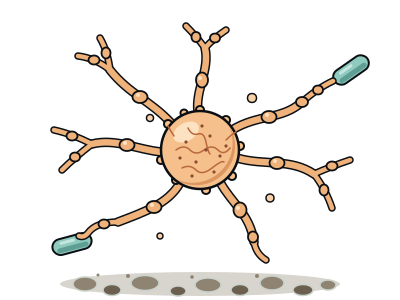
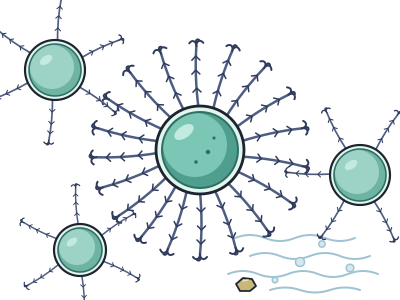
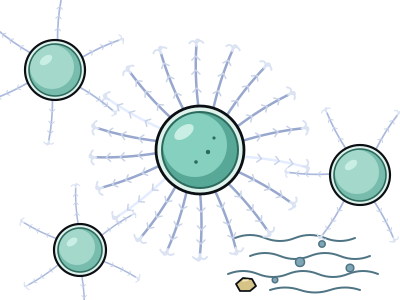
Not every member is a hitch-hiker. The grappling-hook archaeon lives in cold sulfur springs and underground water, and it makes its own food from carbon dioxide. Each round cell bristles with hundreds of thin threads that look like barbed wire. Each thread ends in a three-pronged hook that grabs neighbouring cells and holds the colony together.
Members of this group were first found in harsh places: very hot, very acidic or very salty. Since then they have turned up in ordinary places too, such as lake and sea mud and underground water.
Found near Iceland
Nanoarchaeum was discovered in 2002, on hot rocks taken from a seafloor vent north of Iceland.
A name that means 'riding'
Nanoarchaeum's species name, equitans, means 'riding', because the little cell rides on the surface of its larger host, an archaeon called Ignicoccus.
A rare double wrapping
The grappling-hook archaeon is wrapped in two membranes instead of one. That is rare among archaea.
Inside dpann archaea
- NanoarchaeumOne of the tiniest cells known, riding on a bigger archaeon in boiling vents because it cannot live alone.
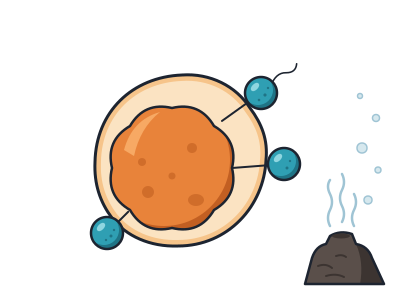
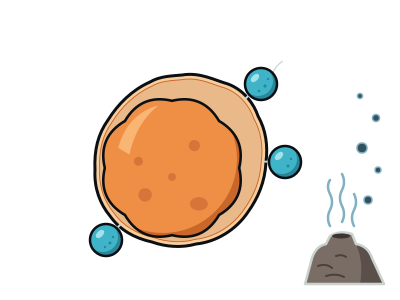
- ARMAN archaeonOne of the smallest cells known, found in mine water as acidic as battery acid at Iron Mountain, California.
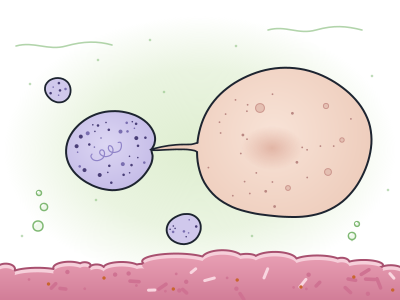
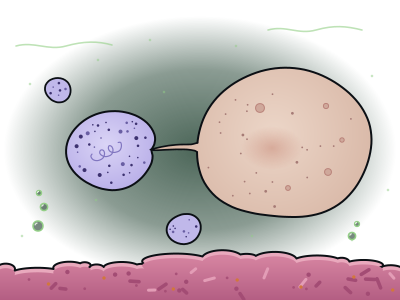
- Grappling-hook archaeonCovered in about a hundred barbed hooks that knit the cells into a net-like film in cold underground springs.
Next to it on the tree
- Methane-makers and salt-loversArchaea that make the methane in cow burps, turn salt ponds pink, or grow hotter than boiling water.
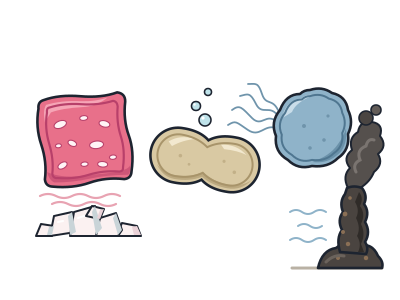
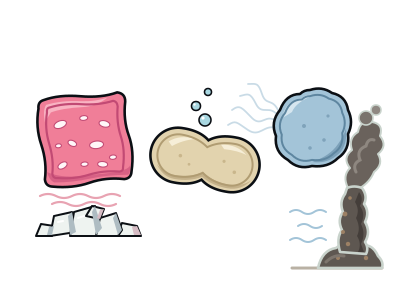
- Hot-spring and ocean archaeaFrom boiling acid springs to the open ocean, these archaea thrive where you would least expect.
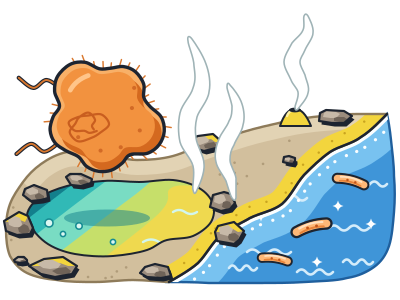
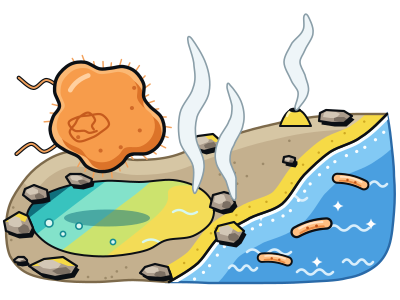
- Asgard archaeaNamed after Norse gods, these archaea carry cell-building genes once thought unique to us; our ancestor was one of them.