A species
ARMAN archaeon
Candidatus Micrarchaeum acidiphilum
One of the tiniest cells known, living in mine water about as acidic as battery acid.
You and the arman archaeon meet in the Archaea branch, shown at about 3.3 billion years ago (on 20 March, in a calendar from life's shared ancestor to today).
Deep inside an old mine at Iron Mountain in northern California, water about as acidic as battery acid flows through the dark. A pink, slimy biofilm floats on it. Hidden in that slime is one of the smallest cells known. Each cell is a little oval about 200 to 400 nanometres across, roughly the size of a large virus. A full stop on this page could hold many thousands of them.
Even though it is that small, it is not a bacterium or a virus. It is an archaeon, part of a major branch of life that is separate from bacteria. On the tree it sits in a group of mostly very small archaea, alongside Nanoarchaeum and the grappling-hook archaeon. Many members of this group are thought to live attached to other microbes.
For years nobody knew it was there. It was too small to spot easily under ordinary microscopes, and too unusual for the standard DNA tests to pick up. In 2006 a team at UC Berkeley found it by reading all the DNA in a mine sample at once. Its whole genome is only about 1 million DNA letters long. Humans have billions. In these tiny mine microbes, up to nearly half of the genes do jobs nobody understands yet.
Poked by a bigger neighbour
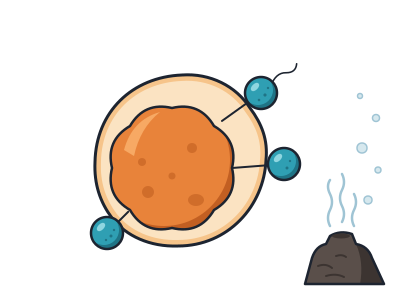
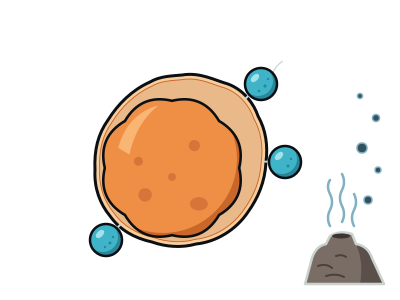
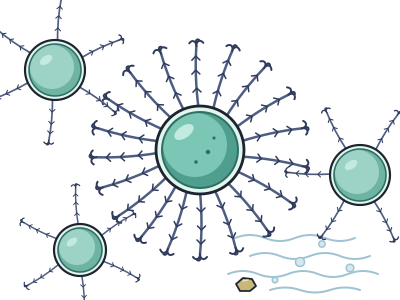
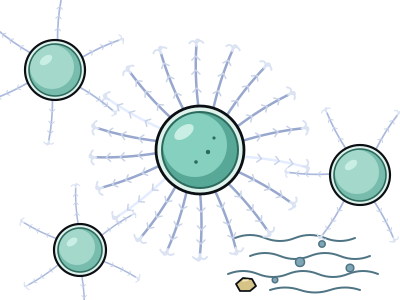
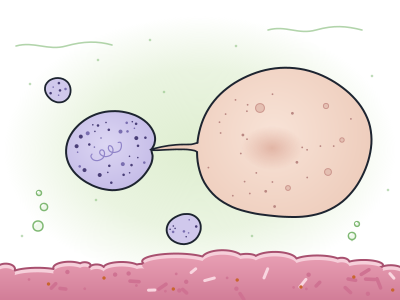
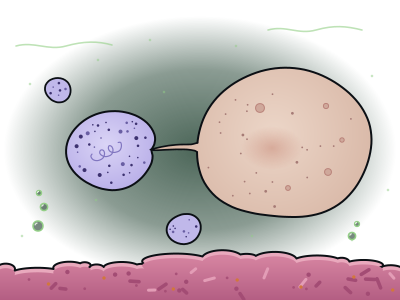
In 3D pictures of frozen cells, larger archaea sometimes pushed thin, needle-like arms right into tiny cells of this kind. About 1 in 10 of the roughly 70 tiny cells imaged had been pierced this way.
Hardly any protein factories
One estimate gives each tiny cell only about 90 ribosomes, the machines that build proteins. A cell of the gut bacterium E. coli can have about 10,000.
Borrowed genes
In these microbes, up to about a fifth of the genes look most like bacterial genes. That includes a dozen genes scientists once thought only bacteria had.