An extinct species
Acanthostega †
Acanthostega gunnari
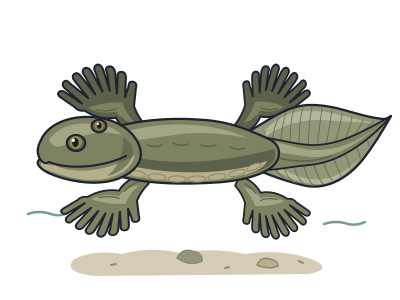
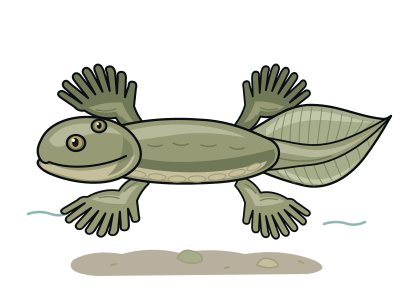
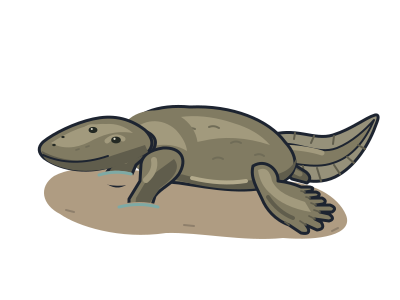
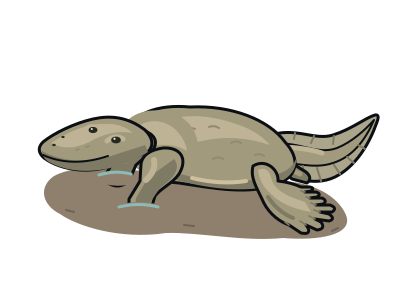
Eight fingers, but still a swimmer.
Lived about 365–360 million years ago.
You and the acanthostega meet in the Fish on the way to land branch, shown at about 400 million years ago (on 27 November, in a calendar from life's shared ancestor to today).
It had real legs and eight fingers on each hand, yet its body was built for life in water. It belonged to an extinct branch close to the origins of living four-limbed animals, including us. It lived about 365 to 360 million years ago, but was not a demonstrated direct ancestor of humans.
Its paddle-like limbs lacked the wrist and ankle structures needed for ordinary weight-bearing walking. Fossils also preserved a deep, fish-like tail fin supported by bones. Bones that once supported gills provided evidence that it still had gills: the breathing tissue itself was not preserved.
Together, these features supported a surprising idea: limbs with fingers evolved for use in water before they were used on land. Almost all its fossils came from one sandstone layer in East Greenland. The rocks recorded a river channel within a tropical inland delta—a very different setting from Greenland's icy landscape today.
A belly covering
Elongated, oval bony scales covered its belly.
Sensing the water
Canals in its skull bones housed a system for sensing water movement, like that of fishes.
Short ribs
Its ribs were very short.
Next to it on the tree
- Four-limbed animalsFish that walked: every frog, lizard, bird and mammal inherits their four limbs.
- EusthenopteronA fish whose fin bones match your arm bones: one upper bone, then two, then many.
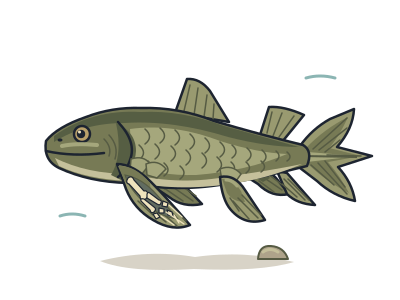
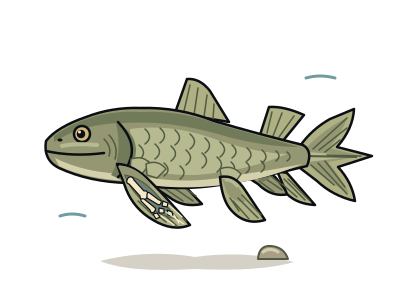
- TiktaalikA 'fishapod' with a neck, wrists and lungs, found in Arctic rocks where scientists predicted.
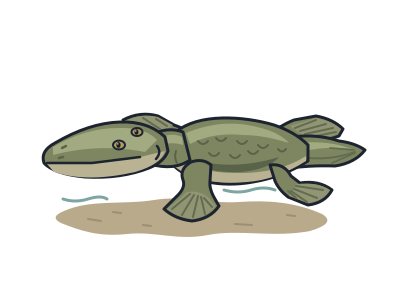
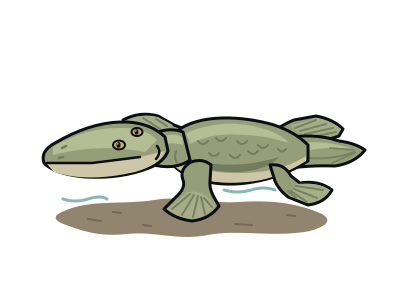
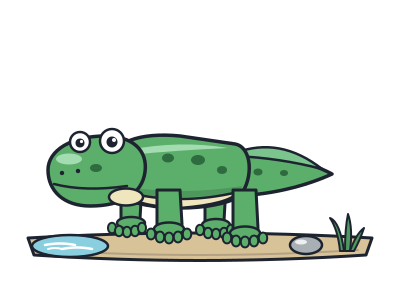
- IchthyostegaA seven-toed, seal-like animal that may have hauled itself across Devonian mudflats.
- PanderichthysA flat-headed, crocodile-like fish whose fins hide tiny finger-like bones.
- ElpistostegeA complete fossil fish from Canada with rows of finger bones inside its fin.
- GogonasusAn Australian fossil fish so perfectly preserved in 3D that you can see the arm bones in its fins.