A species
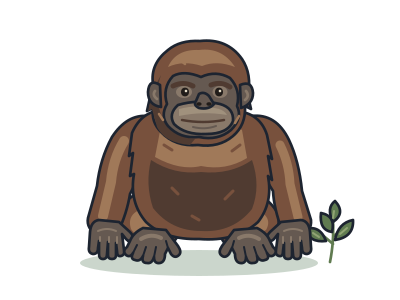
Western gorilla
Gorilla gorilla
A mighty plant-eater with a family life.
You and the western gorilla meet in the Great apes branch, shown at about 16 million years ago (on 30 December, in a calendar from life's shared ancestor to today).
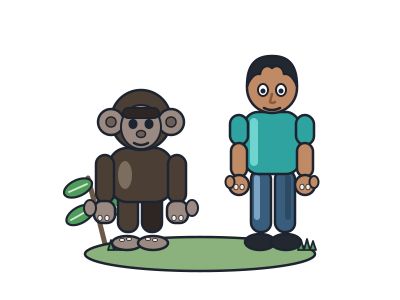
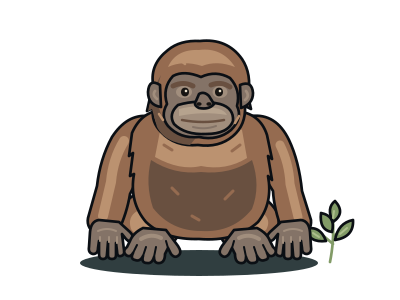
Compare with something elseThe western gorilla is one of the world's largest primates, but this powerful relative of ours is mainly a plant-eater. It belongs to the great ape family, alongside orangutans, chimpanzees, bonobos and humans. Its size can look intimidating. Western lowland gorillas, however, are generally gentle, social animals—not the solitary monsters sometimes shown in films.
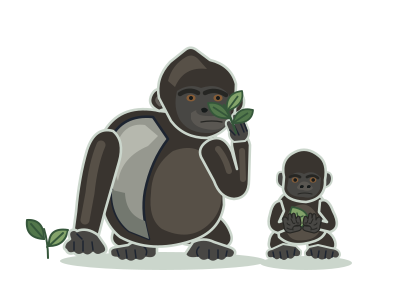
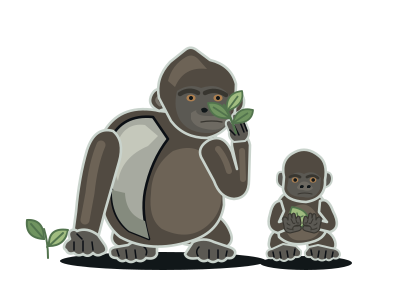
Western gorillas include two kinds: western lowland gorillas and Cross River gorillas. A typical family group has a leading adult male, several females and their young. Mothers carry small babies against their chest; later, the youngsters ride on their mother's back. Young gorillas learn by playing and copying others.
Leaves, stems, bark and fruit make up most of the menu, with insects such as termites too. As gorillas move around and leave droppings, they spread seeds, helping forest plants grow in new places. Mostly gentle does not mean harmless: adults can warn rivals and defend their group.
A nose like no other
Individual gorillas have distinctive nose patterns. Researchers use these to recognise them.
Hands, not fists
Gorillas beat their chest with cupped hands, not clenched fists.
No tail needed
Like other apes, gorillas have no external tail.