A group of living things
New World monkeys
Platyrrhini
A monkey family with an ocean-crossing story.
This branch is shown at about 22 million years ago; its age is a rough estimate.
You and new world monkeys meet in the Primates branch, shown at about 70 million years ago (on 25 December, in a calendar from life's shared ancestor to today).
Compare with something elseThe leading explanation for this family's arrival in South America is an extraordinary accident: their ancestors crossed the Atlantic from Africa on floating tangles of plants. These were natural rafts, not boats the monkeys built. Africa and South America had already separated before monkeys evolved, so the animals could not simply have travelled with the drifting continents.
On the family tree, they are the sister group of the branch containing Old World monkeys and apes, including humans. New World monkeys are not a type of Old World monkey. They are more closely related to apes than to tarsiers, lemurs or lorises.
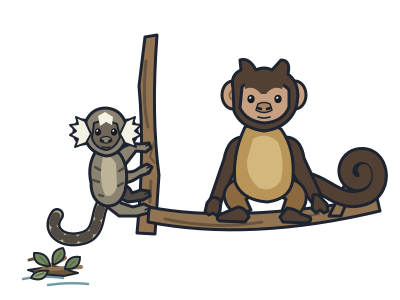
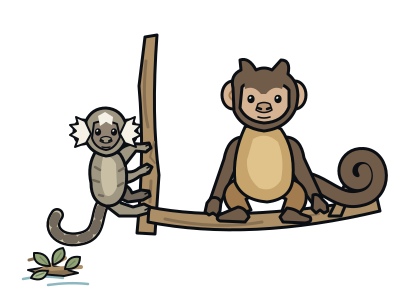
Today, their members include tiny marmosets, sturdier capuchins and howler monkeys. They live from Mexico through Central America and into South America, reaching Argentina. Their homes include wet rainforest and seasonally dry woodland—not just the Amazon. All living members have tails, but only some kinds can grip with them. A marmoset cannot hang by its tail.
Sideways nostrils
Their broad noses have nostrils that open towards the sides. Old World monkeys and apes generally have narrower noses with downward-facing nostrils.
More than fruit
The group includes leaf eaters, insect hunters and tree-gum specialists. Many species eat a mixture of foods.
Different conservation stories
Forest destruction and hunting threaten many species, but their situations differ. One threat label cannot describe the whole group.
Inside new world monkeys
- Common marmosetA squirrel-sized monkey that usually has twins, carried by dad.
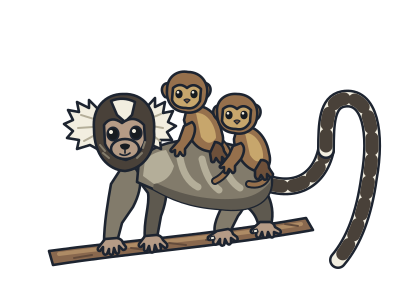
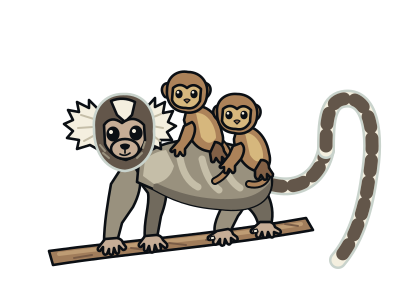
- Bearded capuchinCracks nuts with stone hammers on stone anvils.


- Mantled howler monkeyIts roar carries five kilometres through the rainforest.
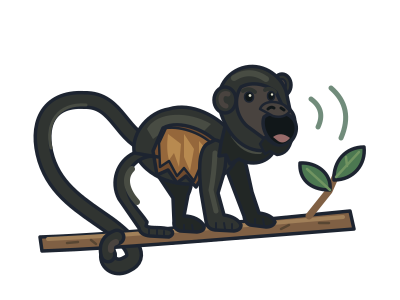
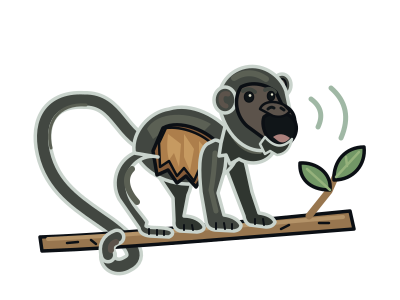
- Golden lion tamarinA flame-orange monkey with a lion’s mane, brought back from the brink by zoo breeding.
- Common squirrel monkeyA small, quick monkey that travels in big noisy troops through the Amazon canopy.
- Geoffroy’s spider monkeySwings through trees using a tail that grips like a fifth hand, with a bare fingerprint-like pad.
- Three-striped night monkeyThe only truly nocturnal monkey, with huge eyes; fathers do most of the baby-carrying.
Next to it on the tree
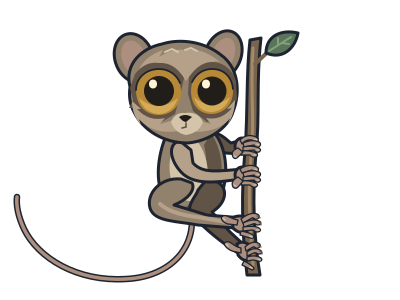
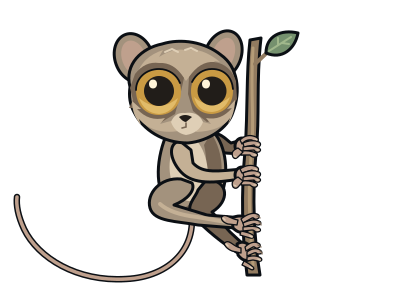
- Philippine tarsierEach eye is as big as its whole brain, and it can turn its head almost all the way round.
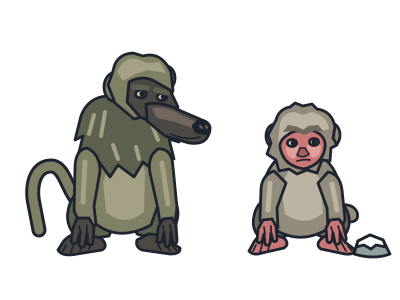
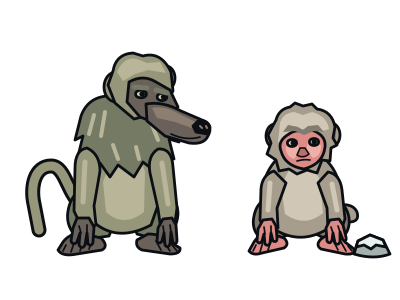
- Old World monkeysBaboons and macaques of Africa and Asia, closer to apes than New World monkeys are.
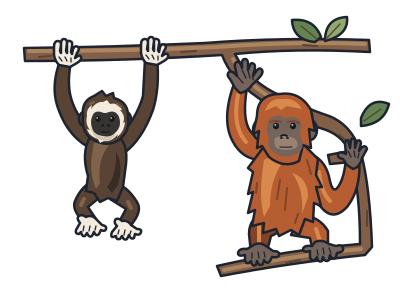
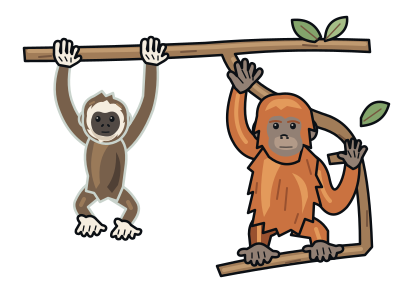
- ApesTailless primates with flexible shoulders made for swinging.
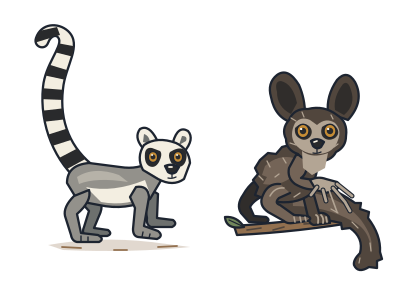
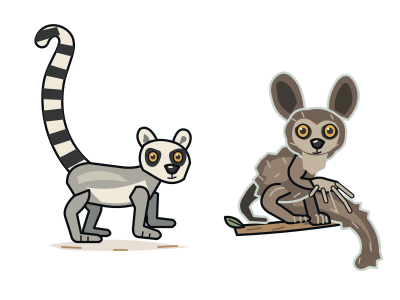
- Lemurs and lorisesWet-nosed primates: Madagascar's lemurs and the slow lorises of Asia.