A species
Bearded capuchin
Sapajus libidinosus
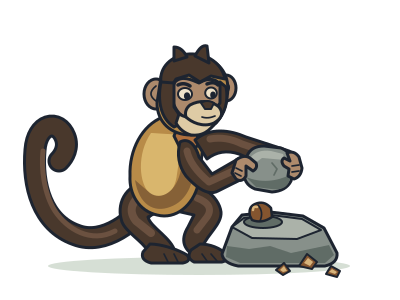
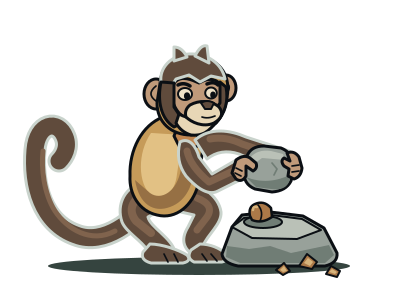
A monkey with a stone hammer
You and the bearded capuchin meet in the Primates branch, shown at about 70 million years ago (on 25 December, in a calendar from life's shared ancestor to today).
Compare with something elseBearded capuchins crack hard palm nuts with stone hammers on stone anvils: hard surfaces such as boulders. This tool-user is a monkey, not an ape. Like the common marmoset and mantled howler shown nearby on the tree, it belongs to the New World monkeys.
The job takes more than a handy rock. These monkeys select hammer stones and carry stones and nuts to their cracking sites. When striking a nut, they often stand on two legs and lift the hammer with both hands. Repeated blows break through the hard shell to reach the food inside.
These monkeys are native only to Brazil and use both trees and the ground. Their coats mix yellow-gold and brown, with darker limbs and tails. Mature animals develop two small dark tufts on the crown. Lighter hair around the mouth and chin gives them their bearded look, though colour varies between individuals.
Signs left behind
Repeated nut cracking leaves shallow pits in anvils, broken shells and discarded hammer stones.
Trees for bedtime
They are active during the day and sleep in trees at night.
A changing seat
Young infants cling to their mother's belly before later riding on her back.
Next to it on the tree
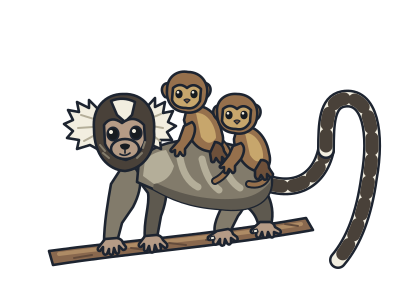
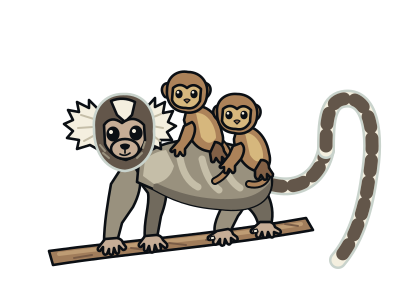
- Common marmosetA squirrel-sized monkey that usually has twins, carried by dad.
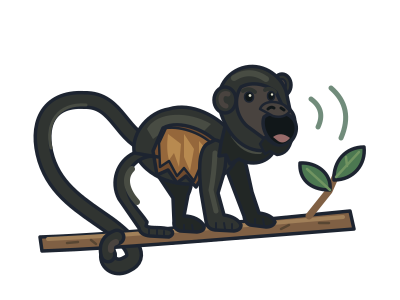
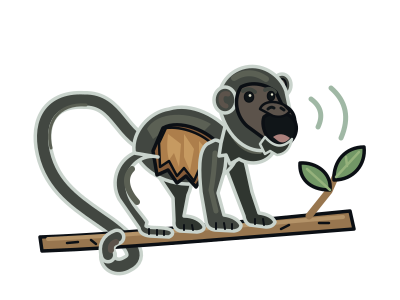
- Mantled howler monkeyIts roar carries five kilometres through the rainforest.
- Golden lion tamarinA flame-orange monkey with a lion’s mane, brought back from the brink by zoo breeding.
- Common squirrel monkeyA small, quick monkey that travels in big noisy troops through the Amazon canopy.
- Geoffroy’s spider monkeySwings through trees using a tail that grips like a fifth hand, with a bare fingerprint-like pad.
- Three-striped night monkeyThe only truly nocturnal monkey, with huge eyes; fathers do most of the baby-carrying.