A species
Common marmoset
Callithrix jacchus
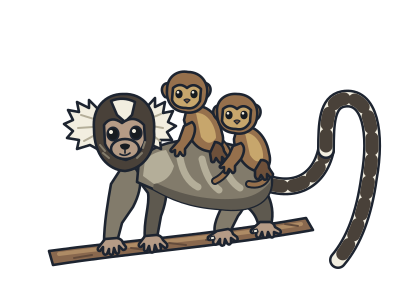
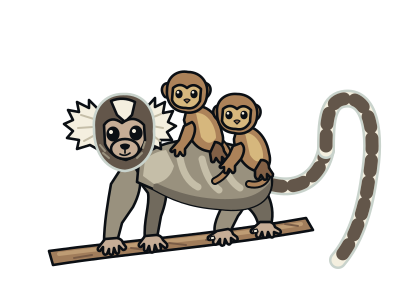
A squirrel-sized monkey with twins riding on dad.
You and the common marmoset meet in the Primates branch, shown at about 70 million years ago (on 25 December, in a calendar from life's shared ancestor to today).
Compare with something elseThe common marmoset is a squirrel-sized monkey that usually has twins, with dad starting to carry the babies soon after birth. But he does not do it alone. Mum and other group members carry them too, while older brothers and sisters help with carrying and feeding. Raising the young is a family job.
Despite its squirrel-like movements, this is a New World monkey: part of the monkey branch native to the Americas. It shares that broader branch with the capuchins and howler monkeys shown nearby. Its own native home is north-eastern Brazil, in habitats ranging from humid forest to dry, thorny woodland.
Claw-like nails help it cling to tree trunks, but its big toes have flat nails. Its lower front teeth work like tiny chisels, cutting holes in bark to reach the gum and other fluids that ooze out. It returns to these feeding holes, and tree gum supplies food when seasonal fruit is scarce.
A tail, not an extra hand
Its long tail cannot grip branches.
Growing into the white tufts
Newborns have brown-and-yellow coats. Their white ear tufts and forehead patch develop as they grow.
Whistling to the family
Loud, high-pitched whistles help group members keep in contact over a distance.
Next to it on the tree
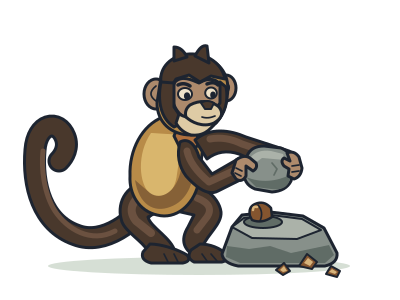
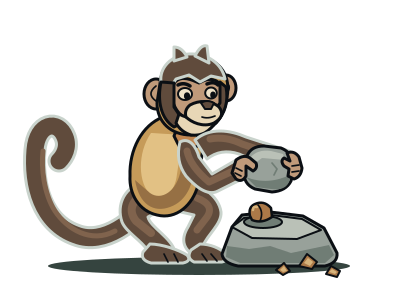
- Bearded capuchinCracks nuts with stone hammers on stone anvils.
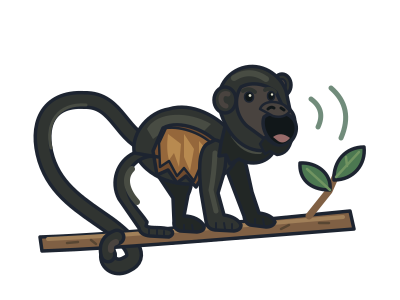
- Mantled howler monkeyIts roar carries five kilometres through the rainforest.
- Golden lion tamarinA flame-orange monkey with a lion’s mane, brought back from the brink by zoo breeding.
- Common squirrel monkeyA small, quick monkey that travels in big noisy troops through the Amazon canopy.
- Geoffroy’s spider monkeySwings through trees using a tail that grips like a fifth hand, with a bare fingerprint-like pad.
- Three-striped night monkeyThe only truly nocturnal monkey, with huge eyes; fathers do most of the baby-carrying.