A group of living things
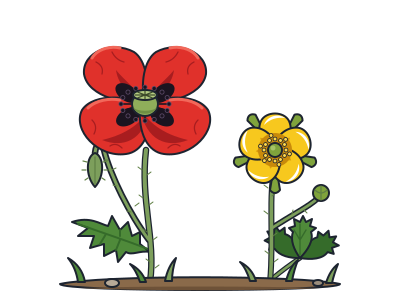
Buttercups and poppies
Ranunculales
The first branch of the eudicots, the biggest group of flowering plants.
This branch is shown at about 110 million years ago; its age is a rough estimate.
You and buttercups and poppies meet in the Eukaryotes branch, shown at about 1.8 billion years ago (on 28 July, in a calendar from life's shared ancestor to today).
Buttercups and poppies are on the earliest branch of the eudicots. Eudicots are a huge group that makes up more than 70% of all flowering plant species. That makes the buttercup in your lawn a distant relative of apples, peas, sunflowers and roses. Its branch split off before any of theirs did. Scientists call it the sister group to all other eudicots.
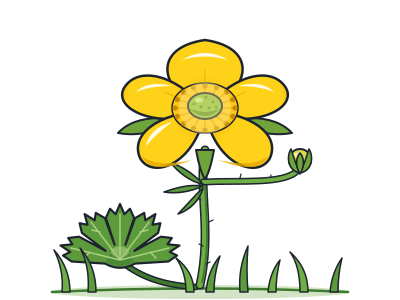
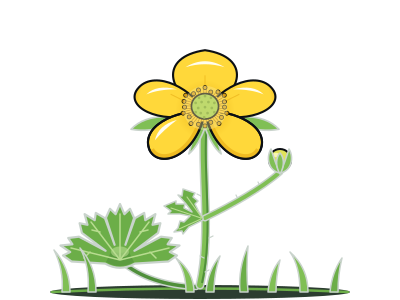
The group has seven families. Its members include buttercups, poppies, columbines, clematis, delphiniums, hellebores and barberries. Many are small herbs, most clematis are woody climbers and barberries are shrubs. In the buttercup family, the parts of the flower usually grow separately instead of joining together, and they are often arranged in spirals.
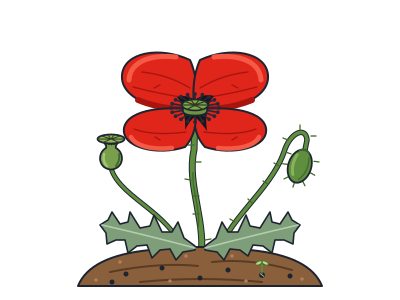
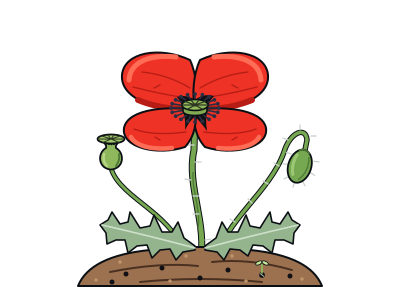
The meadow buttercup's petals are very glossy. The top layer of cells has two very flat surfaces that each reflect light like a mirror, so the petal shines almost as brightly as glass. That's why a buttercup held under your chin makes it glow yellow. The petals also reflect ultraviolet light, which bees can see. The common poppy has four papery, bright red petals, often with a black spot at the base. Each flower lasts only about a day.
Look, but don't nibble. Many plants in the buttercup family are poisonous, and their sap can blister skin.
A 125-million-year-old relative
One of the oldest and most complete eudicot fossils was found in north-east China. It is about 125 million years old and most like living buttercup-family plants. A non-scientist donated it to a museum.
Spurs made for visitors
Most columbine petals end in a hollow, nectar-holding tube called a spur. In North America, long spurs evolved for long-tongued hawkmoths, and medium spurs evolved for hummingbirds.
A crowded family
The buttercup genus alone has more than 1,600 species. Delphiniums have more than 500 and clematis almost 400.
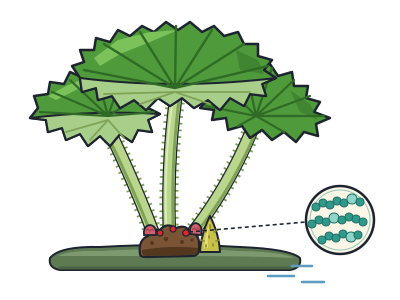
Inside buttercups and poppies
Next to it on the tree
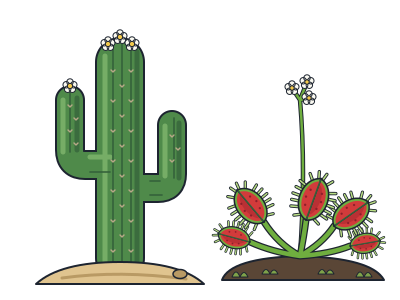
- Cacti, carnations and carnivoresOne branch holds cacti, beetroot and carnations, and also most meat-eating plants.
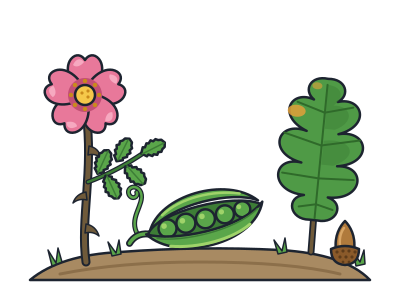
- RosidsA vast branch of eudicots including roses, beans, oaks, cabbages and eucalyptus.
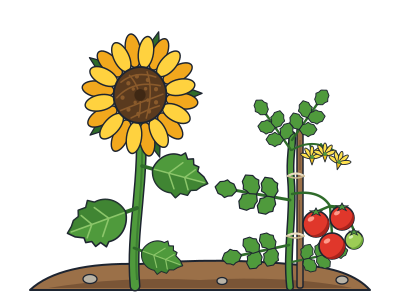
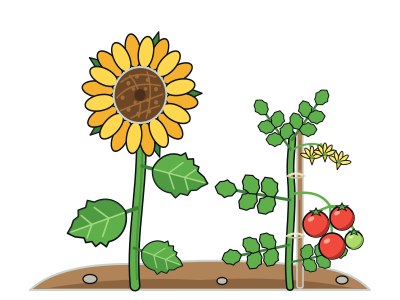
- AsteridsSunflowers, tomatoes, mint and coffee all belong to this big branch.
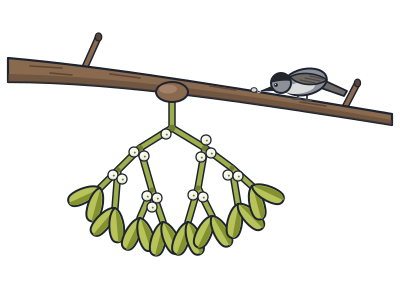
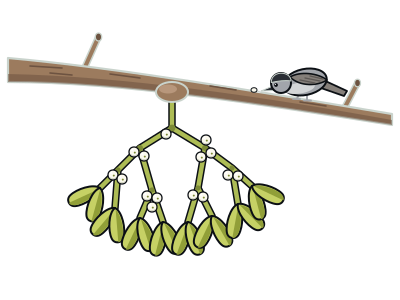
- MistletoeA half-parasite that grows on tree branches, planted there by birds wiping their beaks.
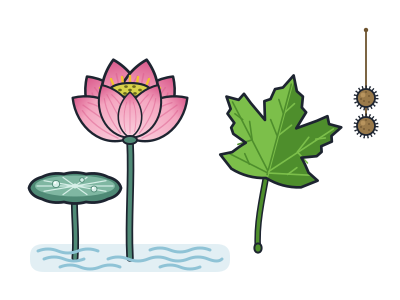
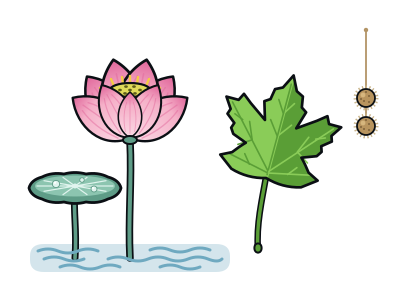
- Lotuses, proteas and planesA water lotus, a South African protea and a city plane tree turn out to be cousins.
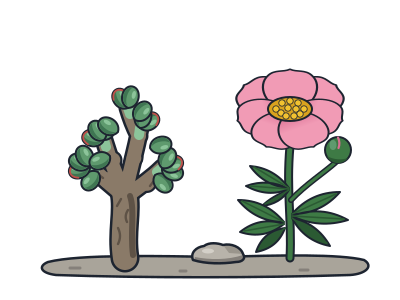
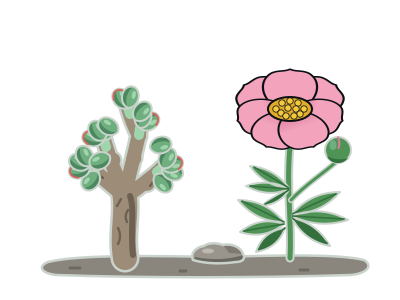
- Stonecrops and peoniesJade plants, peonies and currants: a branch rich in succulents and rock plants.
- Giant rhubarbLeaves big enough to shelter under, with partner microbes living in its stems.