A species
Giant rhubarb
Gunnera manicata
Umbrella-sized leaves, with tiny partner microbes living inside its stems.
You and the giant rhubarb meet in the Eukaryotes branch, shown at about 1.8 billion years ago (on 28 July, in a calendar from life's shared ancestor to today).
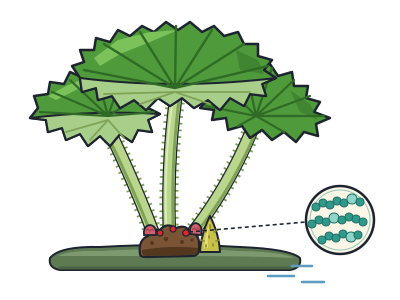
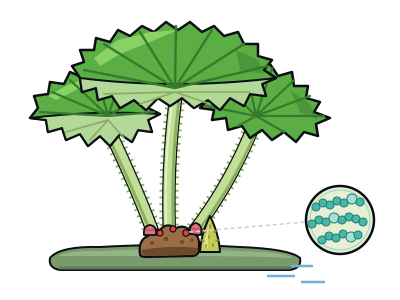
Imagine a leaf so big you could shelter under it like an umbrella. Giant rhubarb's leaves are about 1.5 to 2 metres long and roughly round, with jagged edges. Each one sits on a thick stalk up to about 2.5 metres long. Stiff prickles cover the stalks and the undersides of the leaves.
Something remarkable is hidden in its stems. Small, bright-red glands at the base of each leaf stalk ooze a sugary slime. The slime draws in tiny threads of cyanobacteria, which move right inside the plant's own cells. There they turn nitrogen from the air into a form the plant can use, and the plant gives them sugars in return. No other group of flowering plants is known to host these microbes. In experiments, the glands on seedlings only fully developed when the seedlings were short of nitrogen.
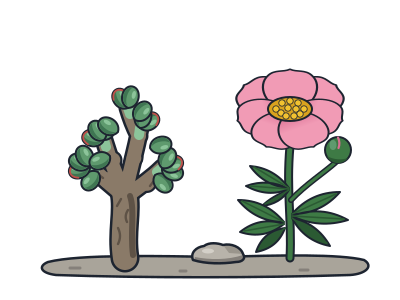
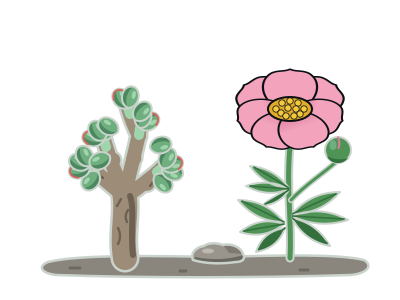
Despite its name, it is not a true rhubarb. True rhubarb belongs to the same broad group as cacti and carnations. Giant rhubarb's small group is the sister group to a vast branch of flowering plants. That branch includes cacti, carnations, roses, sunflowers, stonecrops, peonies and many thousands more. DNA revealed this link. Nobody had guessed it from the plant's shape.
Built in twos
Its tiny flowers have their parts in twos, such as two sepals and two carpels. Most plants on the huge neighbouring branch of the tree have flower parts in fives.
Ancient pollen
The oldest fossil pollen from this plant's genus comes from Peru and is about 90 million years old, from the age of dinosaurs. Later fossil pollen turns up around the world, even in Antarctica, where these plants no longer grow.
Giants and tiddlers
Its genus has about 40 to over 60 species, depending on who is counting. Some of them are tiny, with leaves only 1 to 2 centimetres long.
Next to it on the tree
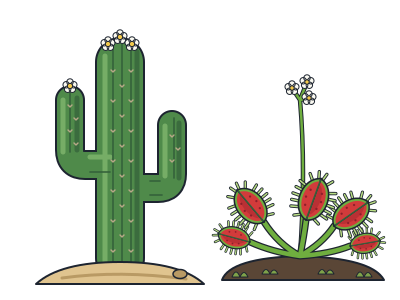
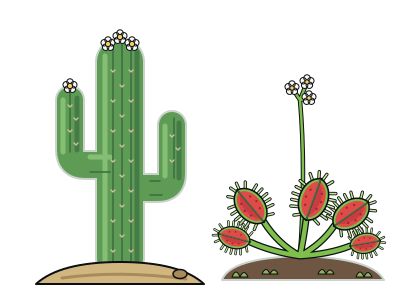
- Cacti, carnations and carnivoresOne branch holds cacti, beetroot and carnations, and also most meat-eating plants.
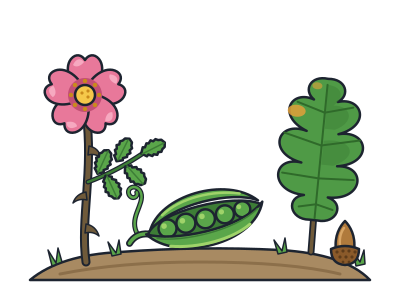
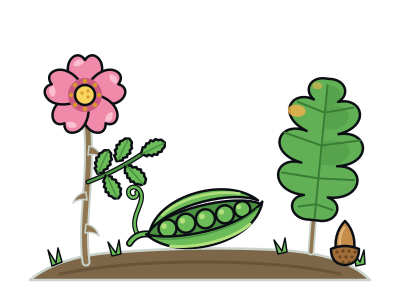
- RosidsA vast branch of eudicots including roses, beans, oaks, cabbages and eucalyptus.
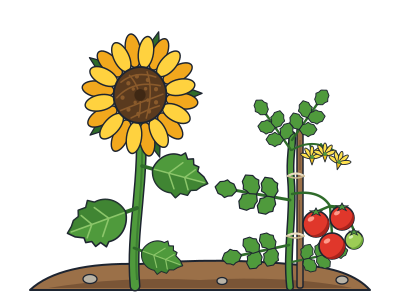
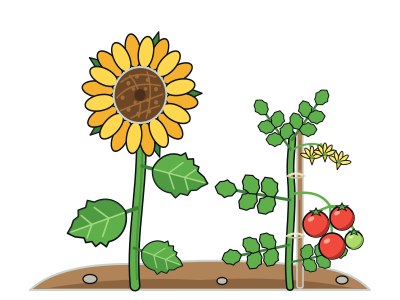
- AsteridsSunflowers, tomatoes, mint and coffee all belong to this big branch.
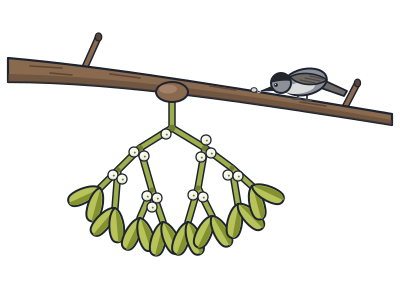
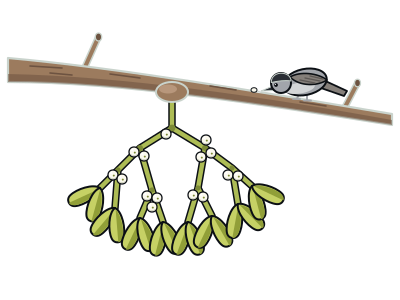
- MistletoeA half-parasite that grows on tree branches, planted there by birds wiping their beaks.
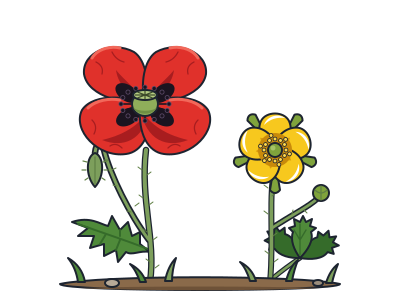
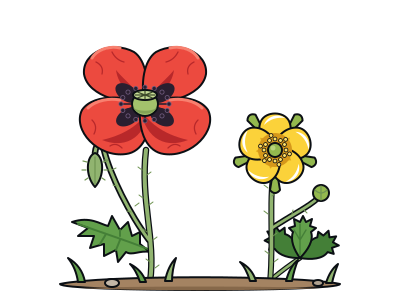
- Buttercups and poppiesThe earliest branch of the eudicots, with buttercups, poppies and columbines.
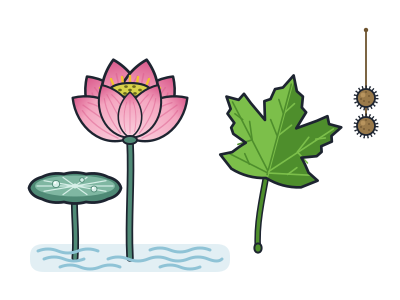
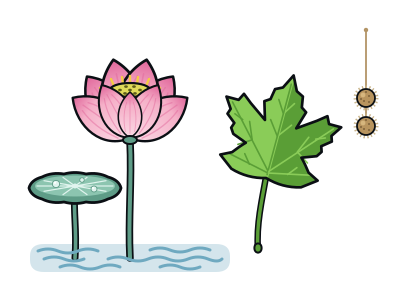
- Lotuses, proteas and planesA water lotus, a South African protea and a city plane tree turn out to be cousins.
- Stonecrops and peoniesJade plants, peonies and currants: a branch rich in succulents and rock plants.