A species
Mistletoe
Viscum album
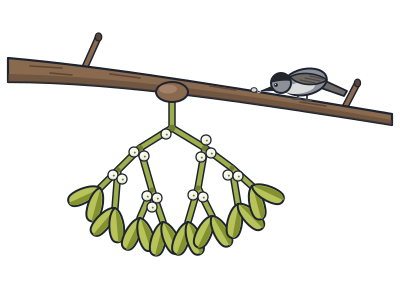
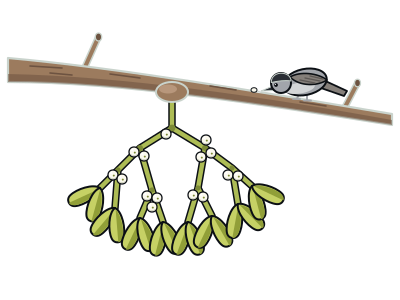
A bush in the treetops, planted by birds wiping their beaks.
You and the mistletoe meet in the Eukaryotes branch, shown at about 1.8 billion years ago (on 28 July, in a calendar from life's shared ancestor to today).
Mistletoe is planted by birds. A blackcap, a small songbird, eats the fatty pulp of a white berry, then wipes the sticky seed off its beak onto a branch. Mistle thrushes swallow whole berries and leave the seeds on branches in their droppings. A gluey, stringy jelly in the berry sticks each seed firmly to the bark.
From then on, mistletoe never touches the soil. It is a half-parasite. Its green leaves make its own food from sunlight, but a root-like part grows into the branch and takes water and minerals from the tree. It grows slowly. Proper leaves take three or more years to appear, and the plant needs 5 to 10 years to grow up. In the end it can become a round, evergreen ball about 1 to 1.5 metres across.
Mistletoe belongs to the same order as sandalwood trees, and many plants in that order are parasites. Living on branches evolved about five separate times in this order, so 'mistletoe' is a way of life, not one single family.
Each plant is either male or female, and only females carry berries. Look for it in winter, when green balls hang in bare apple and lime trees. Never eat it: it is harmful to people and pets.
Spreading under the bark
Over time, one mistletoe plant can send strands under a branch's bark, so several shoots pop up along the same branch.
A kissing custom
Kissing under mistletoe became a popular custom in England in the late 1700s.
Christmas auctions
Tenbury Wells in Worcestershire holds mistletoe auctions every year, though much of the mistletoe sold in Britain at Christmas comes from France.
Next to it on the tree
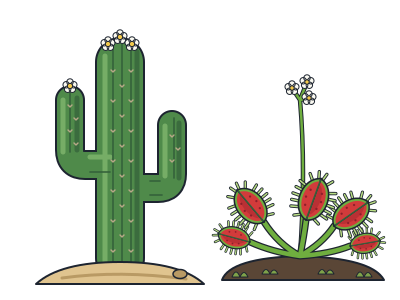
- Cacti, carnations and carnivoresOne branch holds cacti, beetroot and carnations, and also most meat-eating plants.
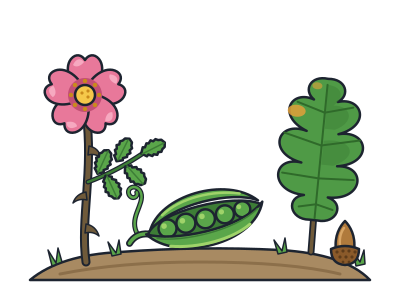
- RosidsA vast branch of eudicots including roses, beans, oaks, cabbages and eucalyptus.
- AsteridsSunflowers, tomatoes, mint and coffee all belong to this big branch.
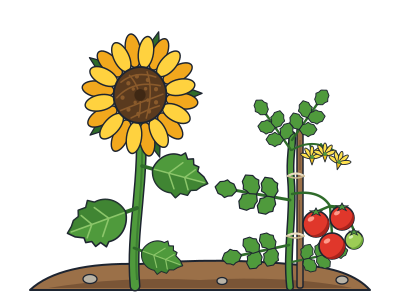
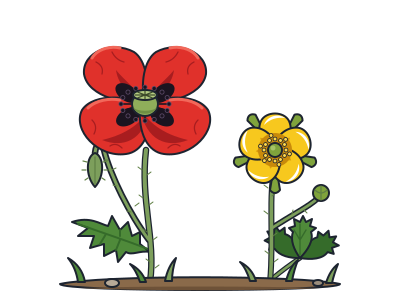
- Buttercups and poppiesThe earliest branch of the eudicots, with buttercups, poppies and columbines.
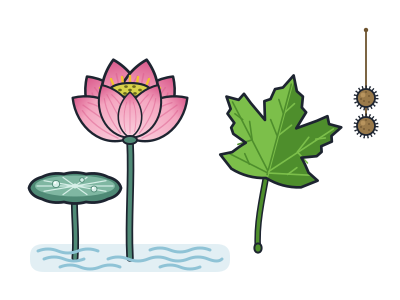
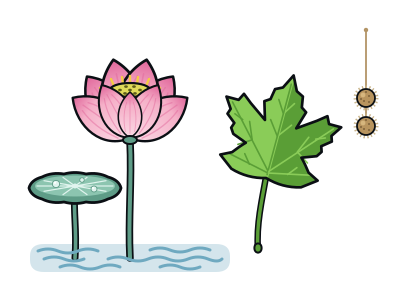
- Lotuses, proteas and planesA water lotus, a South African protea and a city plane tree turn out to be cousins.
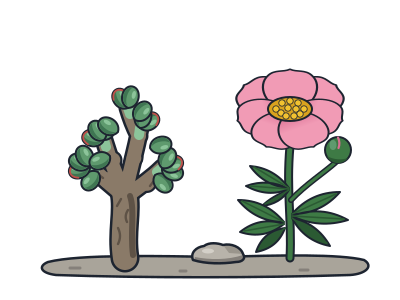
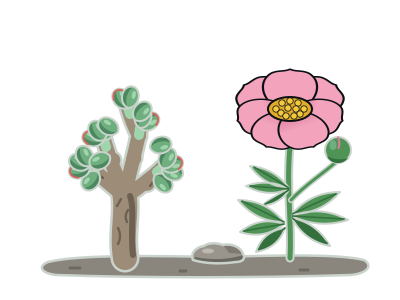
- Stonecrops and peoniesJade plants, peonies and currants: a branch rich in succulents and rock plants.
- Giant rhubarbLeaves big enough to shelter under, with partner microbes living in its stems.