A species
Sweet potato
Ipomoea batatas
A morning glory with a sweet root that crossed the Pacific long before Europeans did
You and the sweet potato meet in the Eukaryotes branch, shown at about 1.8 billion years ago (on 28 July, in a calendar from life's shared ancestor to today).
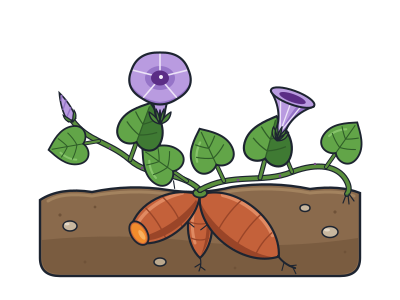
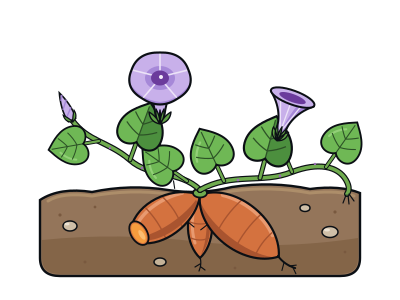
This sweet root comes from a morning glory. When it flowers, its lavender, trumpet-shaped flowers open before sunrise and wither within a few hours, much like many of its garden relatives. Away from the tropics it seldom flowers, because the summer days are too long. Despite its name, it is not a kind of potato. The ordinary potato belongs to a different family, the nightshades, along with tomatoes and peppers. The part we eat is also different. It is a swollen side root, not an underground stem like a potato.
Its story crosses an ocean. The oldest known sweet potato remains come from Peru and are about 10,000 years old. Yet people in Polynesia were growing it centuries before any European sailed into the Pacific. A 2013 study compared the DNA of more than 1,200 sweet potatoes, including dried plants collected by Captain Cook's crew. It traced the Polynesian ones back to the Peru–Ecuador region.
How did it get there? One archaeologist has suggested that Polynesian sailors made the long trip to South America on purpose in large double-hulled canoes, then carried the plant home.
Today it grows in warm places all over the world. Farmers usually plant cuttings from the vines, not seeds. The fast-spreading vines shade out weeds, so the crop needs little work. Inside, the roots can be white, cream, yellow, orange or purple.
Naturally carries bacterial DNA
Scientists tested 291 farmed sweet potato varieties, and every one carried DNA from a soil bacterium. Scientists use the same kind of bacterium to make genetically modified crops in the lab.
Winter storage pits
In Aotearoa New Zealand, Māori dug underground pits called rua kūmara and cleaned them with fire. They used the pits to keep sweet potatoes safe through the winter.
A huge harvest
In 2020 the world grew about 89 million tonnes of sweet potatoes. China grew more than half of them.
Next to it on the tree
- Nightshade familyTomatoes and potatoes are close cousins in a family that also includes deadly nightshade.
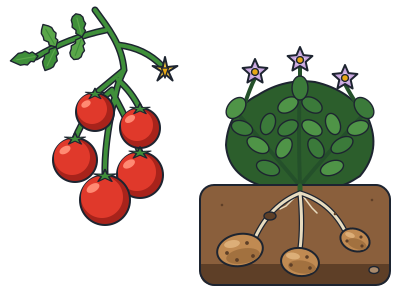
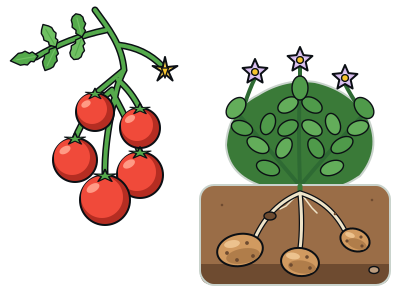
- Daisy familyOne of the two biggest flowering-plant families, with over 32,000 species from lettuce to dandelions.


- Olives, mints and kinOlives, mint, lavender, basil and lilacs are all relatives.
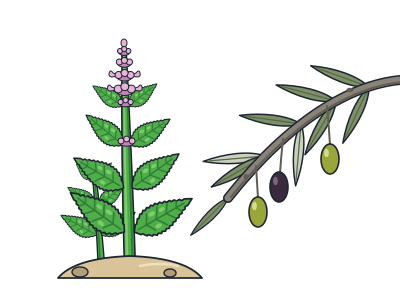
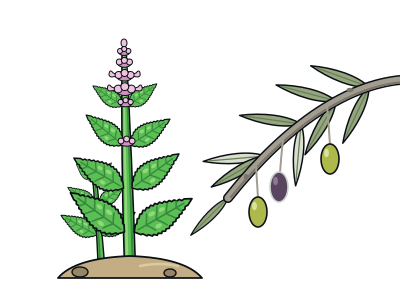
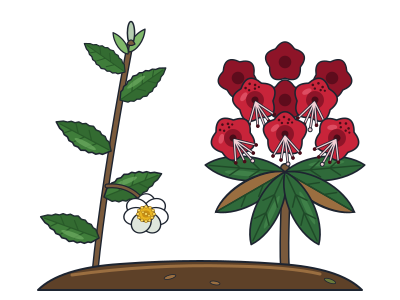
- Heathers, tea and kinTea, blueberries, kiwifruit, Brazil nuts and pitcher plants share one ancestor.
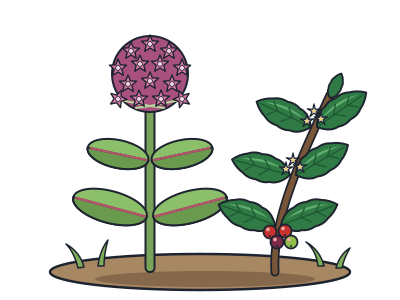
- Coffee and milkweedsCoffee, milkweed and gentians are relatives, many with powerful natural chemicals.
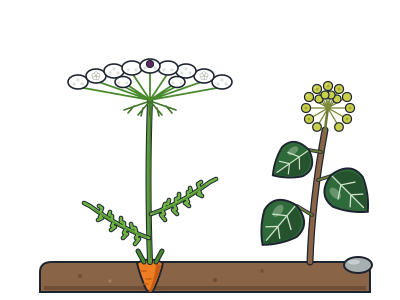
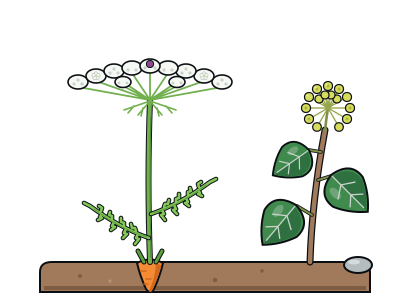
- Carrots, parsley and ivyUmbrella-shaped flower clusters link carrots and coriander to ivy.
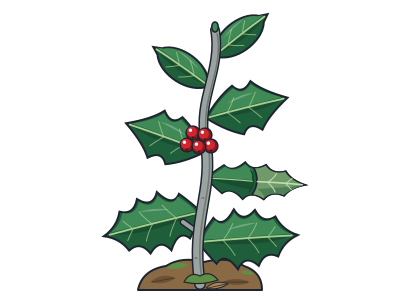
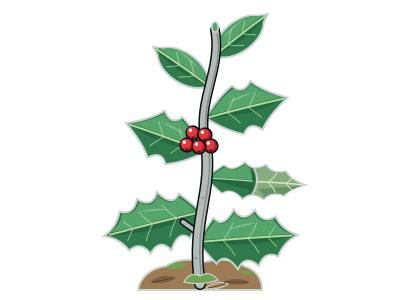
- HollyPrickly lower leaves deter deer, while higher leaves are often smooth.