A group of living things
Daisy family
Asteraceae
One huge family, from salad lettuce to dandelion clocks
This branch is shown at about 70 million years ago; its age is a rough estimate.
You and daisy family meet in the Eukaryotes branch, shown at about 1.8 billion years ago (on 28 July, in a calendar from life's shared ancestor to today).
The lettuce in your salad, the sunflower in a field and the dandelion on the lawn all belong to one enormous family. With over 32,000 known species, it is one of the two biggest families of flowering plants. Only the orchid family is close in size. Together, those two families make up about one in every ten kinds of flowering plant.
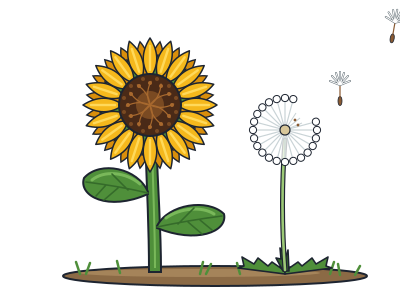
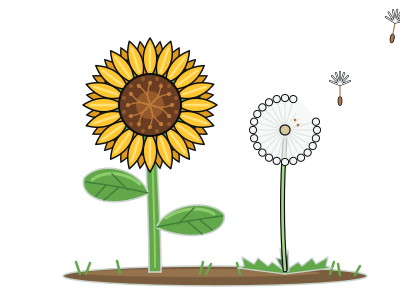
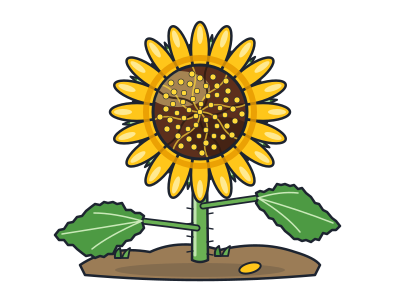
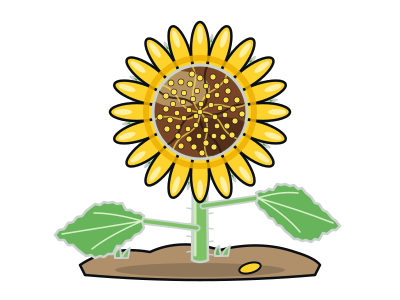
Here is the surprise: a daisy is not one flower. Each 'flower' is really a head packed with many tiny flowers called florets, held from below by a ring of green, leaf-like scales. In a daisy or sunflower, each 'petal' around the edge is a whole floret of its own, and small tube-shaped florets fill the centre. A dandelion head is made only of the strap-shaped, petal-like kind.
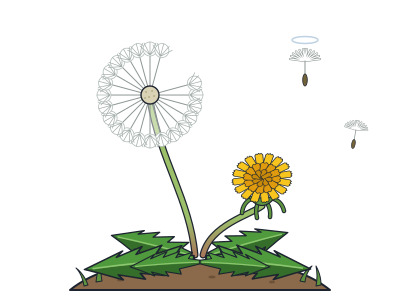
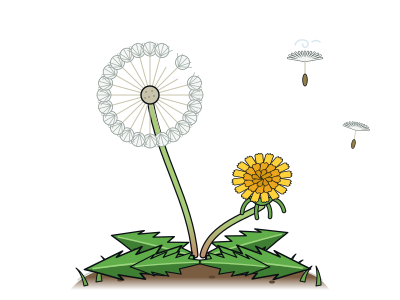
Each tiny fruit holds one seed, and many in this family carry a pappus, a tuft of hairs, bristles or scales. It helps them ride the wind or hitch a ride on animals. A dandelion clock is a ball of these tiny parachutes. Most dandelion seeds land within 2 metres, but in warm, dry air some can travel more than 100 kilometres.
The family grows on every continent except Antarctica, from cold mountains to tropical forests and deserts. Yet its oldest known fossils are pollen grains found in Antarctica. They are about 76 to 66 million years old, from a time when dinosaurs still lived.
Sunflowers keep time
Young sunflowers follow the sun from east to west during the day and swing back east at night, steered by an inner body clock. Grown-up heads stop moving and stay facing east. That helps them. In experiments, east-facing heads warmed up faster in the morning and drew about five times as many pollinating insects as heads turned to face west.
Daisies that grow into trees
In the Galápagos Islands, about 15 kinds of daisy-family trees and shrubs grow nowhere else on Earth. They came from small, non-tree ancestors whose seeds reached the islands long ago. The tallest daisy trees can reach about 15 to 20 metres, roughly as tall as a five-storey building.
A swirl that keeps seeds up
In 2018, scientists in Edinburgh showed that air passing through a dandelion parachute makes a steady swirl of air, like a ring, just above the seed. Experts had thought this kind of swirl would be too wobbly to happen in nature. It keeps the seed in the air about four times better than a solid parachute of similar weight would.
Inside daisy family
- SunflowerEach 'flower' is really hundreds of tiny flowers arranged in a perfect spiral.
- DandelionEach seed flies on its own parachute, and plants clone seeds without pollination.
- LettuceA salad leaf bred from a bitter wild plant that oozes milky sap.
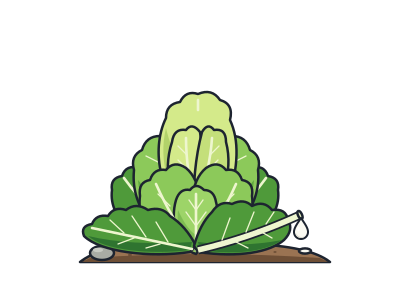
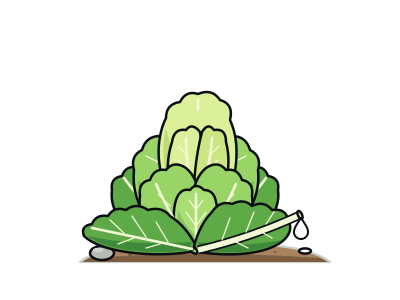
- Common daisyIts name comes from 'day's eye', because it opens at dawn and closes at dusk.
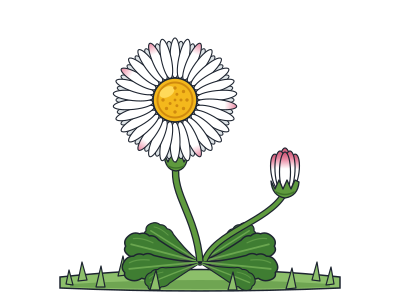
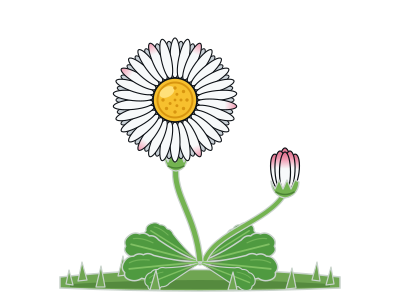
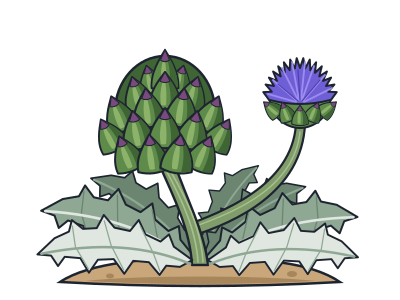
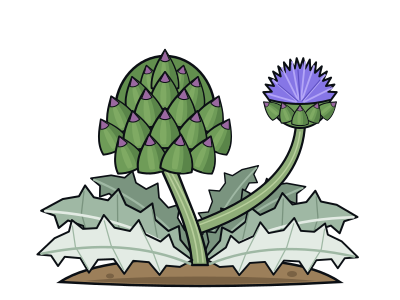
- Globe artichokeWe eat the flower bud of a giant thistle before it blooms.
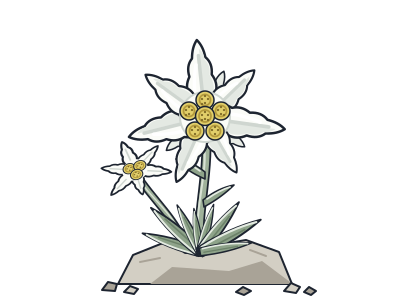
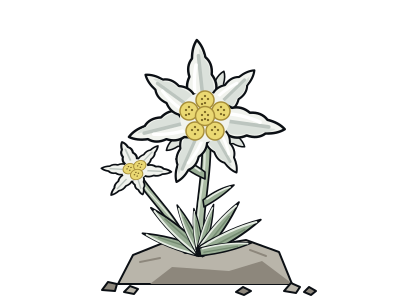
- EdelweissA woolly white alpine flower, a symbol of the Alps.
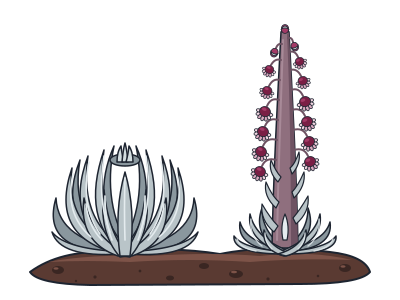
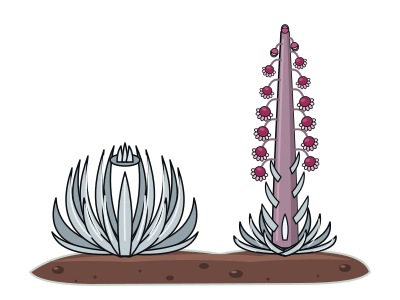
- Haleakalā silverswordA silver ball of leaves on a Hawaiian volcano that flowers once and dies.
Next to it on the tree
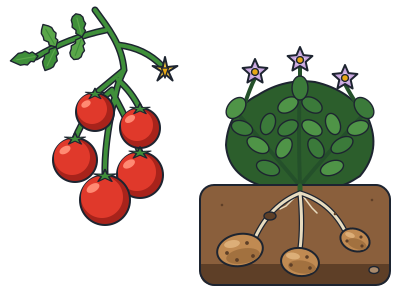
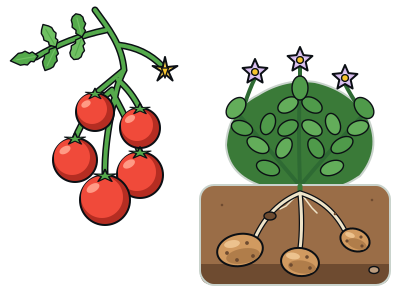
- Nightshade familyTomatoes and potatoes are close cousins in a family that also includes deadly nightshade.
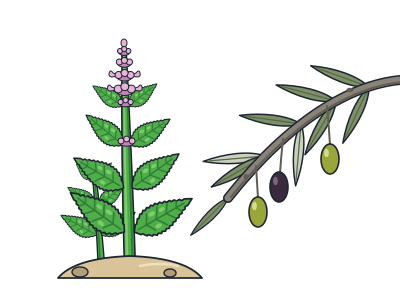
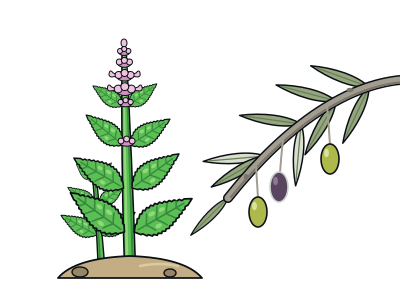
- Olives, mints and kinOlives, mint, lavender, basil and lilacs are all relatives.
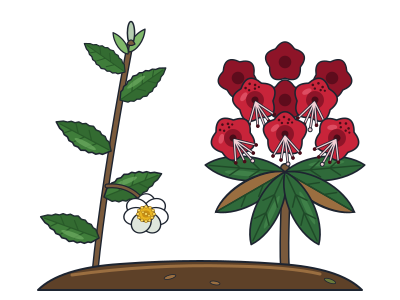
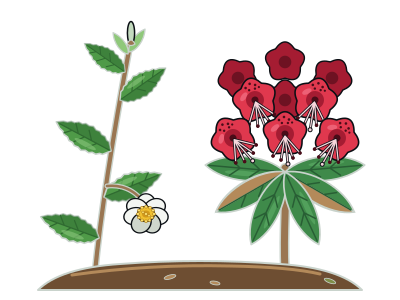
- Heathers, tea and kinTea, blueberries, kiwifruit, Brazil nuts and pitcher plants share one ancestor.
- Coffee and milkweedsCoffee, milkweed and gentians are relatives, many with powerful natural chemicals.
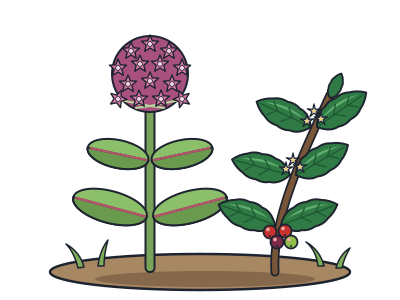
- Carrots, parsley and ivyUmbrella-shaped flower clusters link carrots and coriander to ivy.
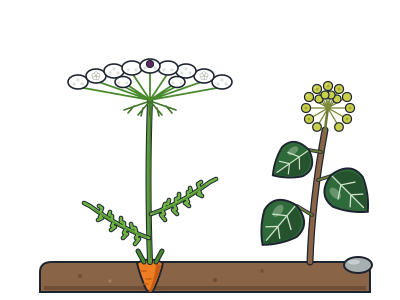
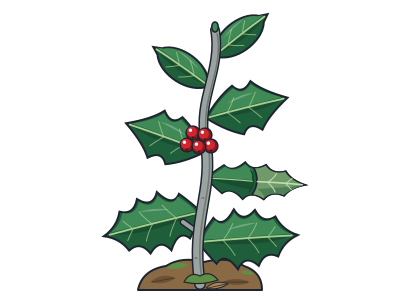
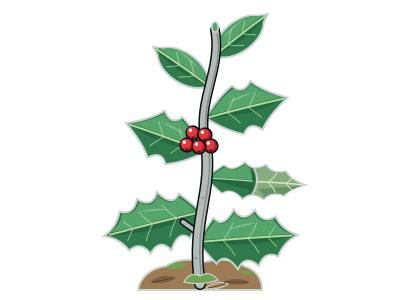
- HollyPrickly lower leaves deter deer, while higher leaves are often smooth.
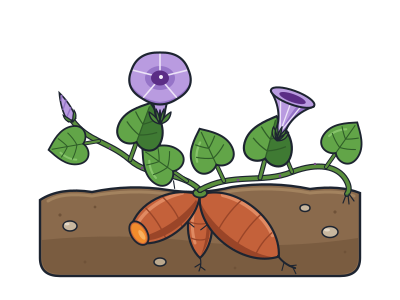
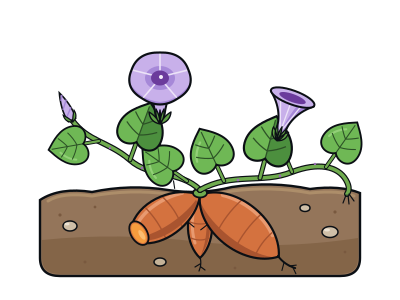
- Sweet potatoA morning glory with a sweet root, which reached Polynesia long before Europeans.