A species
Petunia
Petunia × atkinsiana
A favourite garden flower with a surprising relative: tobacco
You and the petunia meet in the Eukaryotes branch, shown at about 1.8 billion years ago (on 28 July, in a calendar from life's shared ancestor to today).
Petunias fill hanging baskets and window boxes all summer. This cheerful bedding flower has a surprising relative: tobacco. Both belong to the nightshade family, which also includes tomatoes, potatoes, chilli peppers and aubergines. Even the name points to tobacco. 'Petunia' comes from a French word, which came from a South American Tupi–Guarani word for tobacco.
Petunias are not a kind of tobacco, though. They sit on a different branch of the nightshade family. Wild petunias come mainly from southern South America, especially southern Brazil, Argentina and Uruguay. The white wild parent of the garden petunia grows on the Pampas, the area's wide, flat grasslands.
The garden petunia is not a wild species. It is a hybrid that people first raised in the 1830s. They crossed a white wild petunia that smells sweet at night with a violet one and its close relatives. Today, most petunias sold for home gardens are this hybrid.
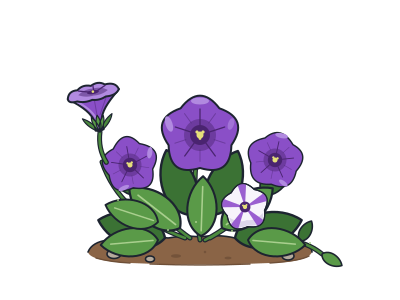
The plant is soft and bushy, with weak, straggling stems. Sticky hairs make it feel slightly clammy. Each flower is a trumpet of five joined petals that open out into five soft points. Depending on the type, the flowers are about 2.5 to 10 centimetres across, from about the width of a large coin to about the width of a palm.
Night shift and day shift
In the wild, hawkmoths visit the white parent at night, and its scent is strongest after dark. The violet parent has no scent. Bees visit it during the day, and its flowers open and close in time with the bees.
A petunia that glows
In 2023, the USA approved a petunia called 'Firefly' for sale. It glows faintly because it carries genes from a glowing mushroom.
The hummingbird petunia
One rare wild petunia has red flowers, and hummingbirds visit it. Most other petunias rely on insects to carry their pollen.
Next to it on the tree
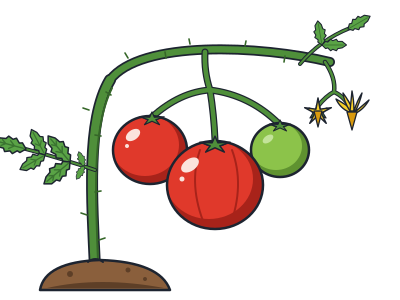
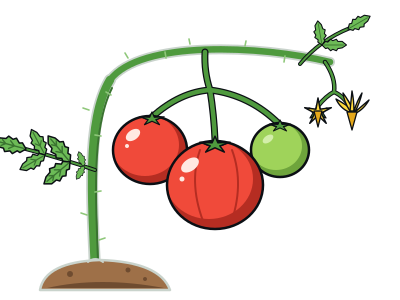
- TomatoEuropeans once feared tomatoes as poisonous because of their nightshade cousins.
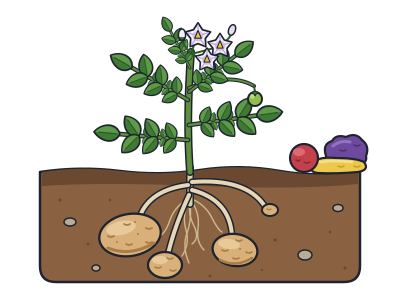
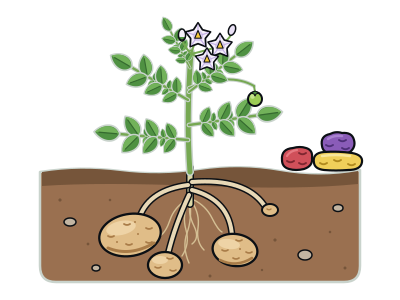
- PotatoThousands of varieties from the Andes; the swollen underground stems fed Europe's population boom.
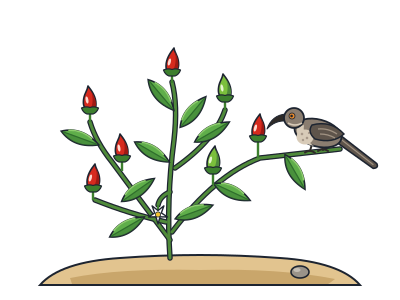
- Chili pepperIts heat stops mammals eating the seeds, but birds cannot feel it and spread them.
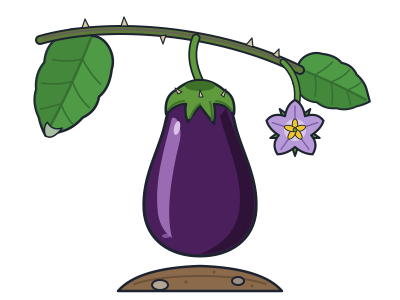
- AubergineA purple berry and close cousin of the tomato and potato.