A group of living things
Green plants
Viridiplantae
From pond scum to the tallest tree, one green family
This branch is shown at about 1 billion years ago; its age is a rough estimate.
You and green plants meet in the Eukaryotes branch, shown at about 1.8 billion years ago (on 28 July, in a calendar from life's shared ancestor to today).
The tiny green algae in a pond and the tallest known tree on Earth are family. Every green alga and every land plant comes from one shared ancestor. They all catch sunlight with two kinds of chlorophyll, called a and b. Their nearest relatives on the tree, the red algae and glaucophytes, have only chlorophyll a plus extra pigments that green plants lack. Those extra pigments are part of why red algae look reddish, while green plants show plain green.
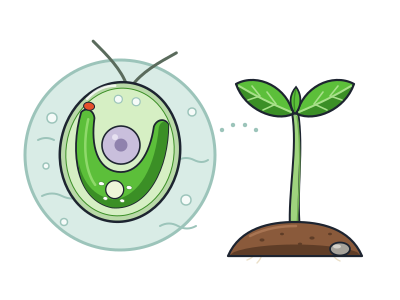
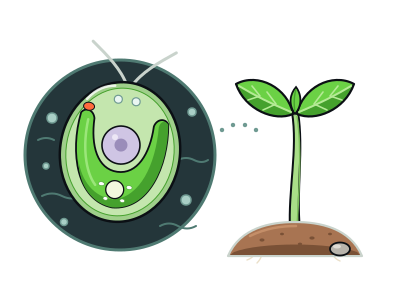
The family has two main branches. One is mostly green algae that live in water, from seaweeds to tiny swimming cells in ponds. The other holds some freshwater algae plus all the land plants, which grew out of that branch.
The size range is enormous. The smallest known member is a sea alga about 0.8 micrometres across, roughly a hundred times thinner than a human hair. It is the smallest known free-living cell with a nucleus. The tallest known living tree is a coast redwood in California called Hyperion. It is about 116 metres tall, which is taller than a 30-storey building, and roughly 600 to 800 years old.
Big or small, green plants share some habits. They store the sugar they make from sunlight as starch, right inside their chloroplasts. Most of them build their cell walls from tough cellulose fibres.
Hundreds of thousands of kinds
There are about 450,000 to 500,000 species of green plants. That makes them by far the biggest of the three related groups, ahead of red algae and glaucophytes.
Borrowed from a bacterium
The shared ancestor of green plants, red algae and glaucophytes is thought to have swallowed a bacterium that could use sunlight. The bacterium became the chloroplast. That is why their chloroplasts are wrapped in two layers.
A cell with one of everything
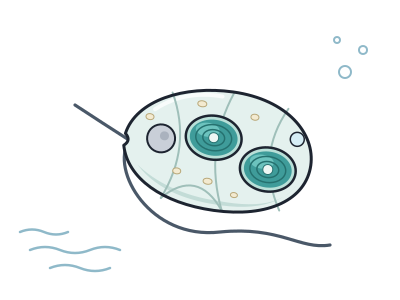
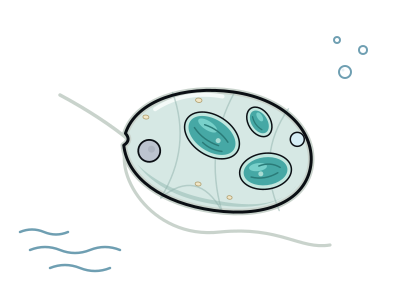
The tiniest known green alga has just one nucleus, one mitochondrion and one chloroplast. It has no cell wall and no tail for swimming. It was found in 1994 in a lagoon in France.
Inside green plants
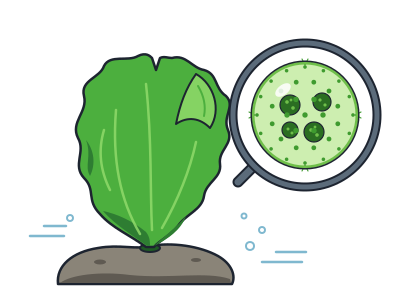
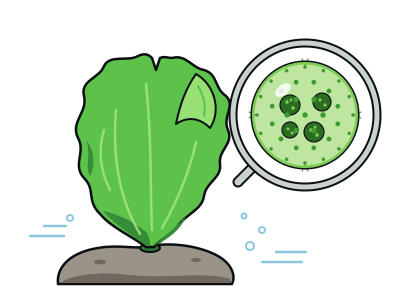
- Green seaweeds and pond algaeGreen algae of seas and ponds, from single swimming cells to sheets of sea lettuce.
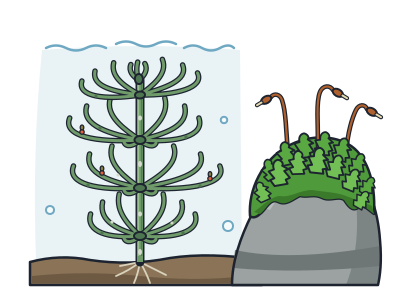
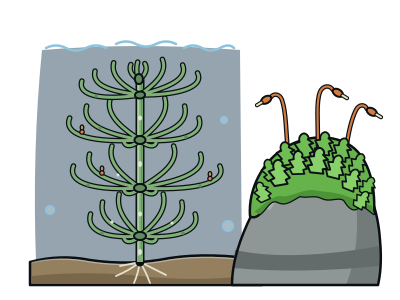
- Land plants and their algal kinSome freshwater green algae are the closest living relatives of every land plant.
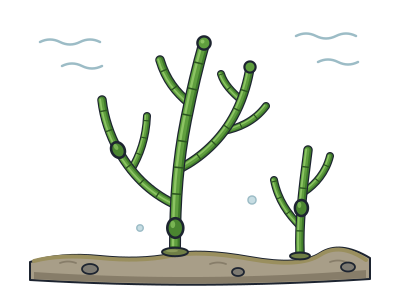
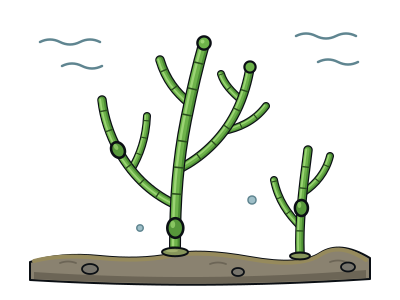
- ProterocladusTiny branching threads from a billion years ago, the oldest known green seaweed.