A group of living things
Green seaweeds and pond algae
Chlorophyta
Green algae of seas and ponds, from single swimming cells to sheets of sea lettuce.
This branch is shown at about 900 million years ago; its age is a rough estimate.
You and green seaweeds and pond algae meet in the Eukaryotes branch, shown at about 1.8 billion years ago (on 28 July, in a calendar from life's shared ancestor to today).
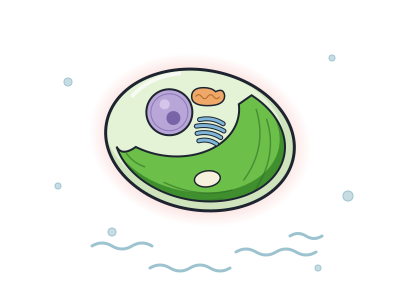
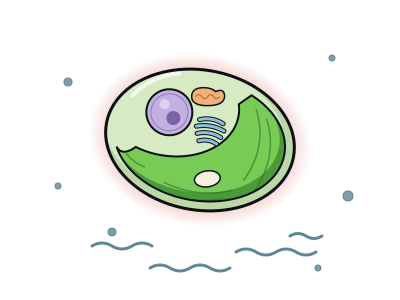
This group stretches from a single green cell swimming in a puddle to a soft sheet of sea lettuce on a rocky shore. They are green for the same reason a garden lettuce is: they use the same two kinds of chlorophyll as land plants. They also store starch, much as plants do.
Even so, they are not the grandparents of land plants. They are the sister group of the branch that led to land plants, so the two are more like cousins. About nine in ten known species live in fresh water, but others live in the sea.
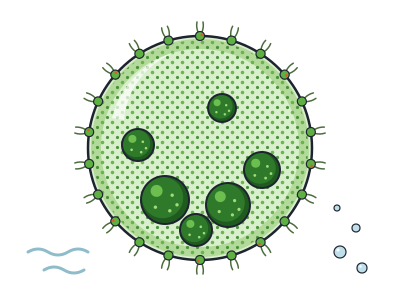
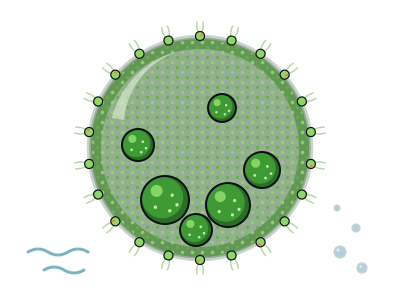
The smallest members are single cells. A Chlamydomonas cell is about a tenth as wide as a human hair. It swims with two whip-like tails and senses light with a tiny eyespot. Volvox is a hollow ball of jelly that holds hundreds to thousands of cells. Their tails beat together, so the ball rolls through the water towards light.
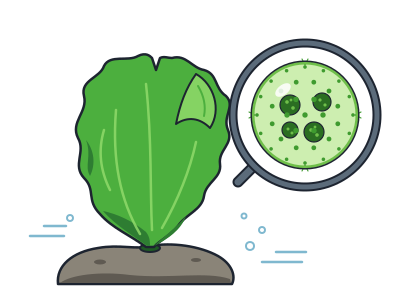
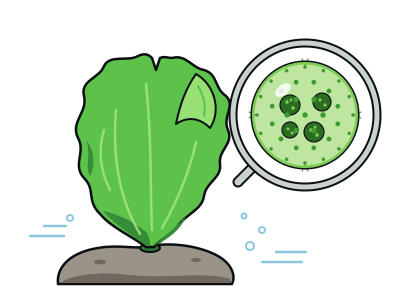
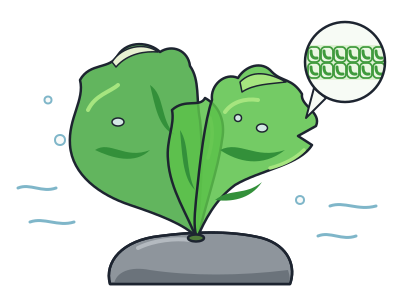
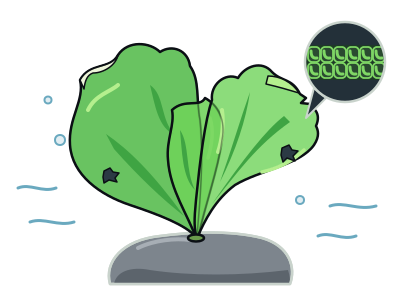
Sea lettuce is a see-through green sheet only two cells thick. It can grow to about 18 centimetres long or more, but most pieces are much smaller. It has a wavy, often torn edge, and a tiny disc holds it to the rock.
Babies that turn inside out
Volvox grows smaller daughter balls inside itself. Each daughter turns itself inside out so its tails end up facing outwards.
Spotted over 300 years ago
Antonie van Leeuwenhoek described Volvox in 1700 using his early microscopes.
Seaweed on the menu
Sea lettuce is edible. It goes into Scottish soups and salads and into Hawaiian cooking, where it is called 'limu pālahala'.
Inside green seaweeds and pond algae
- ChlamydomonasA single green cell that swims with two whip-like tails and steers using a red eyespot.
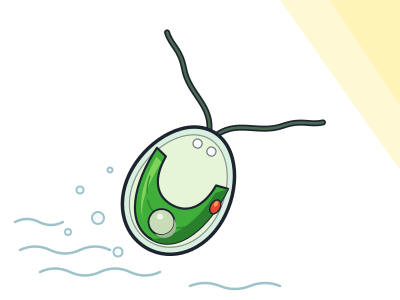
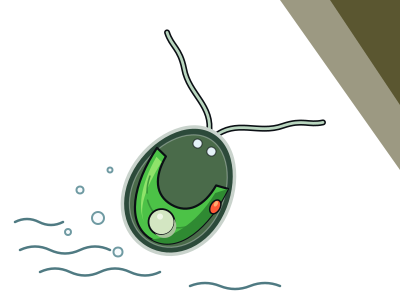
- VolvoxThousands of cells form a spinning green ball, with baby balls growing inside.
- Sea lettuceA seaweed only two cells thick that you can find on almost any rocky shore.
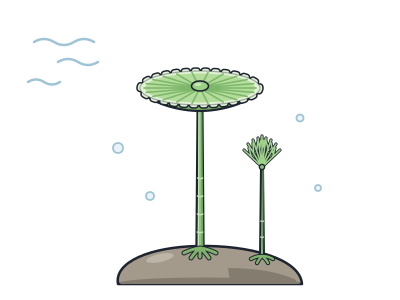
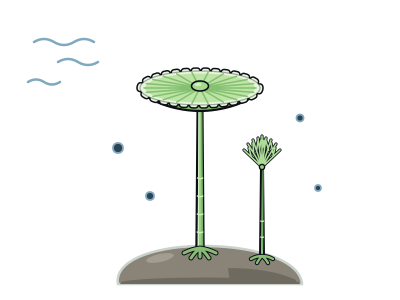
- Mermaid's wineglassA single cell as tall as your finger, topped with a tiny umbrella.
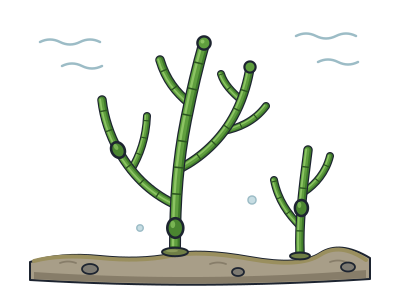
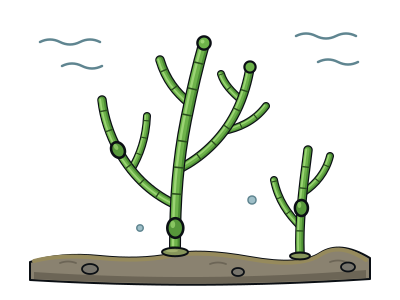
- Bubble and grape seaweedsSeaweeds that can grow a metre long while being one giant cell with millions of nuclei.
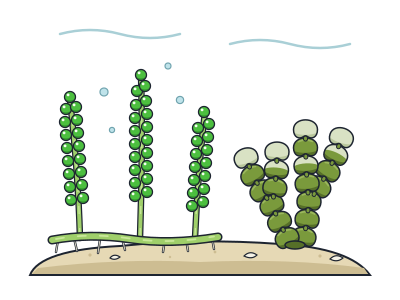
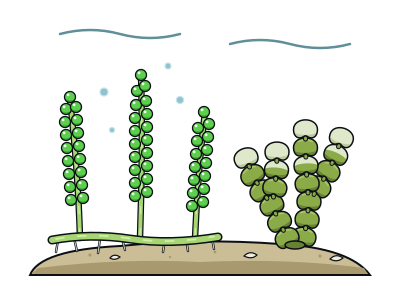
- ChlorellaA single green ball of a cell, sold as a health powder and studied as space-station food.
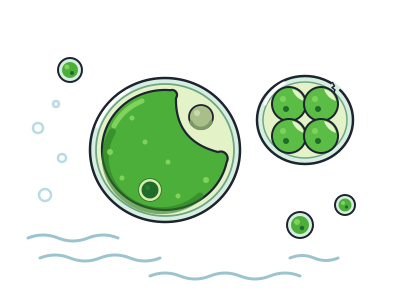
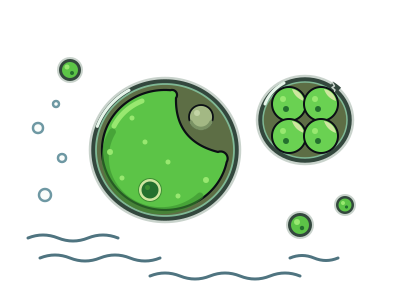
- OstreococcusThe smallest known free-living cell with a nucleus, about a micron across.
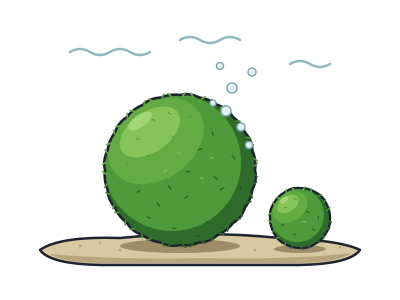
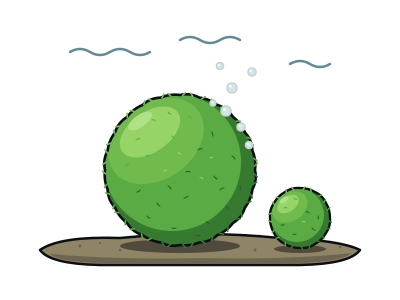
- Marimo moss ballVelvety green balls that roll on lake floors in Japan and live as pets in jars.