A group of living things
Bubble and grape seaweeds
Bryopsidales
Seaweeds that grow big while staying one giant cell
This branch is shown at about 450 million years ago; its age is a rough estimate.
You and bubble and grape seaweeds meet in the Eukaryotes branch, shown at about 1.8 billion years ago (on 28 July, in a calendar from life's shared ancestor to today).
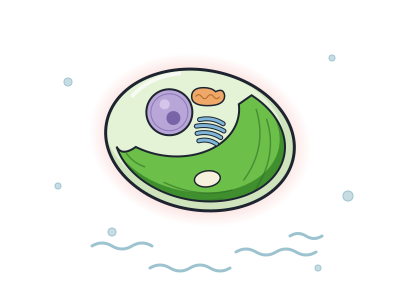
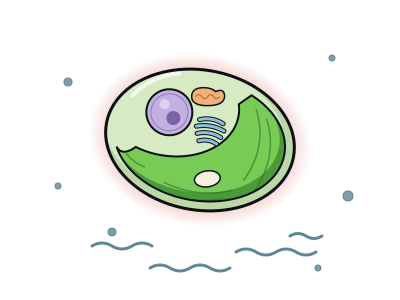
Some of these seaweeds can grow a metre or more long, yet each is just one cell. Big living things like trees and people are built from many tiny, separate cells. These seaweeds are different. Each one is usually a single giant, tube-like cell, with no walls dividing it into separate cells, and it is packed with many nuclei. Sea grapes are probably among the largest single cells on Earth.
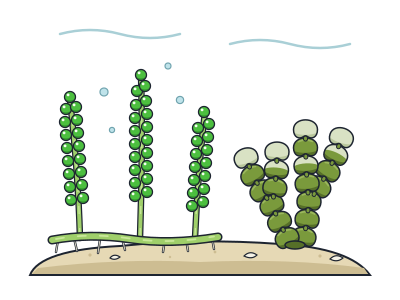
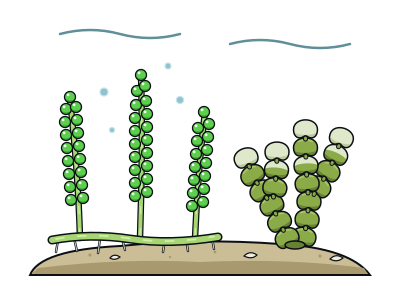
Even so, a sea grape has parts that look and work like a plant's: glossy, grape-like bubbles, fronds, and root-like threads that hold it to the sand. These seaweeds sit on the green plant branch of the tree of life, near sea lettuce and the mermaid's wineglass. They built their plant-like shapes in their own way, all inside one cell.
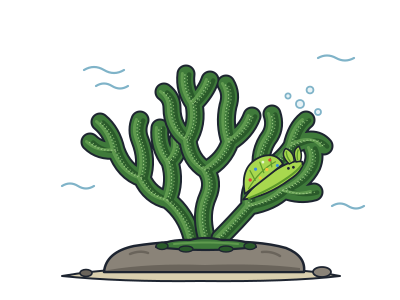
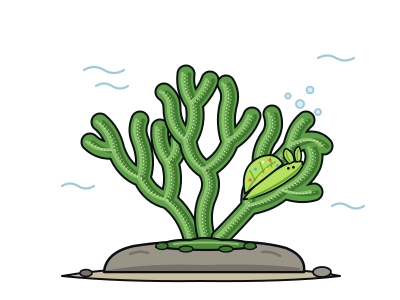
The group also includes cactus seaweed, a bushy chain of flat green segments, and velvet horn. Cactus seaweed's segments are hardened with a chalky mineral, which makes them stiff and unappealing to grazing animals. Most members of the group live in warm seas, on reefs and in lagoons.
When cactus seaweed and its close relatives break apart, their chalky pieces pile up. In some tropical lagoons the sand is made almost entirely of these remains, and worn-down pieces help make up white tropical beaches.
Hidden mounds
On the seafloor of the northern Great Barrier Reef, piles of skeletons left by cactus seaweed and its close relatives cover about 6,000 square kilometres. They are up to about 20 metres thick and built up over thousands of years.
Slugs with stolen green parts
Some sea slugs eat velvet horn and its relatives. They keep the stolen chloroplasts working inside their own bodies for more than a month.
A short, busy life
Cactus seaweed and its close relatives probably live only a few months to a year. They reproduce in a burst of about 36 hours, turning the whole body into reproductive cells. Then the empty white body dies.
Inside bubble and grape seaweeds
- Sea grapesPopping green bubbles eaten as "green caviar" in Japan and the Philippines.
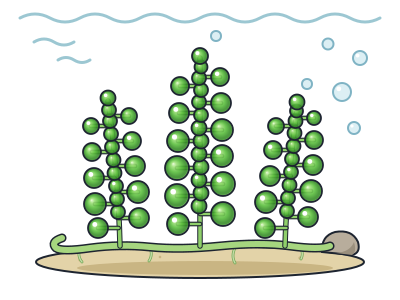
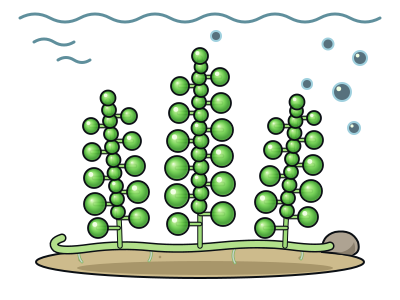
- Cactus seaweedIts chalky green coins pile up when it dies and make much of the white sand on tropical beaches.
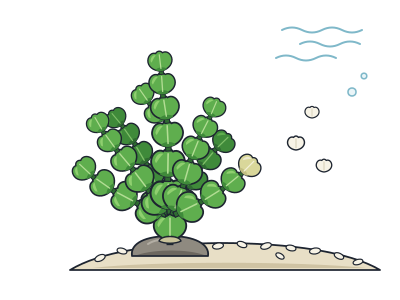
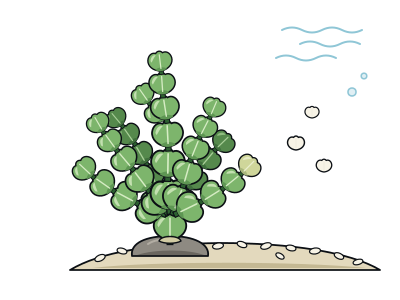
- Velvet hornSpongy green fingers whose chloroplasts are stolen, and kept working, by sea slugs that eat it.
Next to it on the tree
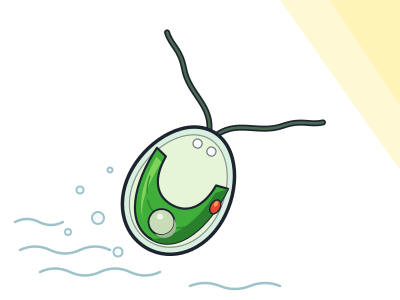
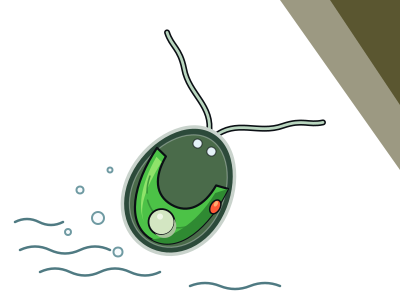
- ChlamydomonasA single green cell that swims with two whip-like tails and steers using a red eyespot.
- VolvoxThousands of cells form a spinning green ball, with baby balls growing inside.
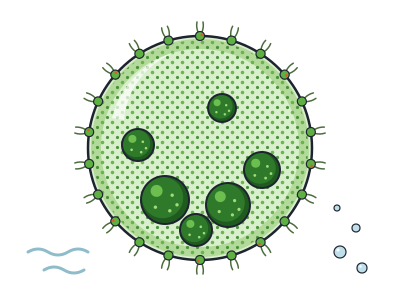
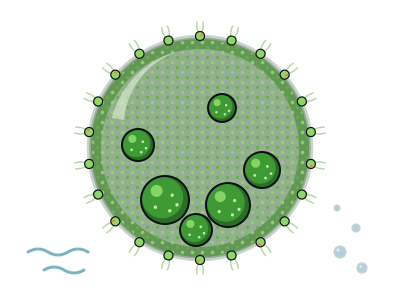
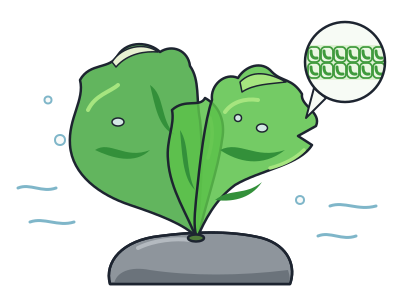
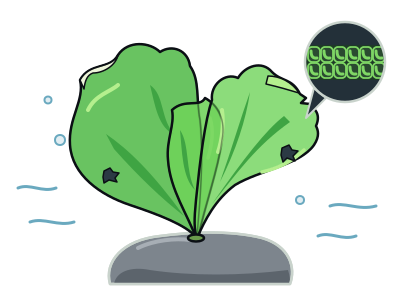
- Sea lettuceA seaweed only two cells thick that you can find on almost any rocky shore.
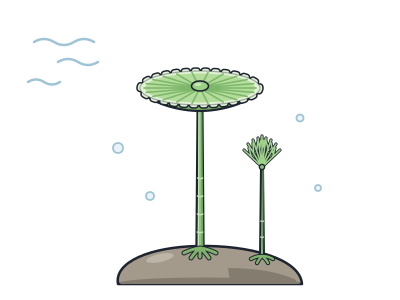
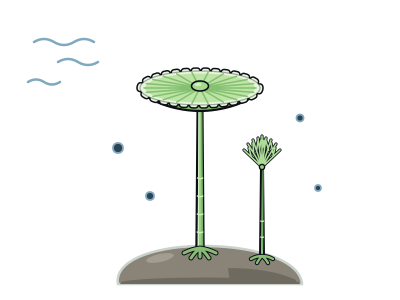
- Mermaid's wineglassA single cell as tall as your finger, topped with a tiny umbrella.
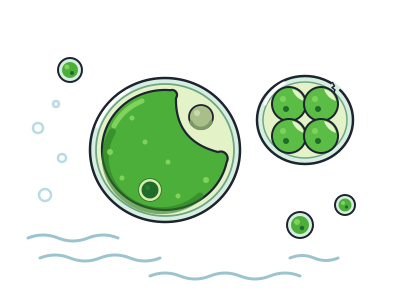
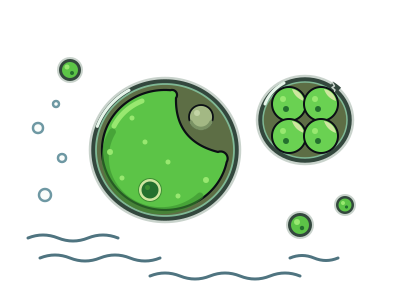
- ChlorellaA single green ball of a cell, sold as a health powder and studied as space-station food.
- OstreococcusThe smallest known free-living cell with a nucleus, about a micron across.
- Marimo moss ballVelvety green balls that roll on lake floors in Japan and live as pets in jars.